

DFF Interview Series — Vol. 3
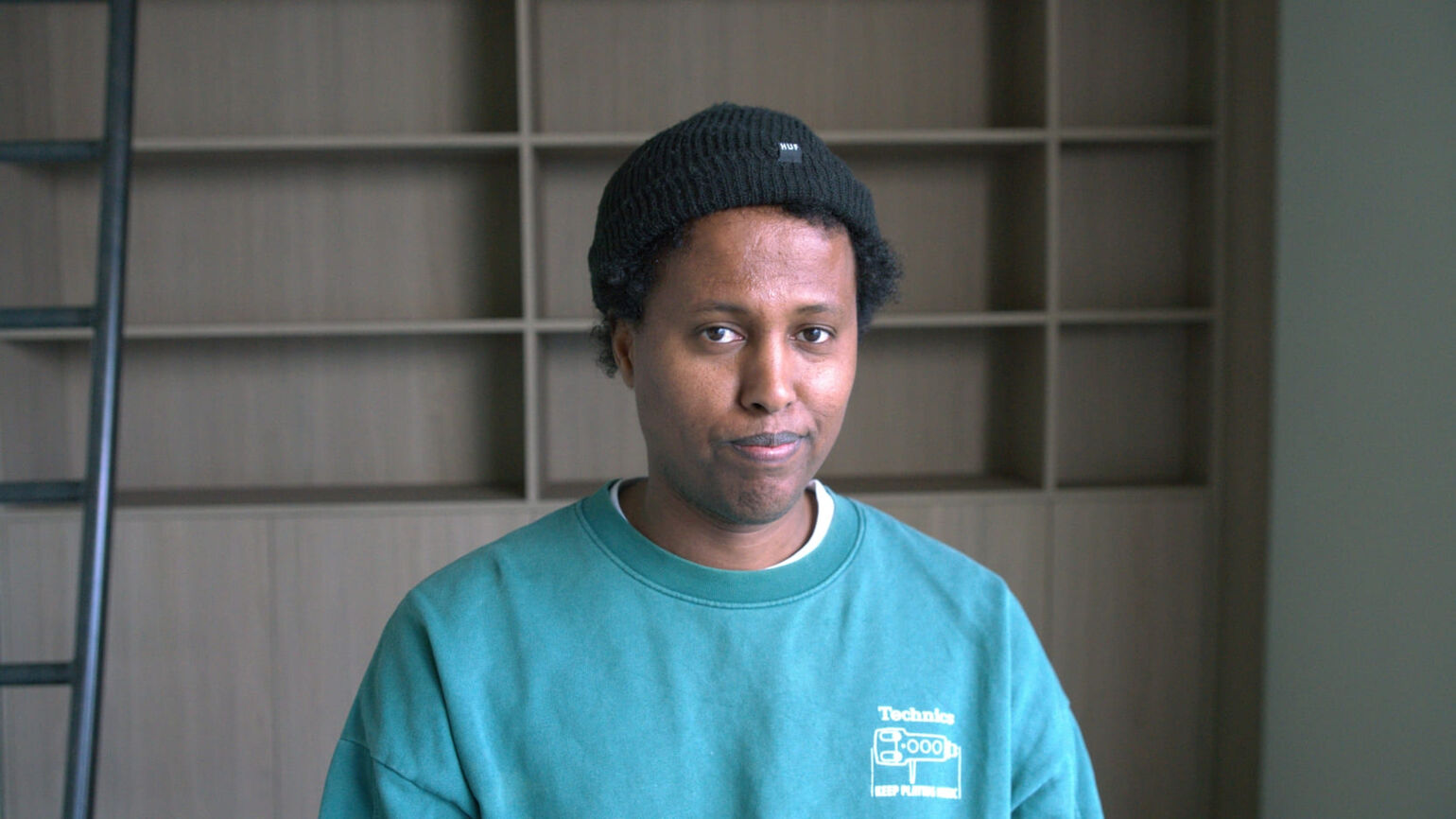
Whispers of a Burning Scent — Mo Harawe | To turn what remains unspoken into film
The Displacement Film Fund (DFF) was announced as a pilot initiative at the International Film Festival Rotterdam (IFFR) in 2025. The fund supports five filmmakers who have been forcibly displaced or whose work engages with that experience, providing each with 100,000 euros to produce a short film, along with the opportunity to premiere at IFFR. UNIQLO is among the founding partners.
On January 30th, 2026, the five short films supported by the fund had their world premieres at IFFR — marking the fund's first concrete results. The day after the premiere, those involved shared their reflections on the solidarity these films created and the possibilities this new fund represents. In the third installment of this series, we spoke with Mo Harawe, director of Whispers of a Burning Scent—a film that delves into the inner world of a taciturn man accused of taking advantage of his marriage and summoned to court—about his experience with the DFF.
——The Displacement Film Fund asked you to complete a film in just six months. Looking back, what was that experience like?
It was a really good experience. If it's possible, I like to not wait — to write and then go and make the film. Normally films take much longer, and that can be a really frustrating process. You write, then there's financing, then you keep writing, then you shoot, then you edit with no deadline so the edit never ends. This was the opposite. From the start there was funding. From there: there's a script, let's go and shoot, edit, we have a deadline, deliver it. The whole process was connected, fast-paced, without the gap that financing usually creates. I really enjoyed that.
——Was there a moment during the process that stayed with you more than you expected?
In a way, this was the simplest production I've had — and I mean that in the best sense. As I said, you don't have to think about financing, and you know from the beginning when it's going to be done and where it's going to screen. There was a lightness to it. At the same time, there was a responsibility, because this program means a lot and there are people who really need it. The biggest pressure for me was the feeling that I had to live up to expectations, make something better than expected, and ensure it had real value. I could have taken it easy, but I didn’t want to do that. That lightness alongside the responsibility — that combination was new for me.
——The film is based on a man you encountered in Somalia — when police mistook a prop for a real dangerous object and briefly detained you during the shoot, the story stayed with you.
Life is full of surprises. In the worst moment you can imagine, something new arrives. Of course at the time, when the shoot was interrupted, we were very frustrated — but here I am now because of that. This story feels universal to me. You could set it in Japan or the Netherlands and it would be exactly the same. Society would judge this person the same way. But his feelings — they can't be proved. They exist, but there's no proof. And what I'm trying to say is: I wish we lived in a world where that was enough. Where you could recognize someone's feelings without needing proof.
——After completing the film, did anything shift for you — in how you think about the fund or the theme of displacement?
Making this film let me move on. I was able to realize this story and make it happen — that's a big thing. When something stays with you for that long, it means something. In a way I think I've built a wall now, which is better — otherwise it might have stayed with me for the rest of my life. If this opportunity hadn't come, I probably wouldn't have made it, because it would have meant going through a long process that felt less accessible to me.
——What first led you to believe that film and storytelling were the right way to respond to the world?
Film brings so many mediums together — sound, visuals, everything. When it works, it's the most effective way of engaging people, catching emotions, and showing things. As human beings, I think we need stories to survive, to stay optimistic and hopeful about life. That's why everyone is trying to tell a story, whether through movies, writing, or poetry. And film, as a visual medium, transcends — sometimes there's no language barrier. You cut things together and it makes meaning for everyone, whether you're from Burkina Faso or Japan or Beirut. That universal connection is what the visual medium gives us.
——What does "home" mean to you?
That's a big question. I think home is where you have some kind of feeling. You can have many homes, and depending on what age you lived in a place, it will mean something different. The most important one — the one that can't be replicated — is where you had your childhood. At that age you're very innocent, you see the world differently than adults. You can't really recreate that. But you can have other homes at different points in your life. That feeling of where you first took your steps while you were still that innocent — I don't think that's replaceable.
——What stories do you feel most responsible for telling right now?
Honestly, I'm not sure. I think it depends on my feelings — whatever is bothering me, not in a negative way, but in the sense that it stays with you. Things you can't digest and let go of. In the end, I'm making films for myself, just to let them out. And what I've found is that what I thought was only my problem turns out to be shared by many people. We're all dealing with the same existential questions, wherever we are. Sharing that makes it a little less painful.
——You've spoken about how the film industry in Somalia has changed. Has the situation evolved?
In the region where we film, yes — a lot. Before, there was fear of cameras, because the only people who came with cameras were foreign journalists telling negative stories. That was the association. But now, people know what filmmaking is, and they know it creates jobs. Now people say, 'I want to participate.' They want to show their world in a different way, in a way they haven't been able to see themselves. And that shift in mindset — that's actually the biggest change. It's harder to change minds than it is to change physical things. Film can do that. Not propaganda, not pushing an agenda — but showing the full context, the good and the bad, honestly. That's our goal.
——How was the world premiere on January 30th?
It was one of the best screening experiences of my life. Watching the other filmmakers’ work alongside my own, I began to see my film differently. That night, I forgot I was a filmmaker and was simply part of the audience. The reactions were incredible — some films made people cry, others laugh, and some even brought them to their feet. It was truly an amazing screening.
——What do you think becomes visible when all five films are seen together?
I think we're all trying to empathize with the world. And for all of us, I think filmmaking is a kind of therapy. There's this urgency to share our stories. All five films have a lot in common — everyone just wants to show their world the way it is. There's honesty in all of them, and it comes through. The topics are heavy, emotional sometimes, but no one is bitter. There's hope in all of these films.
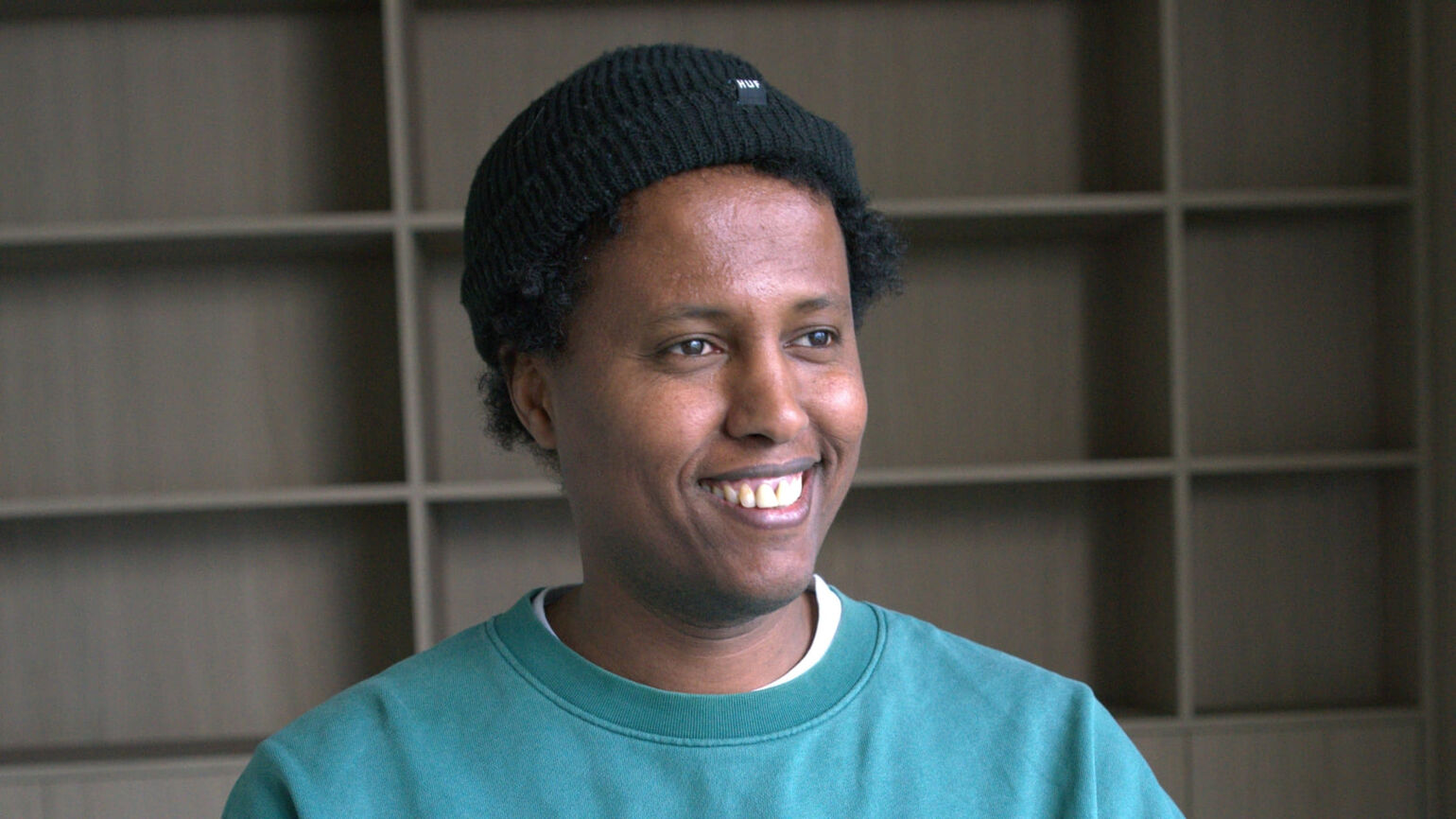
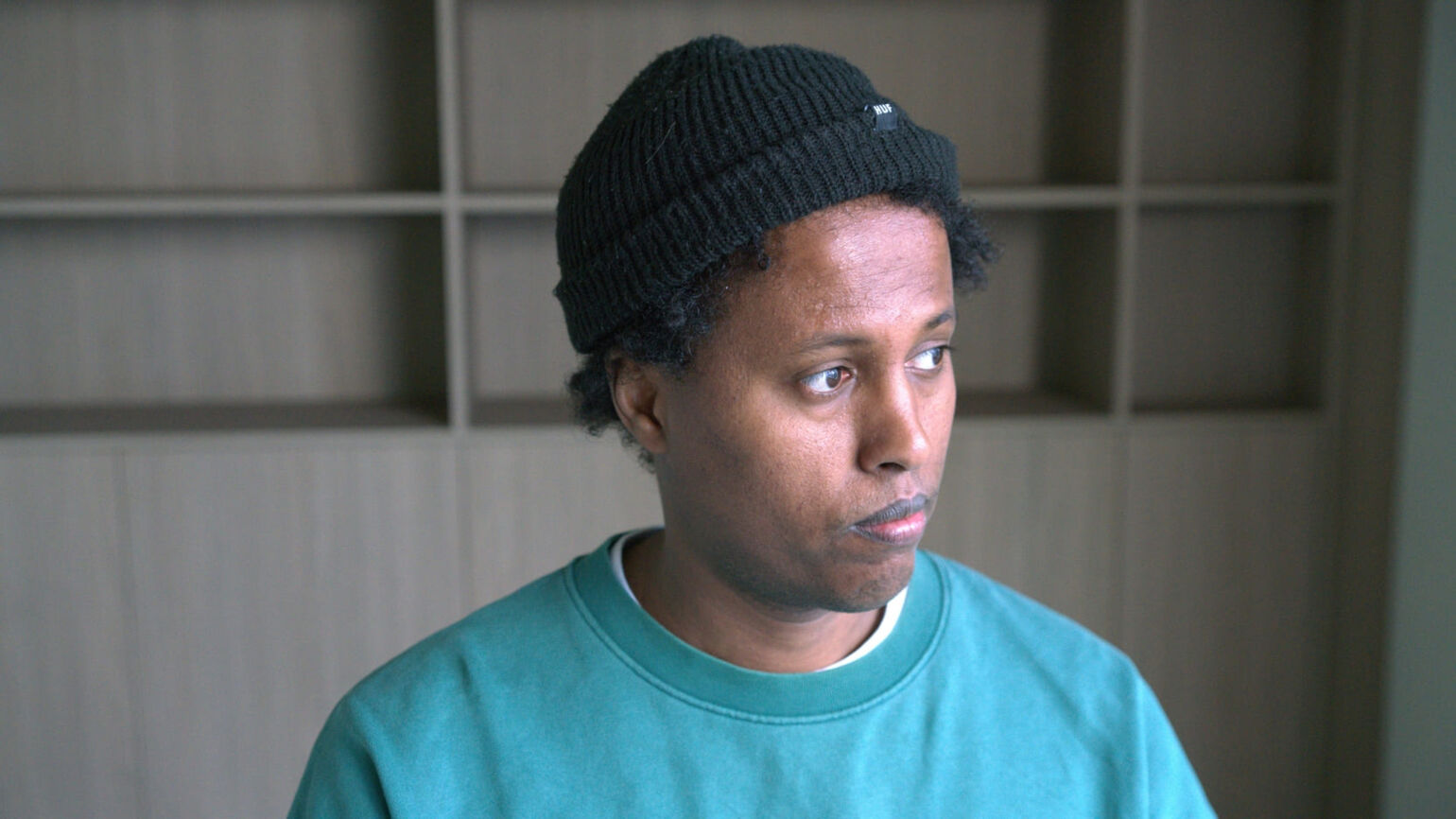
Mo Harawe — Somali-Austrian filmmaker. His feature debut The Village Next to Paradise (2024) was the first Somali film to be officially selected for the Un Certain Regard section at the Cannes Film Festival.
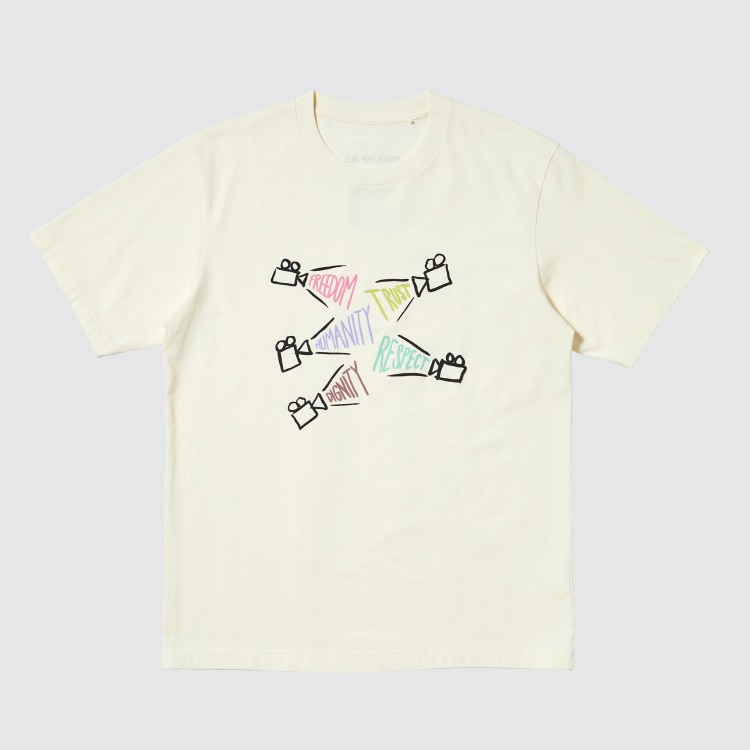
PEACE FOR ALL × Displacement Film Fund Collaboration
A collaborative T-shirt created by UNIQLO's charity T-shirt project PEACE FOR ALL and the Displacement Film Fund will go on sale Friday, June 19, 2026. The design draws on words about "peace" contributed by the five filmmakers supported by the fund, expressing through design the vision of using the power of cinema to bring the voices of displaced people to the world. Proceeds from this T-shirt will be donated to the Displacement Film Fund.
About the Displacement Film Fund
The Displacement Film Fund was established to support and fund the work of filmmakers who have been forcibly displaced, or who have a track record of telling stories about displacement. Co-created and led by UNHCR Goodwill Ambassador Cate Blanchett, the Fund was announced at the 54th International Film Festival Rotterdam (IFFR) in 2025, with MASTER MIND, UNIQLO, Droom en Daad, the Tamer Family Foundation, and the Amahoro Coalition as founding partners. The Hubert Bals Fund serves as operating partner, and UNHCR as strategic partner. At the 55th IFFR, Aarti Lohia and the SP Lohia Foundation were announced as new major partners, having pledged their support to the fund following the success of its pilot year.
For more information:
https://www.uniqlo.com/us/en/special-feature/sustainability/displacement-film-fund
The Displacement Film Fund (DFF) was announced as a pilot initiative at the International Film Festival Rotterdam (IFFR) in 2025. The fund supports five filmmakers who have been forcibly displaced or whose work engages with that experience, providing each with 100,000 euros to produce a short film, along with the opportunity to premiere at IFFR. UNIQLO is among the founding partners.
On January 30th, 2026, the five short films supported by the fund had their world premieres at IFFR — marking the fund's first concrete results. The day after the premiere, those involved shared their reflections on the solidarity these films created and the possibilities this new fund represents. In the third installment of this series, we spoke with Mo Harawe, director of Whispers of a Burning Scent—a film that delves into the inner world of a taciturn man accused of taking advantage of his marriage and summoned to court—about his experience with the DFF.
——The Displacement Film Fund asked you to complete a film in just six months. Looking back, what was that experience like?
It was a really good experience. If it's possible, I like to not wait — to write and then go and make the film. Normally films take much longer, and that can be a really frustrating process. You write, then there's financing, then you keep writing, then you shoot, then you edit with no deadline so the edit never ends. This was the opposite. From the start there was funding. From there: there's a script, let's go and shoot, edit, we have a deadline, deliver it. The whole process was connected, fast-paced, without the gap that financing usually creates. I really enjoyed that.
——Was there a moment during the process that stayed with you more than you expected?
In a way, this was the simplest production I've had — and I mean that in the best sense. As I said, you don't have to think about financing, and you know from the beginning when it's going to be done and where it's going to screen. There was a lightness to it. At the same time, there was a responsibility, because this program means a lot and there are people who really need it. The biggest pressure for me was the feeling that I had to live up to expectations, make something better than expected, and ensure it had real value. I could have taken it easy, but I didn’t want to do that. That lightness alongside the responsibility — that combination was new for me.
——The film is based on a man you encountered in Somalia — when police mistook a prop for a real dangerous object and briefly detained you during the shoot, the story stayed with you.
Life is full of surprises. In the worst moment you can imagine, something new arrives. Of course at the time, when the shoot was interrupted, we were very frustrated — but here I am now because of that. This story feels universal to me. You could set it in Japan or the Netherlands and it would be exactly the same. Society would judge this person the same way. But his feelings — they can't be proved. They exist, but there's no proof. And what I'm trying to say is: I wish we lived in a world where that was enough. Where you could recognize someone's feelings without needing proof.
——After completing the film, did anything shift for you — in how you think about the fund or the theme of displacement?
Making this film let me move on. I was able to realize this story and make it happen — that's a big thing. When something stays with you for that long, it means something. In a way I think I've built a wall now, which is better — otherwise it might have stayed with me for the rest of my life. If this opportunity hadn't come, I probably wouldn't have made it, because it would have meant going through a long process that felt less accessible to me.
——What first led you to believe that film and storytelling were the right way to respond to the world?
Film brings so many mediums together — sound, visuals, everything. When it works, it's the most effective way of engaging people, catching emotions, and showing things. As human beings, I think we need stories to survive, to stay optimistic and hopeful about life. That's why everyone is trying to tell a story, whether through movies, writing, or poetry. And film, as a visual medium, transcends — sometimes there's no language barrier. You cut things together and it makes meaning for everyone, whether you're from Burkina Faso or Japan or Beirut. That universal connection is what the visual medium gives us.
——What does "home" mean to you?
That's a big question. I think home is where you have some kind of feeling. You can have many homes, and depending on what age you lived in a place, it will mean something different. The most important one — the one that can't be replicated — is where you had your childhood. At that age you're very innocent, you see the world differently than adults. You can't really recreate that. But you can have other homes at different points in your life. That feeling of where you first took your steps while you were still that innocent — I don't think that's replaceable.
——What stories do you feel most responsible for telling right now?
Honestly, I'm not sure. I think it depends on my feelings — whatever is bothering me, not in a negative way, but in the sense that it stays with you. Things you can't digest and let go of. In the end, I'm making films for myself, just to let them out. And what I've found is that what I thought was only my problem turns out to be shared by many people. We're all dealing with the same existential questions, wherever we are. Sharing that makes it a little less painful.
——You've spoken about how the film industry in Somalia has changed. Has the situation evolved?
In the region where we film, yes — a lot. Before, there was fear of cameras, because the only people who came with cameras were foreign journalists telling negative stories. That was the association. But now, people know what filmmaking is, and they know it creates jobs. Now people say, 'I want to participate.' They want to show their world in a different way, in a way they haven't been able to see themselves. And that shift in mindset — that's actually the biggest change. It's harder to change minds than it is to change physical things. Film can do that. Not propaganda, not pushing an agenda — but showing the full context, the good and the bad, honestly. That's our goal.
——How was the world premiere on January 30th?
It was one of the best screening experiences of my life. Watching the other filmmakers’ work alongside my own, I began to see my film differently. That night, I forgot I was a filmmaker and was simply part of the audience. The reactions were incredible — some films made people cry, others laugh, and some even brought them to their feet. It was truly an amazing screening.
——What do you think becomes visible when all five films are seen together?
I think we're all trying to empathize with the world. And for all of us, I think filmmaking is a kind of therapy. There's this urgency to share our stories. All five films have a lot in common — everyone just wants to show their world the way it is. There's honesty in all of them, and it comes through. The topics are heavy, emotional sometimes, but no one is bitter. There's hope in all of these films.
Mo Harawe — Somali-Austrian filmmaker. His feature debut The Village Next to Paradise (2024) was the first Somali film to be officially selected for the Un Certain Regard section at the Cannes Film Festival.
PEACE FOR ALL × Displacement Film Fund Collaboration
A collaborative T-shirt created by UNIQLO's charity T-shirt project PEACE FOR ALL and the Displacement Film Fund will go on sale Friday, June 19, 2026. The design draws on words about "peace" contributed by the five filmmakers supported by the fund, expressing through design the vision of using the power of cinema to bring the voices of displaced people to the world. Proceeds from this T-shirt will be donated to the Displacement Film Fund.
About the Displacement Film Fund
The Displacement Film Fund was established to support and fund the work of filmmakers who have been forcibly displaced, or who have a track record of telling stories about displacement. Co-created and led by UNHCR Goodwill Ambassador Cate Blanchett, the Fund was announced at the 54th International Film Festival Rotterdam (IFFR) in 2025, with MASTER MIND, UNIQLO, Droom en Daad, the Tamer Family Foundation, and the Amahoro Coalition as founding partners. The Hubert Bals Fund serves as operating partner, and UNHCR as strategic partner. At the 55th IFFR, Aarti Lohia and the SP Lohia Foundation were announced as new major partners, having pledged their support to the fund following the success of its pilot year.
For more information:
https://www.uniqlo.com/us/en/special-feature/sustainability/displacement-film-fund