

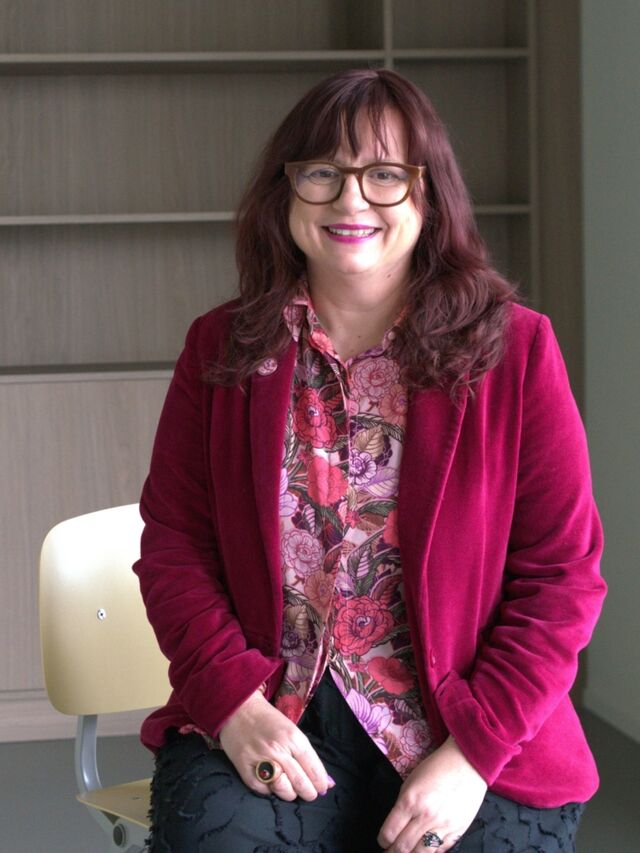
DFF Interview Series—Vol. 1
Clare Stewart on What the Displacement Film Fund Has Achieved and Where It Goes Next
Aug 10, 2026
SUSTAINABILITY
The Displacement Film Fund (DFF) was launched as a pilot initiative at the International Film Festival Rotterdam (IFFR) in 2025. The fund supports five filmmakers who have been forcibly displaced, or whose work explores displacement, providing each with 100,000€ to produce a short film and the opportunity to premiere at IFFR. UNIQLO is among the founding partners.
On January 30, 2026, the five short films supported by the fund premiered at IFFR, marking the first tangible outcome of the initiative. The day after the premiere, those involved shared their reflections on the solidarity these films created and the possibilities this new fund represents. In the first installment of this series, IFFR Managing Director Clare Stewart looks back on what the Displacement Film Fund has accomplished.
―Now that the pilot of the Displacement Film Fund has become a reality and the five films premiered, what did you discover about the fund as a whole—not about individual films, but the bigger picture?
It's so wonderful to see the fund come into reality through these films. What surprised me is how different the films are from one another, yet how strongly they connect thematically. There are resonances across all five—exploring displacement, what it means to be yourself in a new environment, how you reclaim your identity after being forcibly displaced, and what isolation truly feels like. A film like Mo Harawe's Whispers of a Burning Scent doesn't necessarily address displacement directly, and yet you get a very mysterious and interesting sense of what it feels like to be an outsider, which I think is deeply connected to what the experience of displacement can be. It’s also remarkable that we made it happen in such a short period of time, and that really speaks to the excellent job the nominations and selection committee did in determining our first cohort of filmmakers. All five have a strong foundation in visual storytelling, and while they have very different styles, they all have an eloquent visual language and know how to connect with audiences. One of the fund's central purposes is not only to support displaced filmmakers, but to make sure their stories reach more audiences.
―Did you feel that happening at the world premiere on January 30th?
The public screening that night was so emotional. I've worked in film festivals for many years—the Sydney Film Festival, London Film Festival, and now IFFR—and the premiere of the Displacement Film Fund films was one of the most emotional screenings I've ever hosted. You could really feel the warmth and energy in the room, and the audience’s desire to support these stories and the filmmakers behind them.
―What was the moment that stayed with you most from the premiere screening?
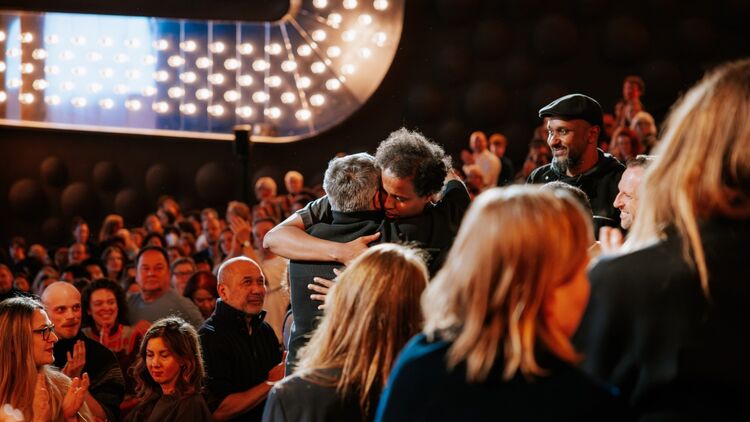
What stood out for me was the connection made between the filmmakers. When the applause happened after the second round of screenings, I was on stage, and I could see Mohammad Rasoulof and Mo Harawe stand up and hug each other. It was incredible, especially incredible to witness while on stage, because you can see the entire audience turn toward that moment all at once. It gives me goosebumps even thinking about it now. It was very moving.
―Having enough funding, combined with a tight timeline around a premiere — that seems to have given the filmmakers an unusual amount of creative freedom.
What we see is what happens when filmmakers are given creative freedom. This fund was designed to be substantial enough to make a short film. 100,000€ is a very good budget for a short film, and substantial enough that they didn't necessarily need to find other sources of funding. That gives a certain freedom, because the more investing parties there are in a film, the more you have to adjust your creative boundaries accordingly. The combination of that freedom and the restriction of having to deliver in time for their world premieres at IFFR gave the filmmakers and their creative teams a very sharpened focus. You could feel that urgency and energy even in the more poetic films like Maryna Er Gorbach’s extraordinary reflection on a Ukrainian soldier’s experience in Rotation. That Mohammad Rasoulof was able to get to such a profound and personal story with Sense of Water in such a short time frame is really the sign of an outstanding filmmaker.
―It was also striking how differently each filmmaker spoke about that experience.
Absolutely. For Shahrbanoo Sadat, born into an Afghan refugee family in Iran, then moving to Afghanistan, being an outsider there too, and then being forced to flee to Germany—in all three of the places she's lived, she was outside of herself, outside of her body, outside of the culture. She said the fund came at exactly the right moment for her, when she was working toward a sense of connecting to the home of her own body. There's also an element of accident in it. The fund landed at a different moment in the creative life and displacement experience of each of the five filmmakers, and I find that really interesting. Hasan Kattan’s Allies in Exile is also a powerful example of the timing being right for the story he tells about his friendship with fellow filmmaker Fadi Al-Halabi and their journey from Syria to a refugee camp in Turkey to asylum seeking in the UK.
―This is a very different structure from other funds. Was that also why Cate Blanchett–who leads the Displacement Film Fund initiative–is so committed to the idea of the fund supporting short films rather than features?
Yes. Part of it was the urgency of getting stories of displacement out and supporting displaced filmmakers, and short films are a fast way to achieve that. But also, the form itself can sometimes communicate something even more powerful than a longer feature. Each of these five films takes exactly the time it needs to say what it wants to say. They're all very different lengths, but not one of them has too many or too few moments.
―The second cycle has been confirmed. What are you thinking about for next time?
After the festival, we'll come together with all our partners to do a full evaluation. There are definitely some learnings from the pilot that we'll want to consider as we shape the next round. More to come.
―The DFF is an initiative of the Hubert Bals Fund, part of IFFR, with IFFR serving as management partner. What kind of space does the fund ultimately aim to create?
The Hubert Bals Fund has been supporting filmmakers in countries where production infrastructure is lacking, or where filmmakers face really challenging circumstances—including political persecution for 30 years. This initiative builds on that mission while taking it in a new direction. It's short film production funding, which is also very important for IFFR as a festival, since we've had one of the biggest short film programs of any large-scale international film festival. What's compelling about our involvement is that it brings two things together: IFFR's commitment to the short form, and the Hubert Bals Fund's longstanding support of filmmakers at risk. As the management partner, we're working with UNHCR as a strategic partner alongside many others to create the maximum opportunity for the films themselves. What makes this fund internationally unique is its combination of founding partners, from global companies like UNIQLO, philanthropic foundations from Africa and Europe, and individuals like Koji Yanai supporting it through MASTER MIND. And now, for the second cycle, we are welcoming the SP Lohia Foundation as another major partner. Outside of public government funding, there are very few funds that offer filmmakers this level of creative freedom, with this kind of purpose and this unique combination of partnerships behind them. We see not only the possibility of growing the fund, but also that it represents an innovative model for the industry that points to new ways of coalescing around a particularly urgent theme and showing how partners can come together in solidarity to amplify impact.
―Each partner amplifies the fund in a different way.
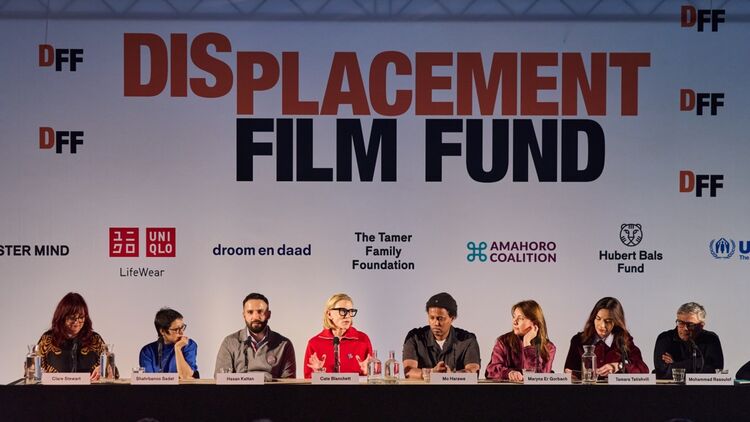
Exactly. The Amahoro Coalition is researching how Mo’s production can have a social and economic impact in Somalia. UNIQLO, through its charity T-shirt project PEACE FOR ALL, is helping share the fund's message globally in a way that we simply could not achieve with limited resources alone. Droom en Daad Foundation supported the press conference and the premiere reception, while The Tamer Family Foundation supported our event at the Cannes Film Festival in May. In addition to their donations to fund film production, each partner is making an additional contribution to amplify the overall project. Everything wouldn’t have been possible without them.
―How do you see the relationship between the festival and the fund developing going forward?
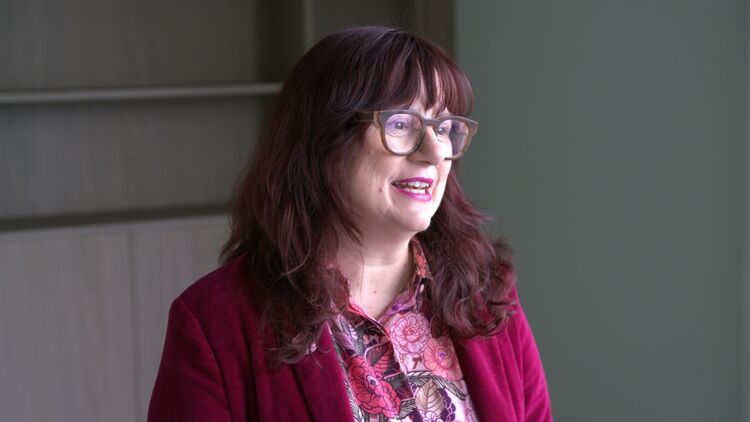
As an organization that runs both a major international film festival and a major global fund, we're always thinking about what it means to do both well. One of the most important aspects of this role is that we bring the power of the festival and the power of the fund together. In the same way that the partnerships help amplify the fund's impact, that connection between the festival and the fund creates a more powerful impact for the work overall—and I believe that will only grow.
Clare Stewart
Managing Director of IFFR since June 2023, overseeing the festival's operations, strategy, and business. In 2022, she served as Interim CEO of Sheffield DocFest, the UK's leading documentary film festival. Prior to that, she was Director of BFI London Film Festival and BFI Flare: London LGBTQIA+ Film Festival (2012–2017), Festival Director of Sydney Film Festival (2006–2011), and inaugural Head of Film Programming at the Australian Centre for the Moving Image (ACMI) in Melbourne (2002–2006). She has also served as an elected member of the BAFTA Film Committee (2020–2024).
PEACE FOR ALL × Displacement Film Fund Collaboration
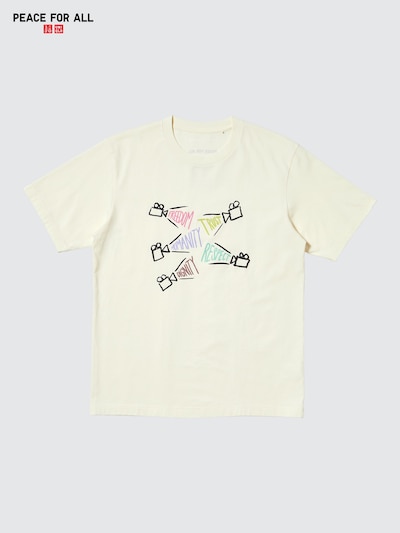
A collaborative T-shirt created by UNIQLO's charity T-shirt project PEACE FOR ALL and the Displacement Film Fund launched Friday, June 19, 2026. Contributed by the five filmmakers supported by the fund, the design draws on words about "peace" expressing their vision to bring the voices of displaced people to the world. Proceeds from this T-shirt will be donated to the Displacement Film Fund.
About the Displacement Film Fund
The Displacement Film Fund was established to support and fund the work of filmmakers who have been forcibly displaced, or who have experience sharing stories about displacement. Co-created and led by actor, producer, and UNHCR Goodwill Ambassador Cate Blanchett, the fund was announced at the 54th International Film Festival Rotterdam (IFFR) in 2025, with MASTER MIND, UNIQLO, Droom en Daad, the Tamer Family Foundation, and the Amahoro Coalition as founding partners. The Hubert Bals Fund serves as an operating partner, and UNHCR as a strategic partner. At the 55th IFFR, Aarti Lohia and the SP Lohia Foundation were announced as new major partners, pledging their support to the fund following the success of its pilot year.
For more information:https://www.uniqlo.com/es/en/special-feature/sustainability/displacement-film-fund
On January 30, 2026, the five short films supported by the fund premiered at IFFR, marking the first tangible outcome of the initiative. The day after the premiere, those involved shared their reflections on the solidarity these films created and the possibilities this new fund represents. In the first installment of this series, IFFR Managing Director Clare Stewart looks back on what the Displacement Film Fund has accomplished.
―Now that the pilot of the Displacement Film Fund has become a reality and the five films premiered, what did you discover about the fund as a whole—not about individual films, but the bigger picture?
It's so wonderful to see the fund come into reality through these films. What surprised me is how different the films are from one another, yet how strongly they connect thematically. There are resonances across all five—exploring displacement, what it means to be yourself in a new environment, how you reclaim your identity after being forcibly displaced, and what isolation truly feels like. A film like Mo Harawe's Whispers of a Burning Scent doesn't necessarily address displacement directly, and yet you get a very mysterious and interesting sense of what it feels like to be an outsider, which I think is deeply connected to what the experience of displacement can be. It’s also remarkable that we made it happen in such a short period of time, and that really speaks to the excellent job the nominations and selection committee did in determining our first cohort of filmmakers. All five have a strong foundation in visual storytelling, and while they have very different styles, they all have an eloquent visual language and know how to connect with audiences. One of the fund's central purposes is not only to support displaced filmmakers, but to make sure their stories reach more audiences.
―Did you feel that happening at the world premiere on January 30th?
The public screening that night was so emotional. I've worked in film festivals for many years—the Sydney Film Festival, London Film Festival, and now IFFR—and the premiere of the Displacement Film Fund films was one of the most emotional screenings I've ever hosted. You could really feel the warmth and energy in the room, and the audience’s desire to support these stories and the filmmakers behind them.
―What was the moment that stayed with you most from the premiere screening?
What stood out for me was the connection made between the filmmakers. When the applause happened after the second round of screenings, I was on stage, and I could see Mohammad Rasoulof and Mo Harawe stand up and hug each other. It was incredible, especially incredible to witness while on stage, because you can see the entire audience turn toward that moment all at once. It gives me goosebumps even thinking about it now. It was very moving.
―Having enough funding, combined with a tight timeline around a premiere — that seems to have given the filmmakers an unusual amount of creative freedom.
What we see is what happens when filmmakers are given creative freedom. This fund was designed to be substantial enough to make a short film. 100,000€ is a very good budget for a short film, and substantial enough that they didn't necessarily need to find other sources of funding. That gives a certain freedom, because the more investing parties there are in a film, the more you have to adjust your creative boundaries accordingly. The combination of that freedom and the restriction of having to deliver in time for their world premieres at IFFR gave the filmmakers and their creative teams a very sharpened focus. You could feel that urgency and energy even in the more poetic films like Maryna Er Gorbach’s extraordinary reflection on a Ukrainian soldier’s experience in Rotation. That Mohammad Rasoulof was able to get to such a profound and personal story with Sense of Water in such a short time frame is really the sign of an outstanding filmmaker.
―It was also striking how differently each filmmaker spoke about that experience.
Absolutely. For Shahrbanoo Sadat, born into an Afghan refugee family in Iran, then moving to Afghanistan, being an outsider there too, and then being forced to flee to Germany—in all three of the places she's lived, she was outside of herself, outside of her body, outside of the culture. She said the fund came at exactly the right moment for her, when she was working toward a sense of connecting to the home of her own body. There's also an element of accident in it. The fund landed at a different moment in the creative life and displacement experience of each of the five filmmakers, and I find that really interesting. Hasan Kattan’s Allies in Exile is also a powerful example of the timing being right for the story he tells about his friendship with fellow filmmaker Fadi Al-Halabi and their journey from Syria to a refugee camp in Turkey to asylum seeking in the UK.
―This is a very different structure from other funds. Was that also why Cate Blanchett–who leads the Displacement Film Fund initiative–is so committed to the idea of the fund supporting short films rather than features?
Yes. Part of it was the urgency of getting stories of displacement out and supporting displaced filmmakers, and short films are a fast way to achieve that. But also, the form itself can sometimes communicate something even more powerful than a longer feature. Each of these five films takes exactly the time it needs to say what it wants to say. They're all very different lengths, but not one of them has too many or too few moments.
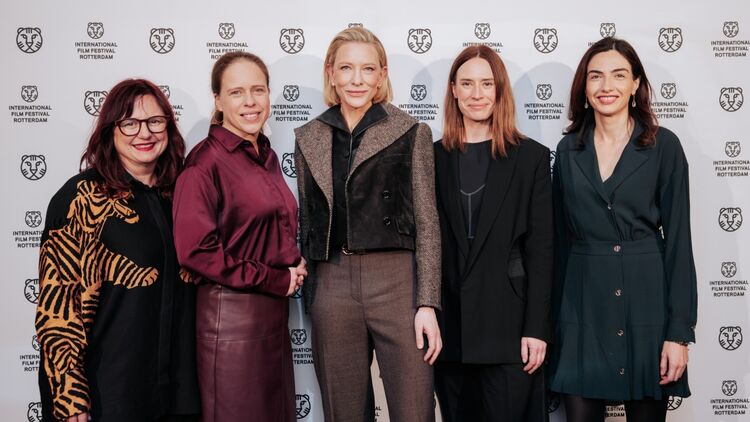
from left to right: Clare Stewart (Managing Director of IFFR), Carola Schouten (Mayor of Rotterdam), Cate Blanchett (Co-founder and leader of DFF), Vanja Kaludjercic (Festival Director of IFFR),Tamara Tatishvili (Head of the Hubert Bals Fund)
―The second cycle has been confirmed. What are you thinking about for next time?
After the festival, we'll come together with all our partners to do a full evaluation. There are definitely some learnings from the pilot that we'll want to consider as we shape the next round. More to come.
―The DFF is an initiative of the Hubert Bals Fund, part of IFFR, with IFFR serving as management partner. What kind of space does the fund ultimately aim to create?
The Hubert Bals Fund has been supporting filmmakers in countries where production infrastructure is lacking, or where filmmakers face really challenging circumstances—including political persecution for 30 years. This initiative builds on that mission while taking it in a new direction. It's short film production funding, which is also very important for IFFR as a festival, since we've had one of the biggest short film programs of any large-scale international film festival. What's compelling about our involvement is that it brings two things together: IFFR's commitment to the short form, and the Hubert Bals Fund's longstanding support of filmmakers at risk. As the management partner, we're working with UNHCR as a strategic partner alongside many others to create the maximum opportunity for the films themselves. What makes this fund internationally unique is its combination of founding partners, from global companies like UNIQLO, philanthropic foundations from Africa and Europe, and individuals like Koji Yanai supporting it through MASTER MIND. And now, for the second cycle, we are welcoming the SP Lohia Foundation as another major partner. Outside of public government funding, there are very few funds that offer filmmakers this level of creative freedom, with this kind of purpose and this unique combination of partnerships behind them. We see not only the possibility of growing the fund, but also that it represents an innovative model for the industry that points to new ways of coalescing around a particularly urgent theme and showing how partners can come together in solidarity to amplify impact.
―Each partner amplifies the fund in a different way.
Exactly. The Amahoro Coalition is researching how Mo’s production can have a social and economic impact in Somalia. UNIQLO, through its charity T-shirt project PEACE FOR ALL, is helping share the fund's message globally in a way that we simply could not achieve with limited resources alone. Droom en Daad Foundation supported the press conference and the premiere reception, while The Tamer Family Foundation supported our event at the Cannes Film Festival in May. In addition to their donations to fund film production, each partner is making an additional contribution to amplify the overall project. Everything wouldn’t have been possible without them.
―How do you see the relationship between the festival and the fund developing going forward?
As an organization that runs both a major international film festival and a major global fund, we're always thinking about what it means to do both well. One of the most important aspects of this role is that we bring the power of the festival and the power of the fund together. In the same way that the partnerships help amplify the fund's impact, that connection between the festival and the fund creates a more powerful impact for the work overall—and I believe that will only grow.
Clare Stewart
Managing Director of IFFR since June 2023, overseeing the festival's operations, strategy, and business. In 2022, she served as Interim CEO of Sheffield DocFest, the UK's leading documentary film festival. Prior to that, she was Director of BFI London Film Festival and BFI Flare: London LGBTQIA+ Film Festival (2012–2017), Festival Director of Sydney Film Festival (2006–2011), and inaugural Head of Film Programming at the Australian Centre for the Moving Image (ACMI) in Melbourne (2002–2006). She has also served as an elected member of the BAFTA Film Committee (2020–2024).
PEACE FOR ALL × Displacement Film Fund Collaboration
A collaborative T-shirt created by UNIQLO's charity T-shirt project PEACE FOR ALL and the Displacement Film Fund launched Friday, June 19, 2026. Contributed by the five filmmakers supported by the fund, the design draws on words about "peace" expressing their vision to bring the voices of displaced people to the world. Proceeds from this T-shirt will be donated to the Displacement Film Fund.
About the Displacement Film Fund
The Displacement Film Fund was established to support and fund the work of filmmakers who have been forcibly displaced, or who have experience sharing stories about displacement. Co-created and led by actor, producer, and UNHCR Goodwill Ambassador Cate Blanchett, the fund was announced at the 54th International Film Festival Rotterdam (IFFR) in 2025, with MASTER MIND, UNIQLO, Droom en Daad, the Tamer Family Foundation, and the Amahoro Coalition as founding partners. The Hubert Bals Fund serves as an operating partner, and UNHCR as a strategic partner. At the 55th IFFR, Aarti Lohia and the SP Lohia Foundation were announced as new major partners, pledging their support to the fund following the success of its pilot year.
For more information:https://www.uniqlo.com/es/en/special-feature/sustainability/displacement-film-fund