

DFF Interview Series — Vol.4
Super Afghan Gym — Shahrbanoo Sadat | Calling Nowhere Home
The Displacement Film Fund (DFF) was announced as a pilot initiative at the International Film Festival Rotterdam (IFFR) in 2025. The fund supports five filmmakers who have been forcibly displaced or whose work engages with that experience, providing each with 100,000 euros to produce a short film, along with the opportunity to premiere at IFFR. UNIQLO is among the founding partners.
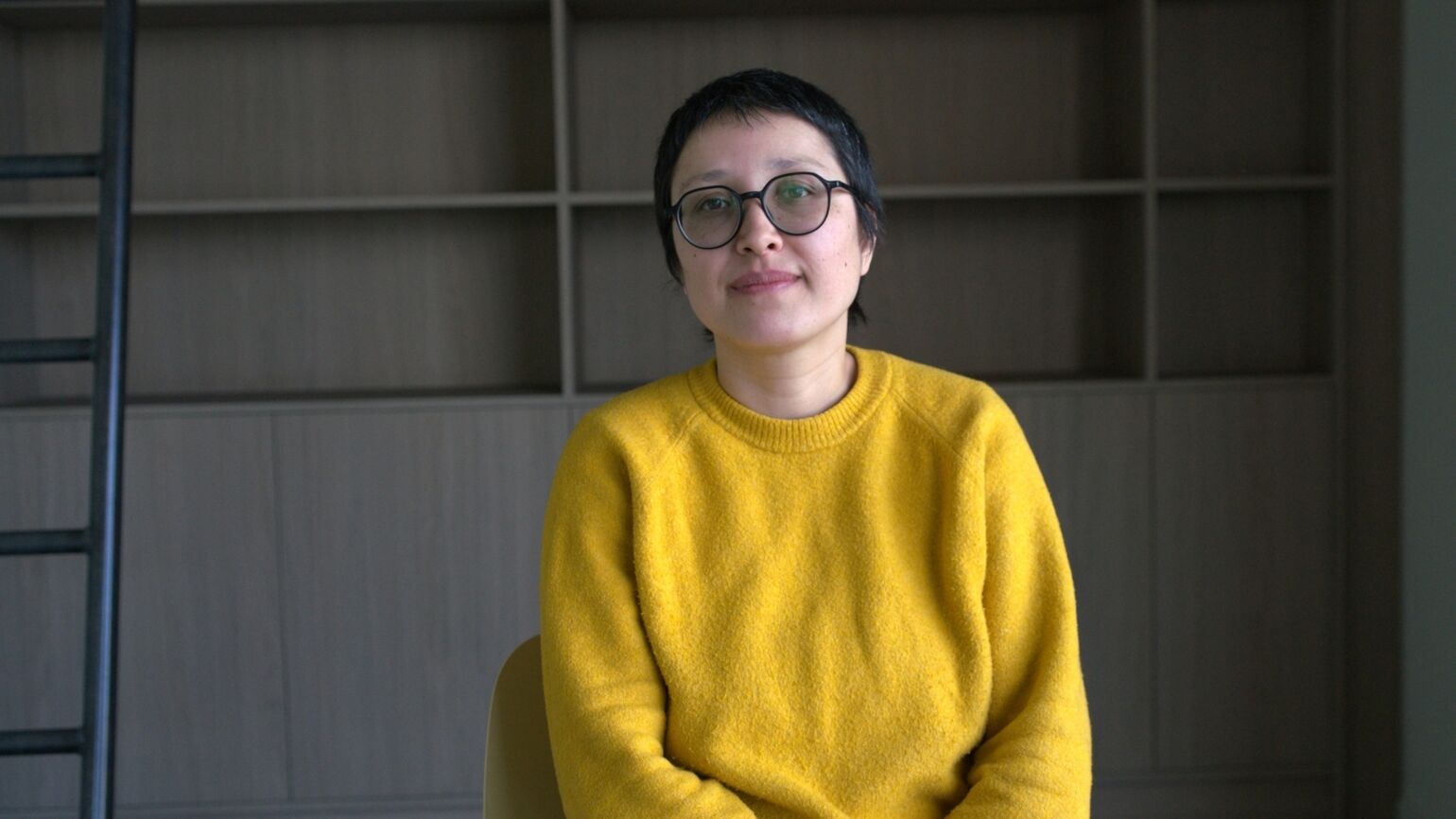
On January 30, 2026, the five short films supported by the fund had their world premieres at IFFR — marking the fund's first concrete results. The day after the premiere, those involved shared their reflections on the solidarity these films created and the possibilities this new fund represents. In the third installment of this series, Shahrbanoo Sadat, director of the short film Super Afghan Gym, which depicts the solidarity among women of different generations who gather at a gym in Kabul, Afghanistan, reflects on her experience with the Displacement Film Fund.
The Displacement Film Fund asked you to complete a film in just six months. Looking back, what was that experience like?
Six months is a fair amount of time, honestly. What usually takes the longest is development and writing — the actual production is the fast part. What was interesting is that when I got the call about this project, it didn't feel like starting from zero. As a filmmaker, you're always carrying ideas around with you. Things you want to shoot but don't have the location for, stories you're desperate to tell but the circumstances aren't right. You have this whole collection of ideas, and Super Afghan Gym was one of them. Right before this, I'd been working on a film where I had to recreate Kabul in Germany — indoors and outdoors — and it was really hard. So much of the budget goes to logistics, accommodation, transportation, and by the time you get to the actual art, there's almost nothing left. So I was already thinking about how wonderful it would be to make something more intimate, something focused on a single location. And then this call came, and I thought — this is it.
Was there a moment during the process — something you discovered while making the film?
I never want to have expectations going into a shoot. Because as a young woman director from Afghanistan, there's always an expectation of what kind of content you should be making — war, explosions, a man beating his wife. Nobody writes it down anywhere, but the market makes it clear. And that expectation has nothing to do with my reality. If I try to fulfill it, I'm being dishonest with myself. So I don't. For me, filmmaking is a process — it's how I find myself. I never know exactly what I'm saying at the start. I only understand what the film is about when it's done. That's why when people ask if I'm a political filmmaker, my answer is no. A political director starts with an agenda. I don't. With my previous film, I spent three years writing over ten drafts, and only at the end did I realize it was about patriarchy. I hadn't decided that at the beginning.
After completing the film, did anything shift for you — in how you think about the fund or the theme of displacement?
Displacement is my everyday life. Whether I want it to be or not, it's tied to my identity — it's how the world sees me. But what the fund gave me that mattered most was community. People from different countries and backgrounds coming together, each making work that comes from themselves — not from an agenda — and that community continuing to grow every year.
What first led you to believe that film and storytelling were the right way to respond to the world?
It was an accident. I never planned to be a filmmaker. I was born in Iran to Afghan parents, and the racism against Afghan refugees there is unbelievable. Even when I was in primary school, there was always the fear that a letter would arrive from the ministry saying Afghan students had to leave. And eventually that letter came, and I was kicked out — I was ten or eleven. We went back to Afghanistan, but there was almost no school there either. I ended up jumping several grades, and after high school I went to Kabul to study physics. My family was very religious, and science showed me a different reality — I loved it. But I took the wrong exam and ended up in the cinema and theater department. That's how I became a filmmaker. And then I fell in love with it through the process. The real turning point came four years ago, when we were evacuated from Afghanistan. I was sitting in a military plane looking at my parents. For me it was the first time leaving the country so dramatically, not knowing when we could return. For my parents it was the second time — the first was when the Soviets invaded. I was crying, and my dad looked at me and said, 'It's okay.' And in that moment I understood — it's my job to express what people like them can't express. People who don't have a platform, who don't have the skill or the emotional space to process what they've been through. That's what I'm here for. Filmmaking is an incredibly demanding job, emotionally. You have to absorb other people's pain. That's also why it matters that filmmakers take care of themselves.
What does "home" mean to you?
Honestly, for as long as I can remember, I've never felt at home anywhere. In Iran, in Afghanistan — everywhere, people were reminding me I didn't belong. But when I came to Germany, something clicked. I suddenly thought: wait. This feeling of not belonging anywhere — maybe this is home. Because if you don't belong to one place, you can belong to any place. Now I think Afghanistan can be my home, Iran can be my home, Germany can be my home. Wherever I live, I can be happy. All these ideas of belonging come from nationalism, from politics, from people who want to divide us. In the end, I want to feel at home in my body. I carry my body everywhere I go, so I can make every place home.
What stories do you feel most responsible for telling right now?
Stories that are truly meaningful to me — personal, honest ones. Things I've lived, or that people close to me have lived. I can't talk about what I don't know. When the Displacement Film Fund reached out, my first reaction was honestly: I don't want to make a film about refugees and immigrants. There are so many of those films that are one-dimensional, that emphasize sadness and victimhood. Even I, having lived as a refugee and immigrant my whole life, didn't want to be part of that. I feel the same way about films on women — there's so much surface-level, shallow treatment of the subject. But I've come to realize that displacement, refugees, immigrants, women — these are my topics. I need to claim that space and talk about them the way I actually think is right — honestly, bravely, on my own terms. What matters is being aware of expectations but not being enslaved by them. Believing in your own ideas matters more than being liked.
So that’s why your film’s humor really resonated with the audience.
Human beings find humor in even the most brutal circumstances — it's how we survive. In Afghanistan, people make jokes about suicide bombings. That's the coping mechanism. So when films portray refugees and immigrants as nothing but sad, that's actually dehumanizing them. Reality is so much more complex than that.
How was the world premiere on January 30th?
It was a very long, very emotional day. But what I loved most was that filmmakers — who normally exist in their own worlds, feeling isolated — were sitting next to each other. And when you talk to them, you realize they're dealing with the same things you are. If you're suffering from racism, the other person is experiencing it in a different form. And from that comes enormous strength, hope, and energy. Suffering together is better than suffering alone.
What do you think becomes visible when all five films are seen together?
Whether I'm telling an Afghan story, someone else a Somali story, another a Ukrainian story — at the root, we're all touching the same human condition, the same feelings. The context is different, but that's why it resonates with audiences. Being an outsider, being alone, being a woman in a patriarchal society — these are things everyone experiences. Today I was talking with Mo Harawe, and every ten seconds I was saying 'me too, me too.' There's something so powerful about hearing someone else express what you feel so deeply but can't quite put into words — and thinking, how is it possible that someone else can say it that well?
Born in Iran to Afghan parents, she returned to Afghanistan as a teenager and was based in Kabul before recently taking refuge in Germany. Her feature debut Wolf and Sheep won the top prize in the Directors' Fortnight at the 2016 Cannes Film Festival. Her autobiographical film No Good Men, in which she also stars, opened the 2026 Berlin International Film Festival. She is currently developing a new comedy film.
PEACE FOR ALL × Displacement Film Fund Collaboration
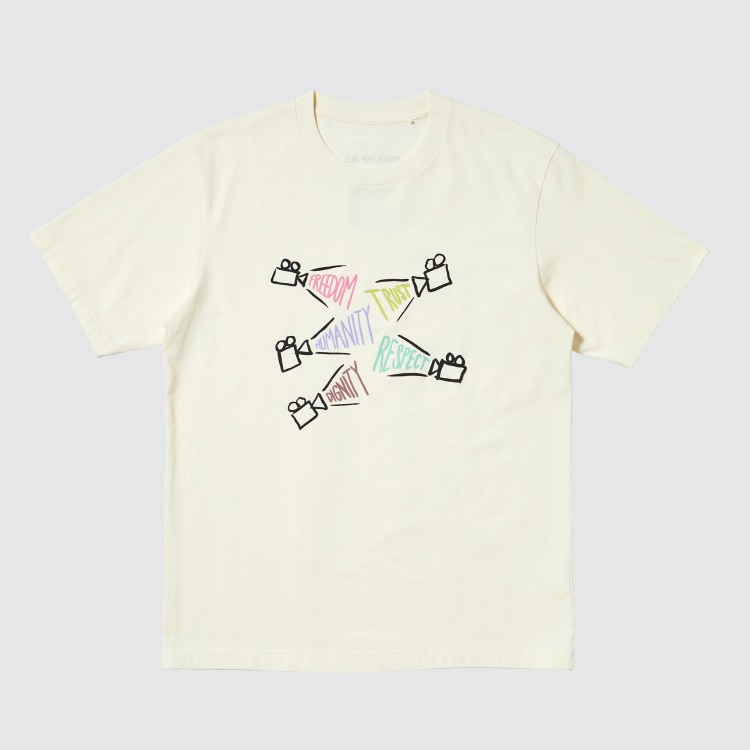
A collaborative T-shirt created by UNIQLO's charity T-shirt project PEACE FOR ALL and the Displacement Film Fund will go on sale Friday, June 19, 2026. The design draws on words about "peace" contributed by the five filmmakers supported by the fund, expressing through design the vision of using the power of cinema to bring the voices of displaced people to the world. Proceeds from this T-shirt will be donated to the Displacement Film Fund.
About the Displacement Film Fund
The Displacement Film Fund was established to support and fund the work of filmmakers who have been forcibly displaced, or who have a track record of telling stories about displacement. Co-created and led by UNHCR Goodwill Ambassador Cate Blanchett, the Fund was announced at the 54th International Film Festival Rotterdam (IFFR) in 2025, with MASTER MIND, UNIQLO, Droom en Daad, the Tamer Family Foundation, and the Amahoro Coalition as founding partners. The Hubert Bals Fund serves as operating partner, and UNHCR as strategic partner. At the 55th IFFR, Aarti Lohia and the SP Lohia Foundation were announced as new major partners, having pledged their support to the fund following the success of its pilot year.
For more information:
https://www.uniqlo.com/ph/en/special-feature/sustainability/displacement-film-fund
The Displacement Film Fund (DFF) was announced as a pilot initiative at the International Film Festival Rotterdam (IFFR) in 2025. The fund supports five filmmakers who have been forcibly displaced or whose work engages with that experience, providing each with 100,000 euros to produce a short film, along with the opportunity to premiere at IFFR. UNIQLO is among the founding partners.
On January 30, 2026, the five short films supported by the fund had their world premieres at IFFR — marking the fund's first concrete results. The day after the premiere, those involved shared their reflections on the solidarity these films created and the possibilities this new fund represents. In the third installment of this series, Shahrbanoo Sadat, director of the short film Super Afghan Gym, which depicts the solidarity among women of different generations who gather at a gym in Kabul, Afghanistan, reflects on her experience with the Displacement Film Fund.
The Displacement Film Fund asked you to complete a film in just six months. Looking back, what was that experience like?
Six months is a fair amount of time, honestly. What usually takes the longest is development and writing — the actual production is the fast part. What was interesting is that when I got the call about this project, it didn't feel like starting from zero. As a filmmaker, you're always carrying ideas around with you. Things you want to shoot but don't have the location for, stories you're desperate to tell but the circumstances aren't right. You have this whole collection of ideas, and Super Afghan Gym was one of them. Right before this, I'd been working on a film where I had to recreate Kabul in Germany — indoors and outdoors — and it was really hard. So much of the budget goes to logistics, accommodation, transportation, and by the time you get to the actual art, there's almost nothing left. So I was already thinking about how wonderful it would be to make something more intimate, something focused on a single location. And then this call came, and I thought — this is it.
Was there a moment during the process — something you discovered while making the film?
I never want to have expectations going into a shoot. Because as a young woman director from Afghanistan, there's always an expectation of what kind of content you should be making — war, explosions, a man beating his wife. Nobody writes it down anywhere, but the market makes it clear. And that expectation has nothing to do with my reality. If I try to fulfill it, I'm being dishonest with myself. So I don't. For me, filmmaking is a process — it's how I find myself. I never know exactly what I'm saying at the start. I only understand what the film is about when it's done. That's why when people ask if I'm a political filmmaker, my answer is no. A political director starts with an agenda. I don't. With my previous film, I spent three years writing over ten drafts, and only at the end did I realize it was about patriarchy. I hadn't decided that at the beginning.
After completing the film, did anything shift for you — in how you think about the fund or the theme of displacement?
Displacement is my everyday life. Whether I want it to be or not, it's tied to my identity — it's how the world sees me. But what the fund gave me that mattered most was community. People from different countries and backgrounds coming together, each making work that comes from themselves — not from an agenda — and that community continuing to grow every year.
What first led you to believe that film and storytelling were the right way to respond to the world?
It was an accident. I never planned to be a filmmaker. I was born in Iran to Afghan parents, and the racism against Afghan refugees there is unbelievable. Even when I was in primary school, there was always the fear that a letter would arrive from the ministry saying Afghan students had to leave. And eventually that letter came, and I was kicked out — I was ten or eleven. We went back to Afghanistan, but there was almost no school there either. I ended up jumping several grades, and after high school I went to Kabul to study physics. My family was very religious, and science showed me a different reality — I loved it. But I took the wrong exam and ended up in the cinema and theater department. That's how I became a filmmaker. And then I fell in love with it through the process. The real turning point came four years ago, when we were evacuated from Afghanistan. I was sitting in a military plane looking at my parents. For me it was the first time leaving the country so dramatically, not knowing when we could return. For my parents it was the second time — the first was when the Soviets invaded. I was crying, and my dad looked at me and said, 'It's okay.' And in that moment I understood — it's my job to express what people like them can't express. People who don't have a platform, who don't have the skill or the emotional space to process what they've been through. That's what I'm here for. Filmmaking is an incredibly demanding job, emotionally. You have to absorb other people's pain. That's also why it matters that filmmakers take care of themselves.
What does "home" mean to you?
Honestly, for as long as I can remember, I've never felt at home anywhere. In Iran, in Afghanistan — everywhere, people were reminding me I didn't belong. But when I came to Germany, something clicked. I suddenly thought: wait. This feeling of not belonging anywhere — maybe this is home. Because if you don't belong to one place, you can belong to any place. Now I think Afghanistan can be my home, Iran can be my home, Germany can be my home. Wherever I live, I can be happy. All these ideas of belonging come from nationalism, from politics, from people who want to divide us. In the end, I want to feel at home in my body. I carry my body everywhere I go, so I can make every place home.
What stories do you feel most responsible for telling right now?
Stories that are truly meaningful to me — personal, honest ones. Things I've lived, or that people close to me have lived. I can't talk about what I don't know. When the Displacement Film Fund reached out, my first reaction was honestly: I don't want to make a film about refugees and immigrants. There are so many of those films that are one-dimensional, that emphasize sadness and victimhood. Even I, having lived as a refugee and immigrant my whole life, didn't want to be part of that. I feel the same way about films on women — there's so much surface-level, shallow treatment of the subject. But I've come to realize that displacement, refugees, immigrants, women — these are my topics. I need to claim that space and talk about them the way I actually think is right — honestly, bravely, on my own terms. What matters is being aware of expectations but not being enslaved by them. Believing in your own ideas matters more than being liked.
So that’s why your film’s humor really resonated with the audience.
Human beings find humor in even the most brutal circumstances — it's how we survive. In Afghanistan, people make jokes about suicide bombings. That's the coping mechanism. So when films portray refugees and immigrants as nothing but sad, that's actually dehumanizing them. Reality is so much more complex than that.
How was the world premiere on January 30th?
It was a very long, very emotional day. But what I loved most was that filmmakers — who normally exist in their own worlds, feeling isolated — were sitting next to each other. And when you talk to them, you realize they're dealing with the same things you are. If you're suffering from racism, the other person is experiencing it in a different form. And from that comes enormous strength, hope, and energy. Suffering together is better than suffering alone.
What do you think becomes visible when all five films are seen together?
Whether I'm telling an Afghan story, someone else a Somali story, another a Ukrainian story — at the root, we're all touching the same human condition, the same feelings. The context is different, but that's why it resonates with audiences. Being an outsider, being alone, being a woman in a patriarchal society — these are things everyone experiences. Today I was talking with Mo Harawe, and every ten seconds I was saying 'me too, me too.' There's something so powerful about hearing someone else express what you feel so deeply but can't quite put into words — and thinking, how is it possible that someone else can say it that well?
Born in Iran to Afghan parents, she returned to Afghanistan as a teenager and was based in Kabul before recently taking refuge in Germany. Her feature debut Wolf and Sheep won the top prize in the Directors' Fortnight at the 2016 Cannes Film Festival. Her autobiographical film No Good Men, in which she also stars, opened the 2026 Berlin International Film Festival. She is currently developing a new comedy film.
PEACE FOR ALL × Displacement Film Fund Collaboration
A collaborative T-shirt created by UNIQLO's charity T-shirt project PEACE FOR ALL and the Displacement Film Fund will go on sale Friday, June 19, 2026. The design draws on words about "peace" contributed by the five filmmakers supported by the fund, expressing through design the vision of using the power of cinema to bring the voices of displaced people to the world. Proceeds from this T-shirt will be donated to the Displacement Film Fund.
About the Displacement Film Fund
The Displacement Film Fund was established to support and fund the work of filmmakers who have been forcibly displaced, or who have a track record of telling stories about displacement. Co-created and led by UNHCR Goodwill Ambassador Cate Blanchett, the Fund was announced at the 54th International Film Festival Rotterdam (IFFR) in 2025, with MASTER MIND, UNIQLO, Droom en Daad, the Tamer Family Foundation, and the Amahoro Coalition as founding partners. The Hubert Bals Fund serves as operating partner, and UNHCR as strategic partner. At the 55th IFFR, Aarti Lohia and the SP Lohia Foundation were announced as new major partners, having pledged their support to the fund following the success of its pilot year.
For more information:
https://www.uniqlo.com/ph/en/special-feature/sustainability/displacement-film-fund