

The Stylish World of Monchhichi
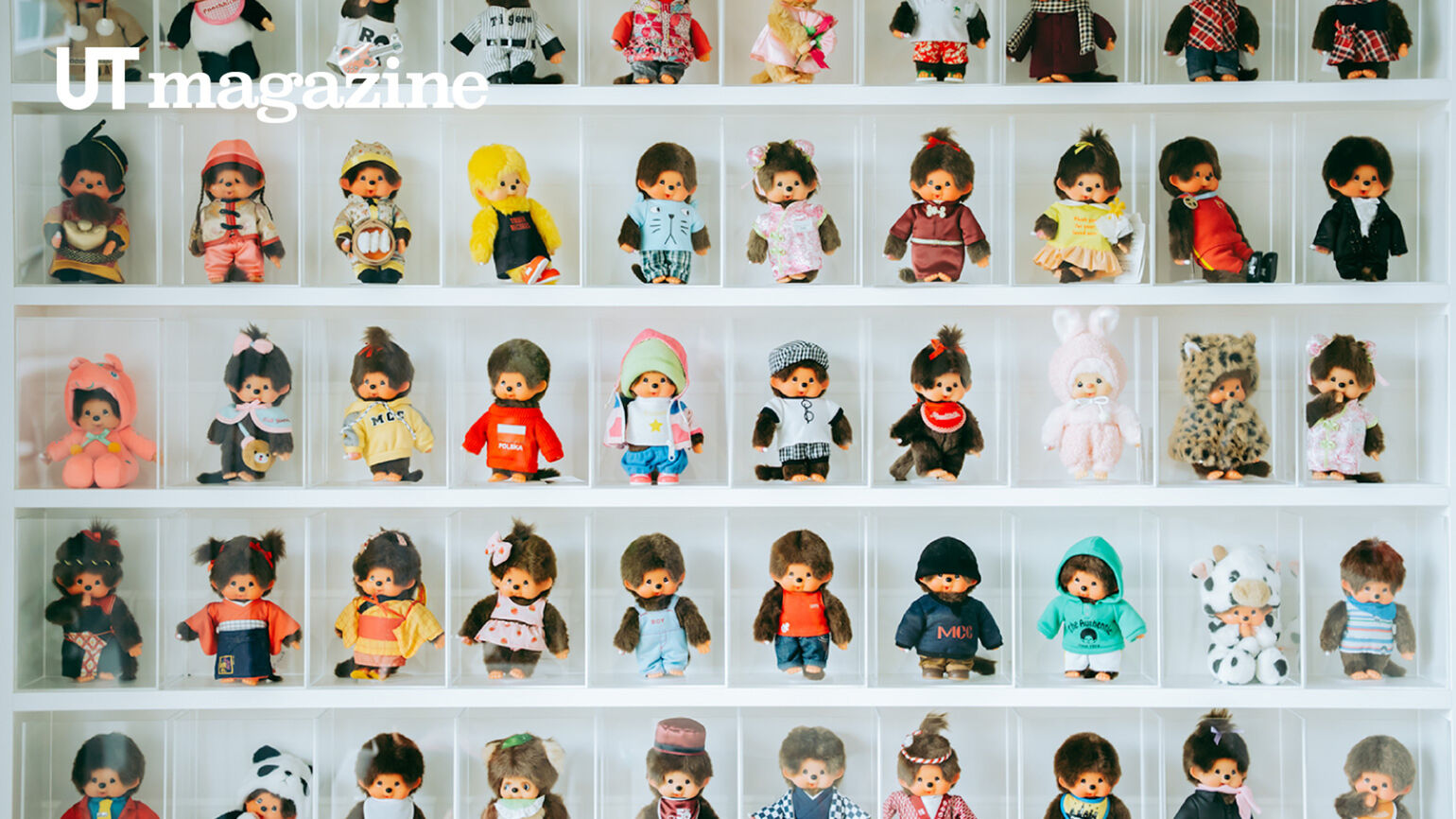
At Sekiguchi's headquarters in Katsushika, Tokyo, a whole wall is filled with Monchhichi and friends styled in all kinds of fashion.
View items
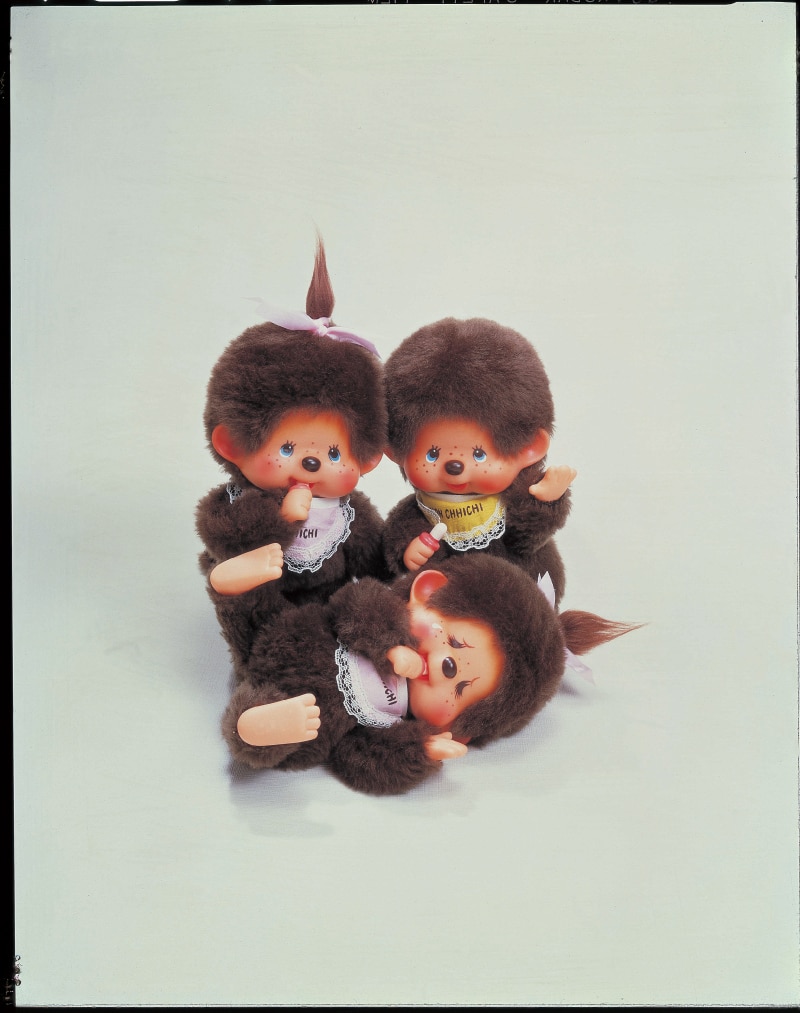
The original Monchhichi-kun from 1974 alongside a teary-eyed Monchhichi-chan. Early models had blue eyes.
Monchhichi Through the Years
When you think of Monchhichi, you think of those unchanged hallmarks — the thumb-sucking pose, the freckles, the little bib around the neck — all there since day one. On first impression, hardly anything seems different, but across its 52-year journey, Monchhichi has gone through subtle update after subtle update to keep pace with each era.
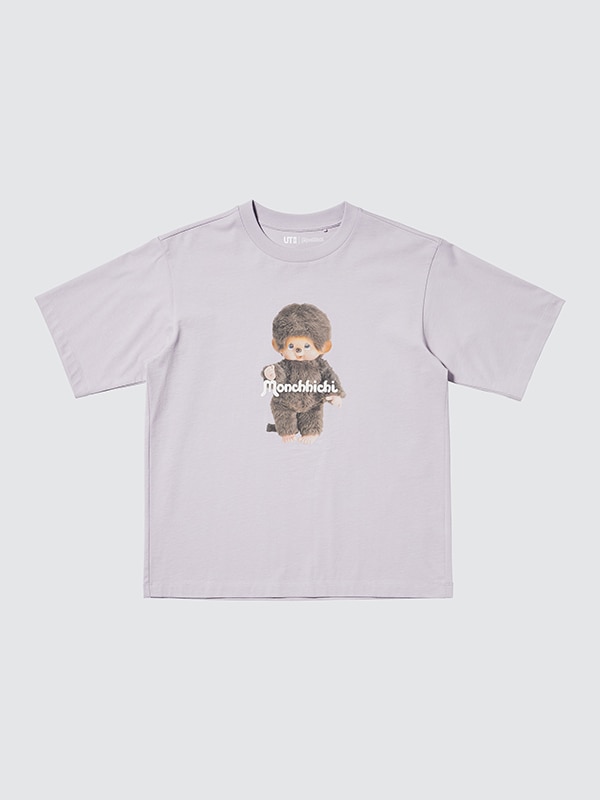
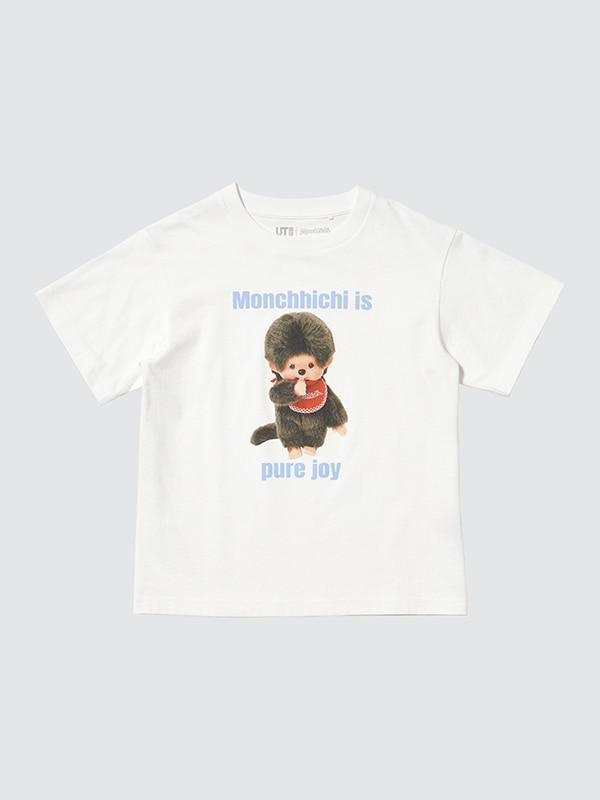
If you take a closer look at the vintage Monchhichi printed on the UT tee, you'll notice he has blue eyes. That's because Sekiguchi originally made dolls for export to Europe, so blue eyes came first. Down the line, the eyes were redesigned in brown to better reflect Monchhichi's Japanese roots.
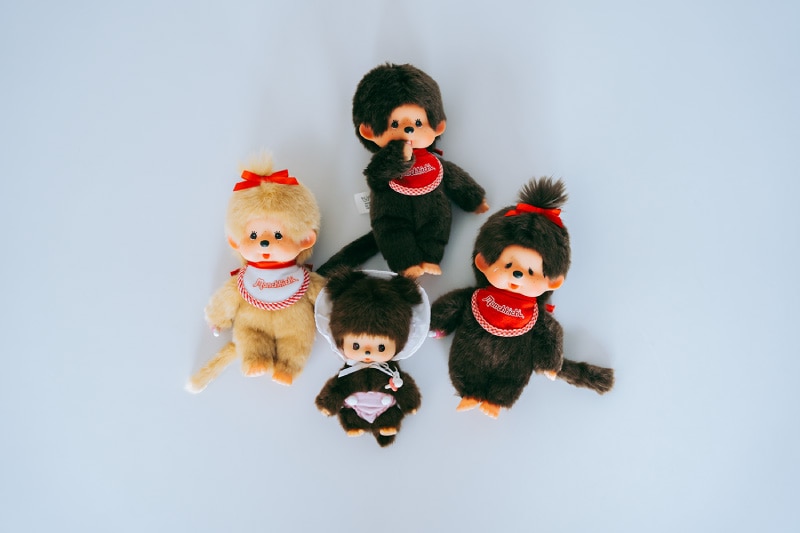
The Standard Series — alongside the classic brown Monchhichi, a beige variation has been added to the family.
The skin tone has also been refreshed with a more modern eye in mind. It used to lean reddish to give off a healthy, lively impression, but the current shade is a softer, more neutral tone. "With the original skin color, you'd actually find it tricky to match certain outfits. Pale clothes or pastel-colored sets just wouldn't quite click. So we lightened the skin tone to make sure it pairs well with any color," Hatano explains. That shift opened the door to Monchhichi pulling off all kinds of new looks.
The fur has been refined as well — now made from a smoother, softer boa material, in keeping with the growing trend toward plushies that feel great to the touch. The team puts genuine care into creating that "you'll want to keep stroking it forever" texture that makes you want to bring it everywhere. And in 2016, to meet a wider range of fan tastes, a beige version joined the standard brown lineup.
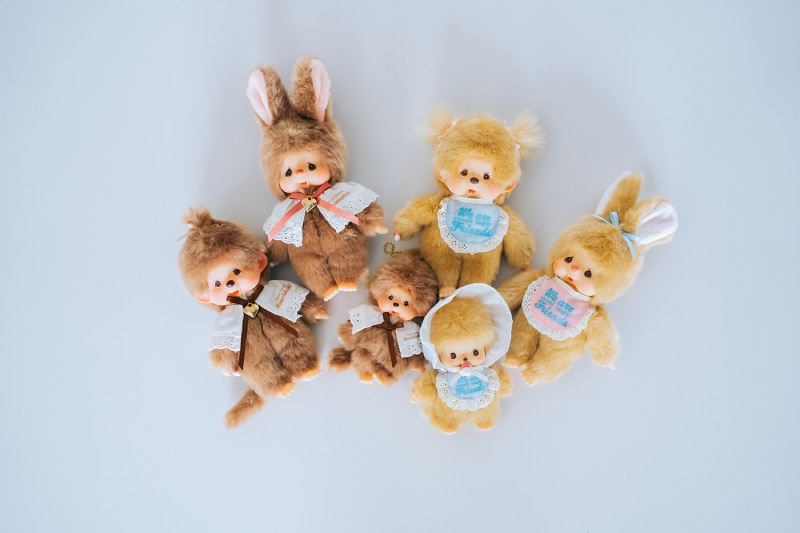
The "Sweet Sugar" series, with a girly design built around sugar pink and pastel blue, plus Monchhichi, Bebichhichi, and Chimutan in soft, muted-tone boa with lacy capes.
The World Expands with Friends
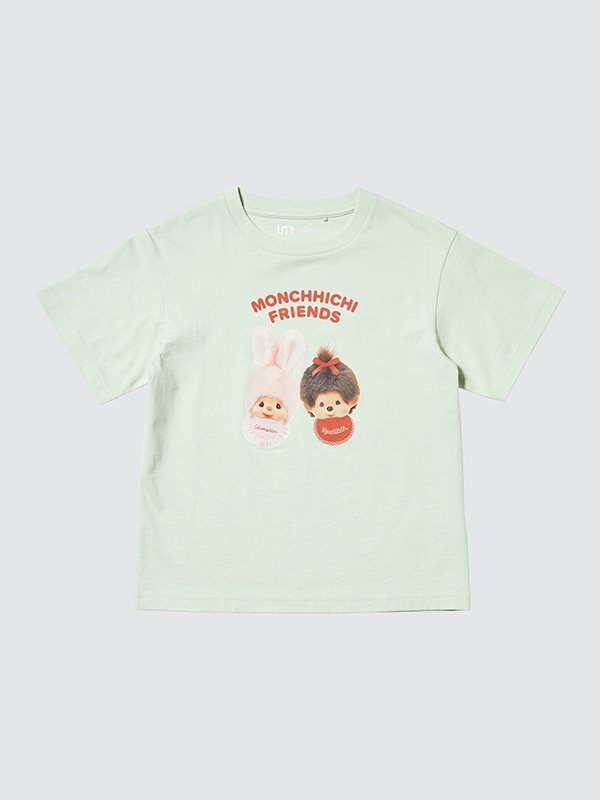
Around the same time Monchhichi was born, a whole crew of friends arrived alongside in the 1970s — Chimutan the bunny girl, Tanutanu the raccoon boy, Kuma the cheerful bear boy, and Chamu the sheep girl — and they're all still part of the cast today. Then, for the 30th anniversary, Monchhichi-kun and Monchhichi-chan got married! Their twin babies, the "Bebichhichi," joined the family.
Bebichhichi's charm is all in that baby-like innocence. Their everyday outfits stick to pastel and soft, gentle hues, with a fluffy, cozy feel. The face still carries the freckles and thumb-sucking pose that make a Monchhichi, a Monchhichi, but the eyes are designed to bring out even more of that endearing charm. One more detail: while Monchhichi sucks on a thumb, Bebichhichi wears their pacifier on a cord around the neck.
Chimutan, a fan of strawberries and fashion, adds something the original Monchhichi cast doesn't have — a pink, sweet vibe and that distinctly bunny-style girlish cuteness. Imagined for women and younger fans drawn to the "kawaii" aesthetic, her line features lace touches and softly muted pale-tone color palettes. Friend characters like these have helped open up the Monchhichi world into something richer and more diverse.
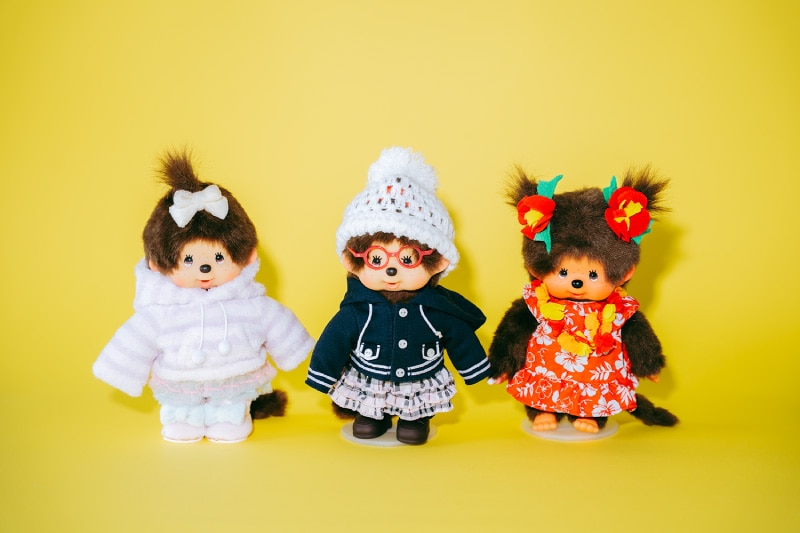
From the fluffy styles of the 2010s to the Shibuya/Harajuku streetstyle and Hawaiian muumuu — Monchhichi-chan rocks trendy fashion and traditional outfits from around the world with ease.
Monchhichi, the Style Icon
Because Monchhichi has been fine-tuned over the years to look great in clothes, the character has worn just about every type of outfit imaginable — current trends, traditional dress, sportswear, even uniforms. That ability to fit into any style is one of Monchhichi's biggest charms. So what led to Monchhichi wearing so many different kinds of clothes in the first place?
"Monchhichi came from an earlier toy called Kutakuta Monkey and grew cuter in the process, with dress-up play built into the experience right from the first release. That's why outfit lineups like the Dress Series and the Boutique Series have always been part of what we offer."
After the relaunch in 1996, the focus shifted: alongside the dress-up doll side, fashion-forward series themselves became the main draw. The 2005 Tokyo Fashion Series, for example, captured the trends of the moment — Lolita, flashy office-lady looks, even otaku boys — through Monchhichi styling. Add in the costumes that turn Monchhichi into other animals or anime characters, and you've got a plushie that lets you play dress-up more freely than just about any other.
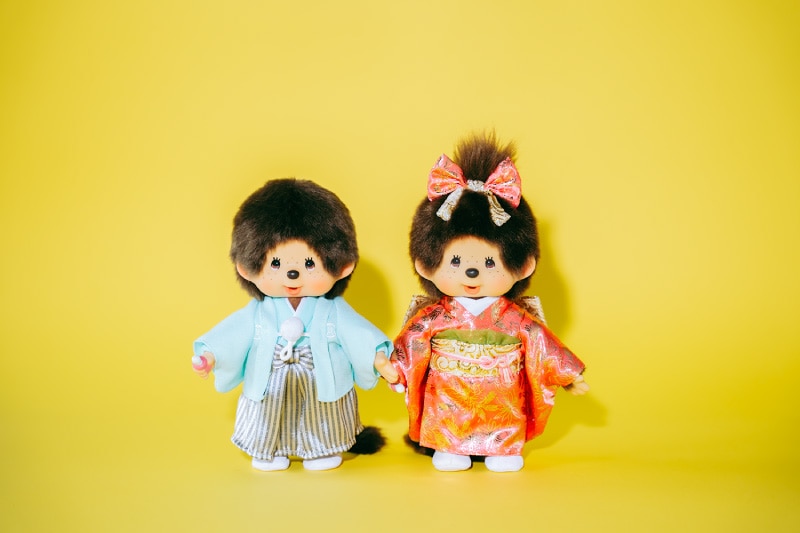
Monchhichi-chan in a furisode kimono and Monchhichi-kun in a montsuki hakama. Though elaborate outfit lineups have grown rarer recently, T-shirts and kimonos with Japanese-style designs remain hugely popular with fans overseas.
"No matter what they wear, no matter what they become, Monchhichi is still Monchhichi — they have this incredible power to stay themselves. Anime characters with original source material come with personalities and backstories, but Monchhichi doesn't. The person who welcomes a Monchhichi home builds the story and the relationship — they become like family or a friend. If there are 1,000 owners, there are 1,000 different Monchhichis, each with their own name and personality. Each one wears their own kind of style."
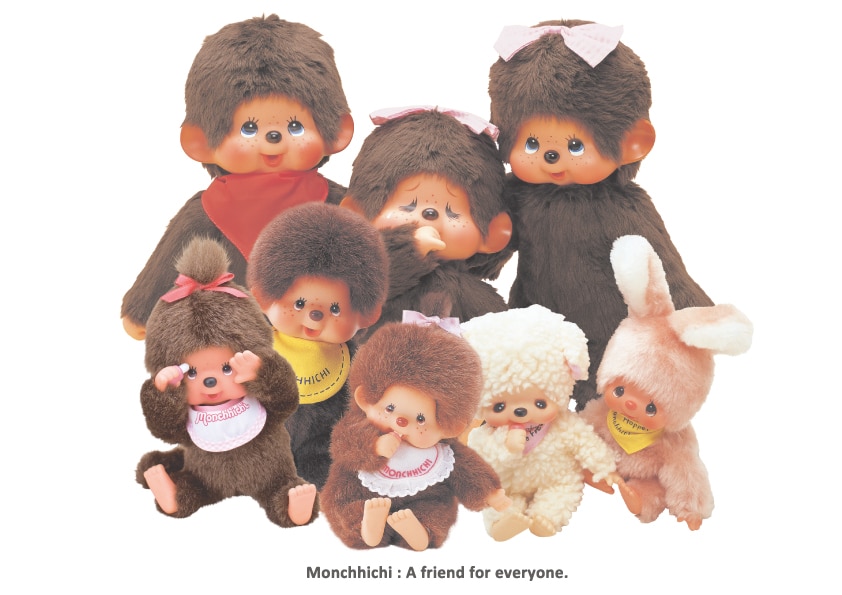
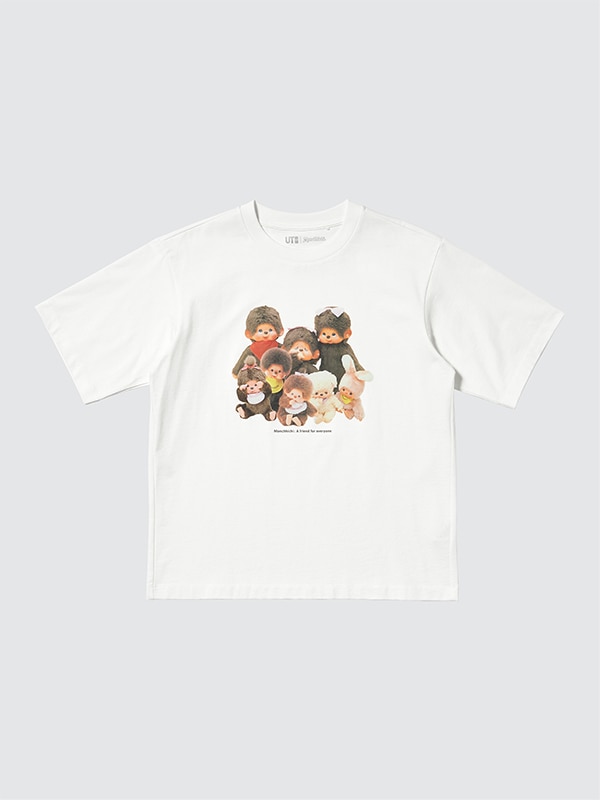
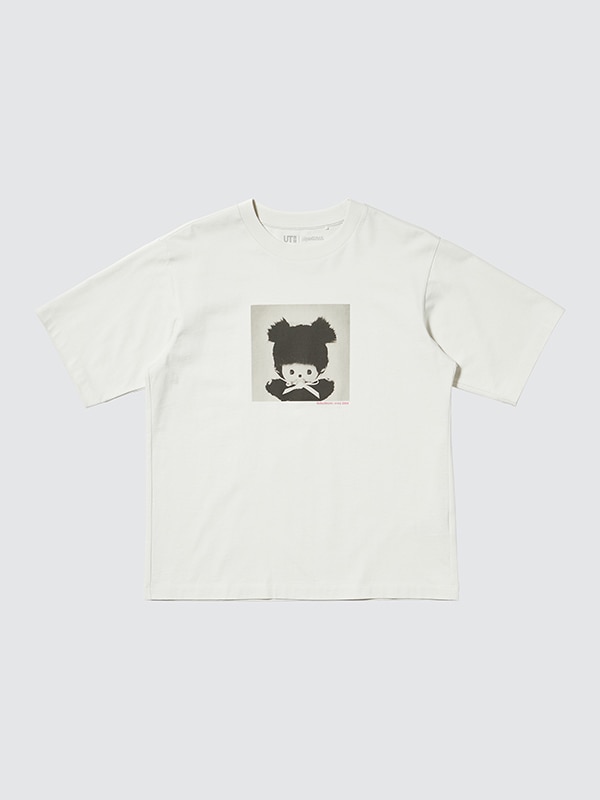
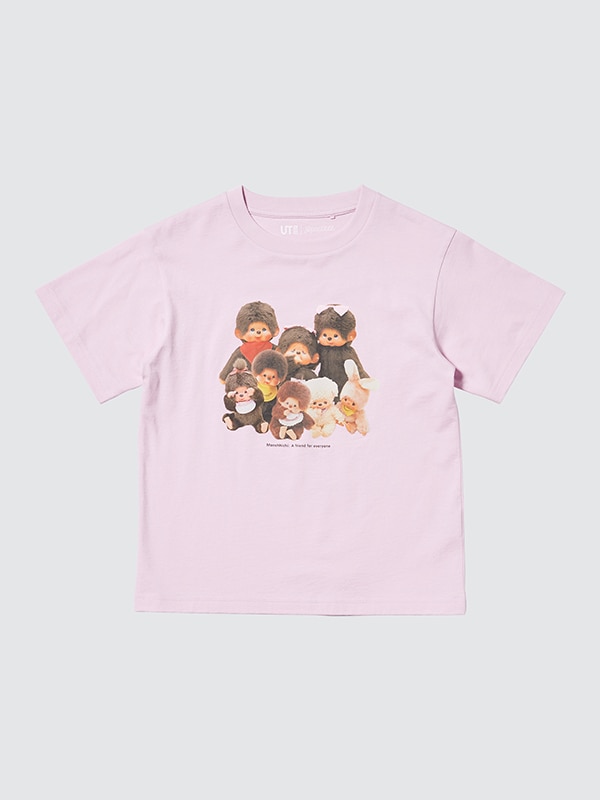
The UT Collection brings together everyone — from the retro pieces of the late '70s and early '80s to every generation of Monchhichi.
New Audiences, New Collaborations
A character who can wear any style is one that keeps stepping into new spotlights. Monchhichi has collaborated with a wide variety of brands and artists across industries — fashion, cosmetics, beverage makers, and beyond.
"Monchhichi has a unique construction — a plush body, with a face and limbs made of soft vinyl, like a doll. The balance between the face and forehead is one of a kind, so even when most of the face is hidden under a costume, somehow that 'Monchhichi essence' still comes through," Hatano says. So long as the result captures that sense of cuteness, Monchhichi can take on all kinds of looks — and that flexibility is one of the big secrets behind the character's appeal. At the foundation of it all is Sekiguchi's deep love for Monchhichi.
"For 10 years, sales were paused, and during that time Monchhichi disappeared from store shelves across Japan — basically gone from the world. After the relaunch in 1996, through the early 2000s, Monchhichi was the kind of character people felt nostalgic about. But to become more than just a fleeting trend — to stay a familiar presence in people's lives — you have to keep showing up, keep being visible. Through collaborations spanning different industries, we want to bring Monchhichi to the customers of both companies involved, help people rediscover the character, and welcome in new fans. The most important thing for Monchhichi is being welcomed into more homes and being loved 100 years down the line. Appearing in all sorts of products opens up new chances for people to meet Monchhichi — and at the same time, it's exciting to see new Monchhichis born in places we couldn't have reached on our own."
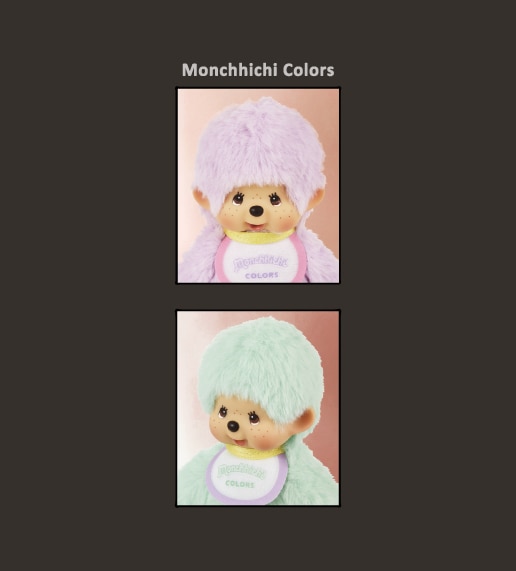
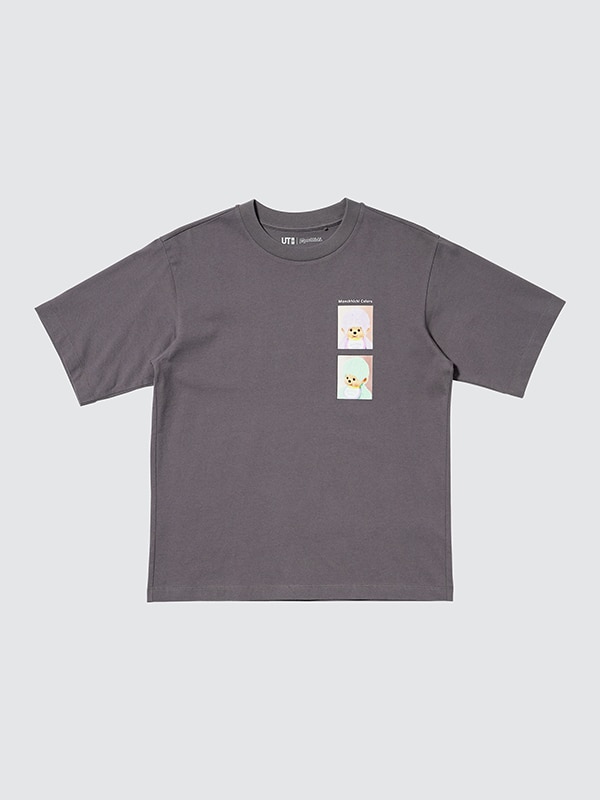
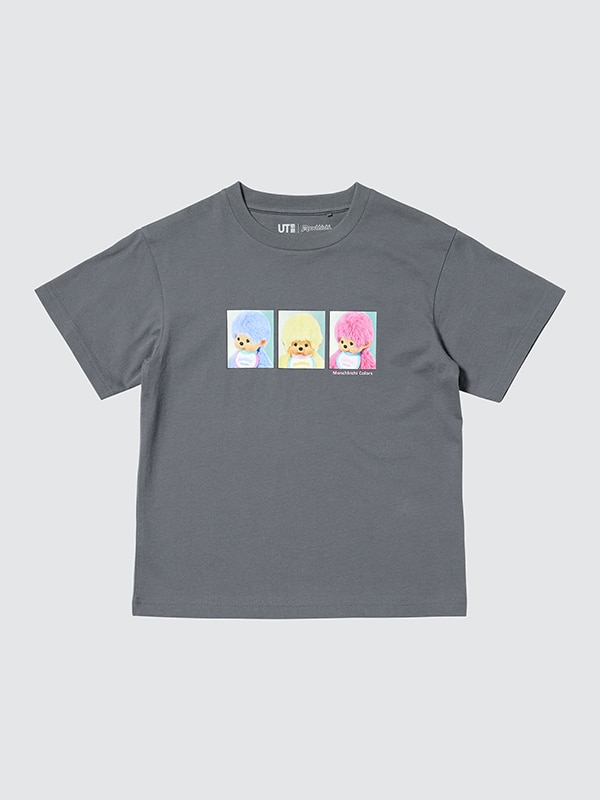
The eye-catching pop pastels of "Monchhichi COLORS."
Monchhichi, Now a Fashion Statement
Thanks to that proactive approach to collaboration, Monchhichi's reach has gone further across the globe, especially around the time of the 50th anniversary in 2024. Asian idols and influencers featuring the character on social media helped open the door to a new, younger audience — and the keychains in particular have become so popular that new releases sell out almost as soon as they're available.
Monchhichi has always been one to dress up and team up with apparel brands, but lately the trend has shifted: people now incorporate Monchhichi itself as part of their outfit. To meet that demand, existing charms have been redesigned to attach more easily to bags, with a compact, easy-to-carry size and cleaner designs — pitching Monchhichi as a "plushie you wear." On top of that, there's now a color lineup that follows current fashion trends, plus "Monchhichi COLORS," which lets fans pick the color that matches their ‘oshi’ as part of the fan-culture wave.
"Our hope is for Monchhichi to be the kind of presence where simply wearing or carrying one feels stylish in itself, so the new young fans we've welcomed will keep loving the character for a long time. Through collaborations across different industries, we don't want this to wrap up as a one-time trend — we want Monchhichi to remain one of the choices people reach for, always. With this UT Collection, having Monchhichi printed onto T-shirts as part of the design — letting people 'wear' Monchhichi as fashion — really makes us happy."
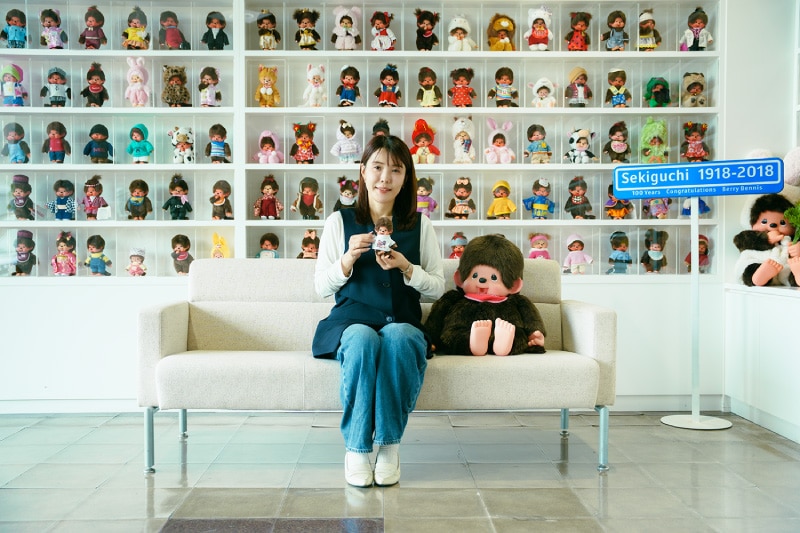
Yuki Hatano, Senior Manager of the IP Division.
© 2026 Sekiguchi Co.,Ltd.
All items