

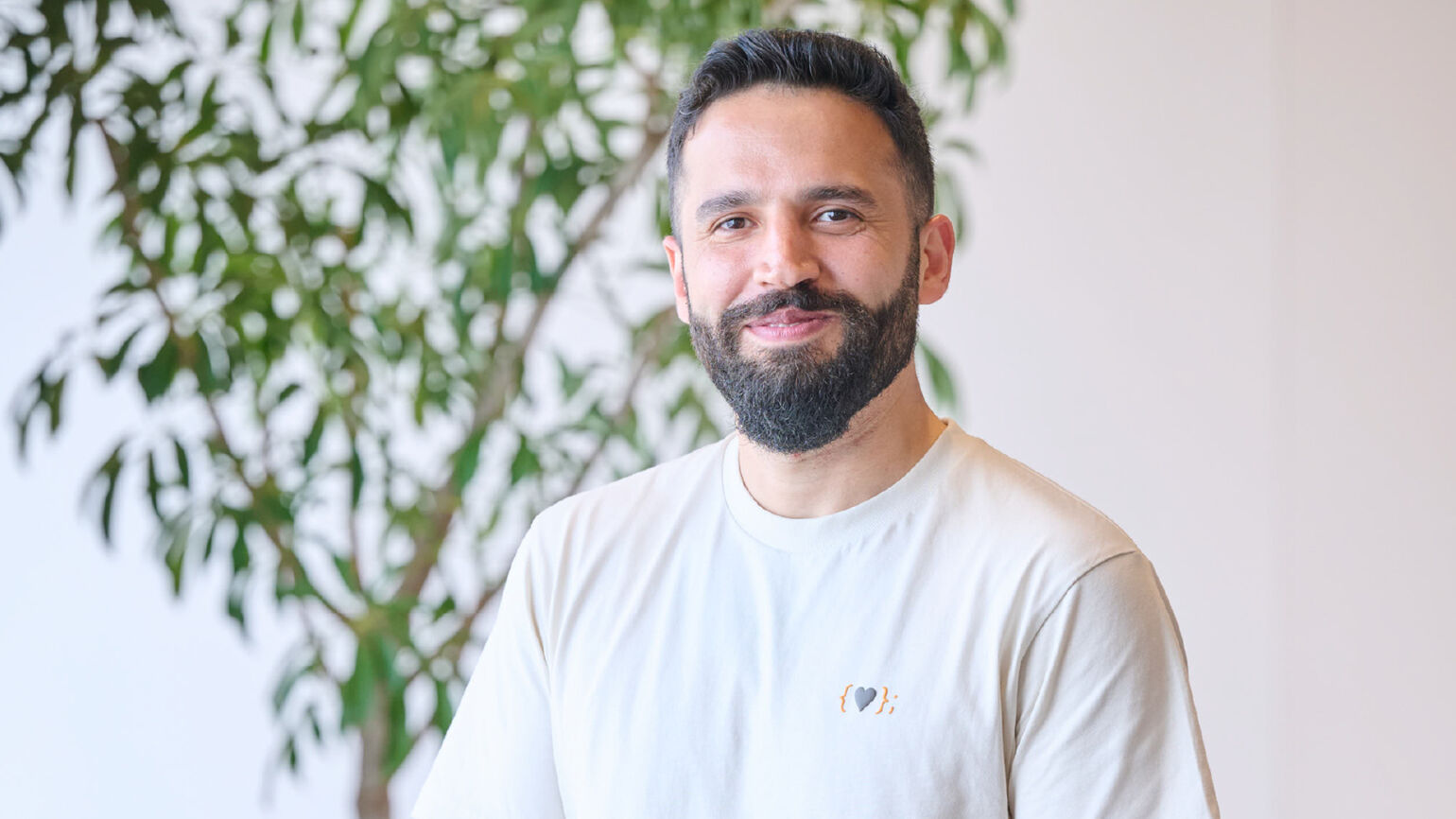
Filming Displacement. Interview with Director Hasan Kattan — Displacement Film Fund
Jan 05, 2026
NEWS
UNIQLO is proud to support the Displacement Film Fund, an initiative dedicated to amplifying the voices of filmmakers whose careers have been disrupted by displacement, or who have a proven record of portraying the refugee experience through film. As a founding partner, UNIQLO has donated €100,000 to help bring these urgent stories from the periphery into the spotlight and broaden understanding towards refugees and displaced people.
How has Syrian film director Hasan Kattan, one of the five inaugural grant recipients of the Displacement Film Fund, approached filming the Syrian uprising affecting his homeland? We spoke about shooting a documentary in a war zone and his next project, currently underway in London.
Tell us about the journey leading up to you becoming a film director.
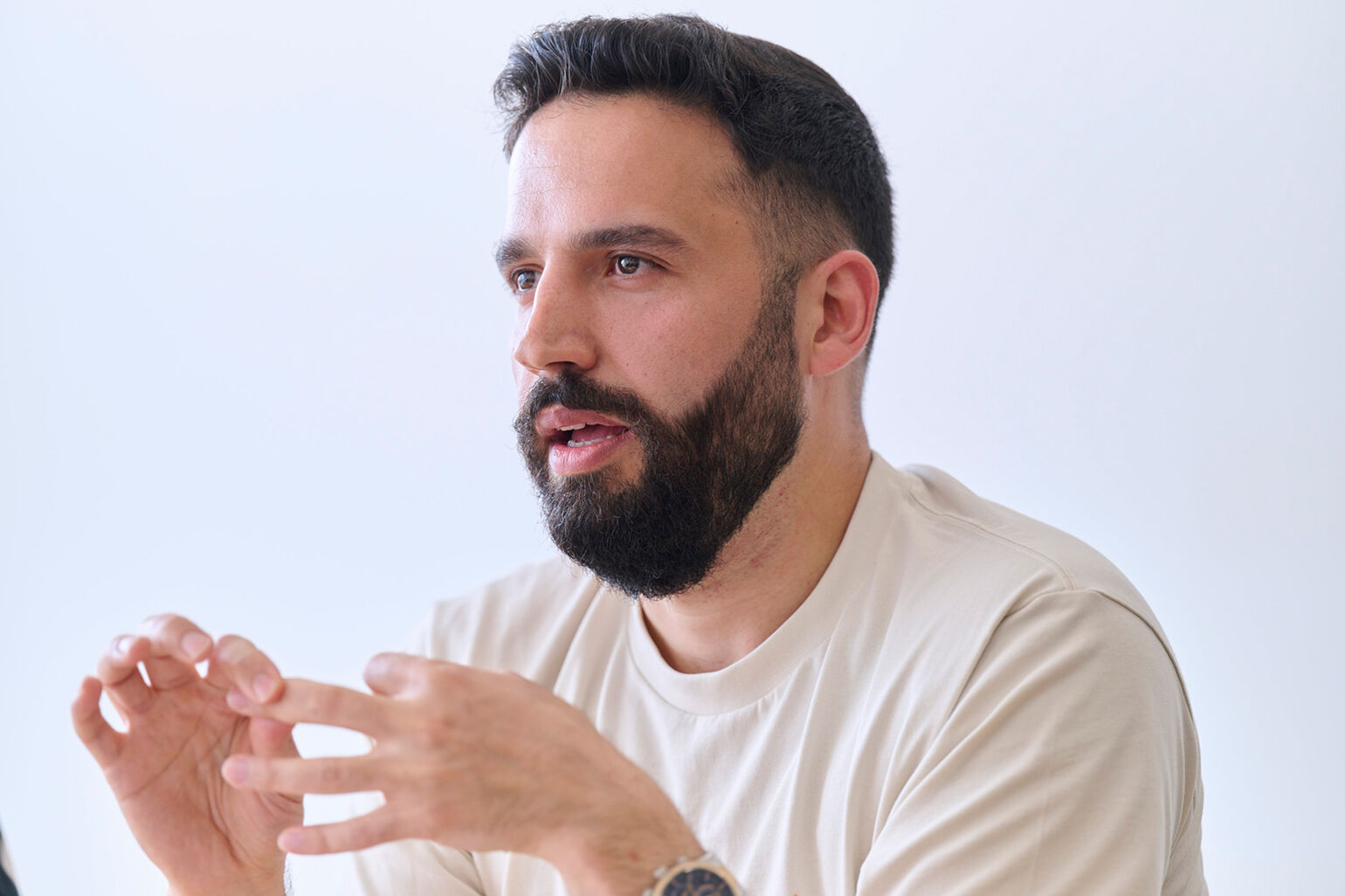
I was born in 1992 in Aleppo, a city in northern Syria. My early life was very normal. As a kid, things were still peaceful. I spent hours and hours glued to the TV watching Japanese anime like Detective Conan, Pokémon, Dragon Ball, and One Piece. Attending college in Syria, I studied law. This was around 2011. People in Syria were getting more outspoken about their desire for liberty and democracy. There were even peaceful demonstrations in Aleppo. I was swept up in this movement and took part in demonstrations.
When the revolution started in 2011, I began filming what I saw using just my smartphone. I felt a duty to document what was happening - to share the truth with the outside world.
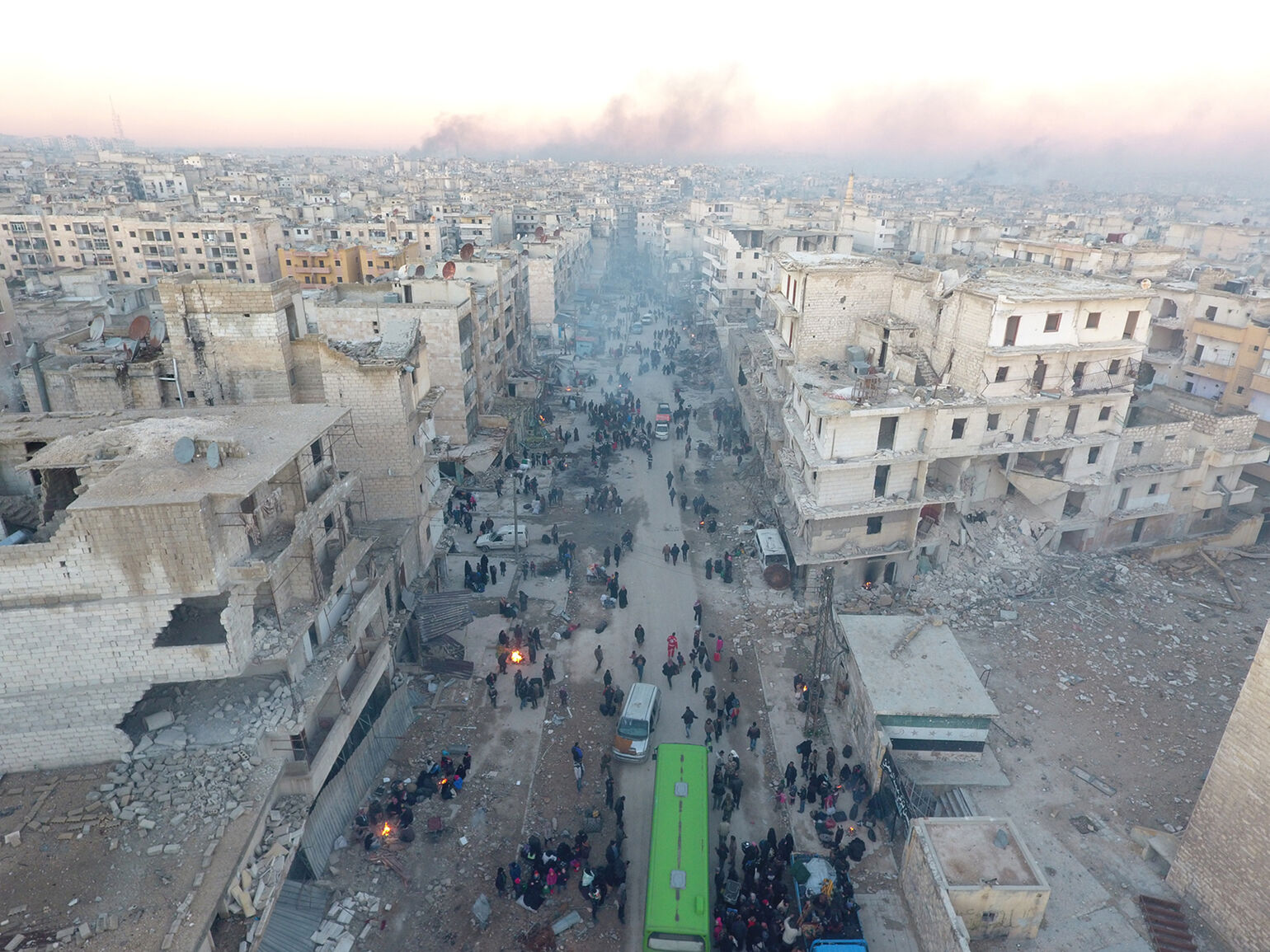
Aleppo, December 2016 — families from besieged Eastern Aleppo waiting at the Ramouseh crossing during the evacuation agreement after six months of siege. Thousands of families sat on the ground for hours in dire humanitarian conditions, waiting for the “green buses” and the Red Crescent and ICRC convoys to evacuate them from the city. Rights holder: AMC (Hasan Kattan – Aleppo Media Center)
I became one of the co-founders of the Aleppo Media Center, a collective of citizen journalists and professional media workers. Together, we worked to capture and broadcast the realities on the ground: war crimes, destruction, and life under siege. For us, storytelling wasn’t just survival - it was resistance.
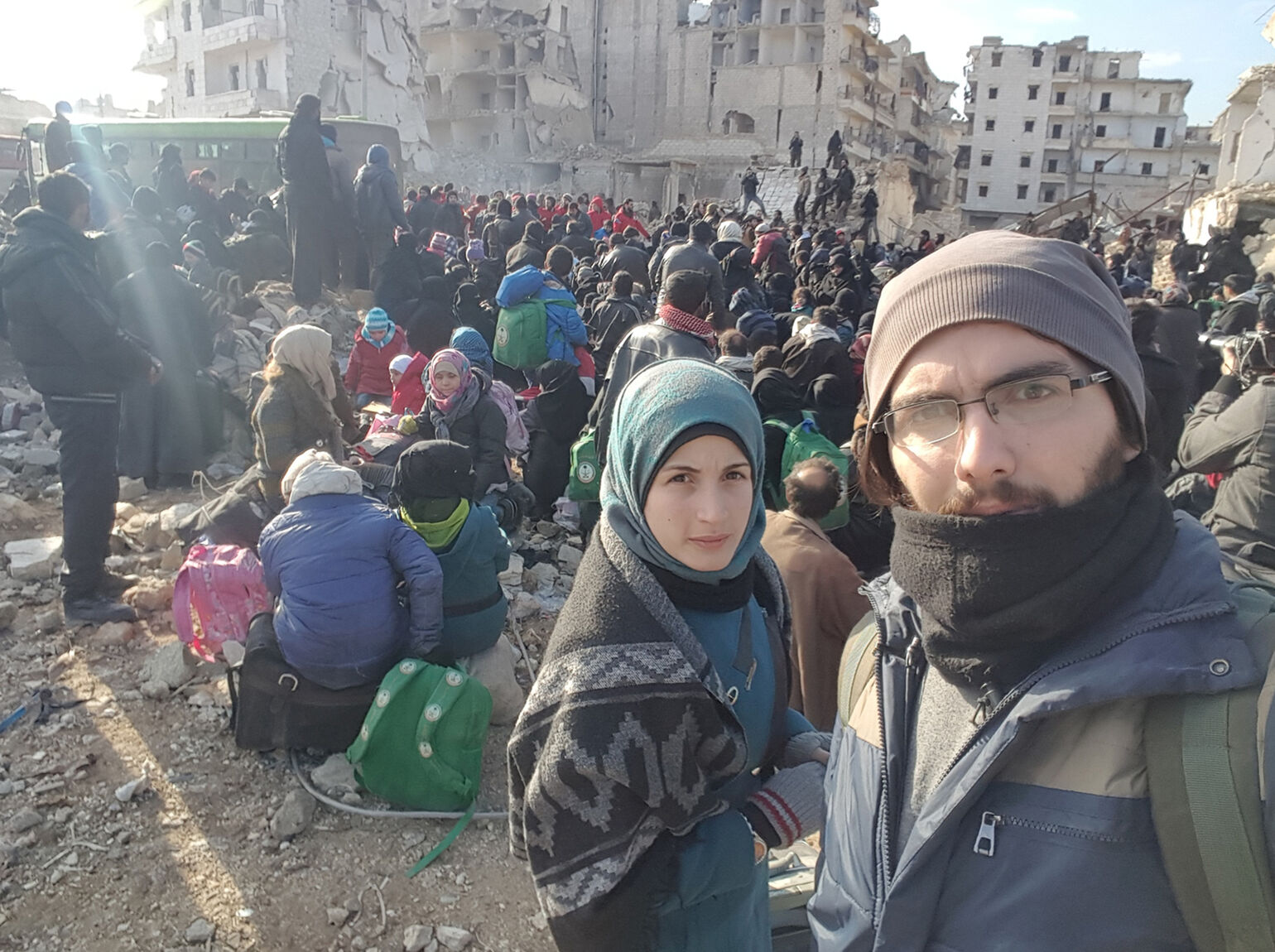
“We Will Return My Love” Aleppo, December 2016 — Saleh and Marwa, protagonists of a short film about a love story between a couple who married during the siege and were later forced to leave their city. The photo was taken as they waited for the green buses to begin the evacuation process after the bombardment and siege. Rights holder: AMC (Saleh Hasnawi – Aleppo Media Center)
What made you move from news reportage into documentary filmmaking?
As a news editor and journalist, I had worked with the BBC, Channel 4, Al Jazeera English, and various international NGOs. I found it absolutely crucial to continue with reporting.
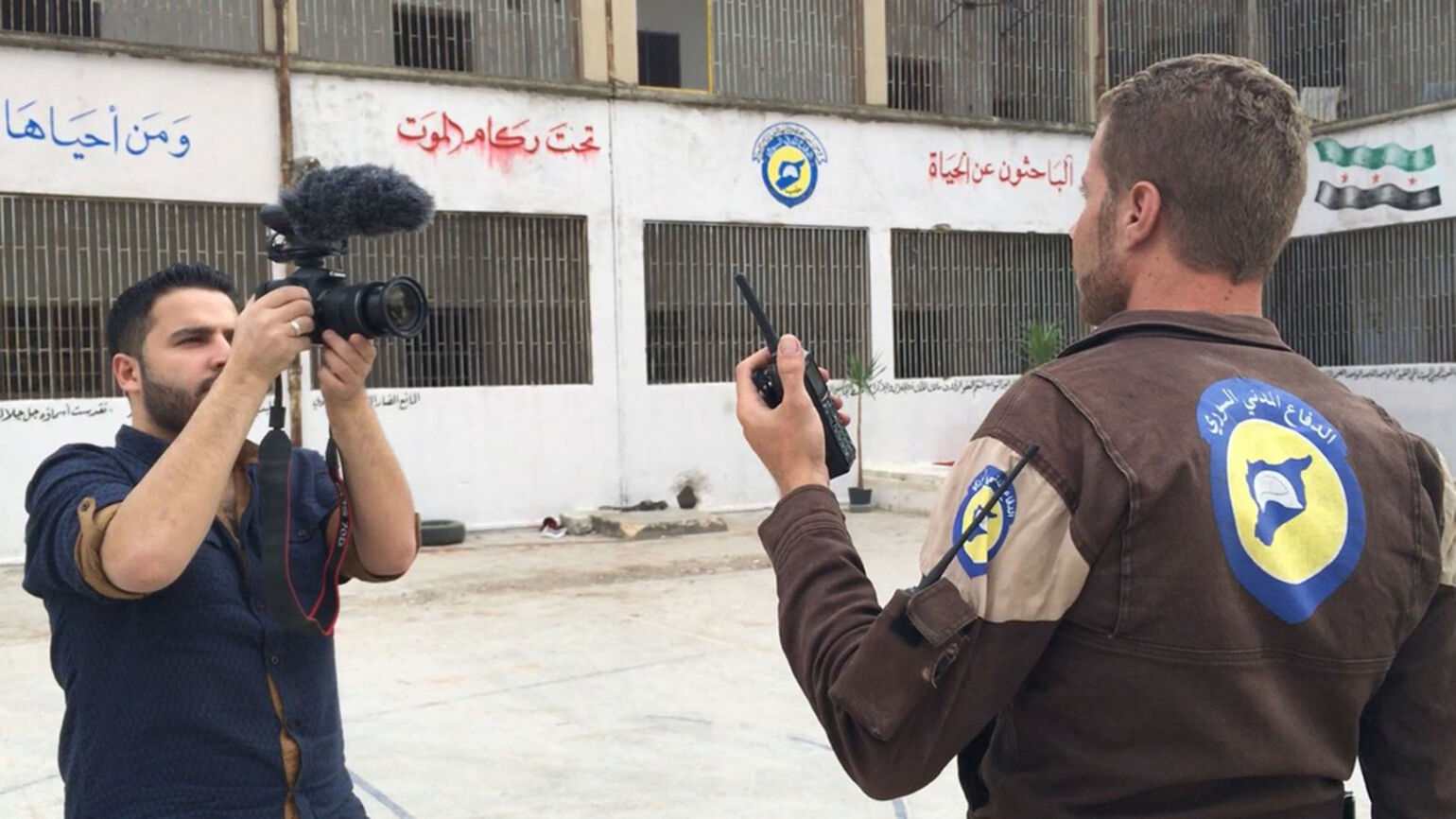
At the Civil Defence Centre in Hanano, Aleppo (2016), during the filming of Last Men in Aleppo. The photo captures a White Helmet volunteer scanning the sky and tracking a regime helicopter on its way to drop barrel bombs on residential neighborhoods. In the photo, Hasan was documenting this moment as he observed and reported the threat. Rights holder: AMC (Thaer ِAlHalabi – Aleppo Media Center)
The Assad regime and its supporters flooded the news with propaganda and false information, distorting people’s stories to the point where they nearly disappeared. For over ten years, I took reporting as my mission in life. Pushing back against the fake news, I protected and preserved the truth so that it could be shared with the world.
Early on, I had no plans to direct films. But as I came into contact with crushing hardship and injustice and met more and more people who were unable to express what they were going through, I felt a mounting need to delve deeper, to record what I observed and spread the message far and wide. I realized that a documentary can inspire even people living far away from where the story is taking place.
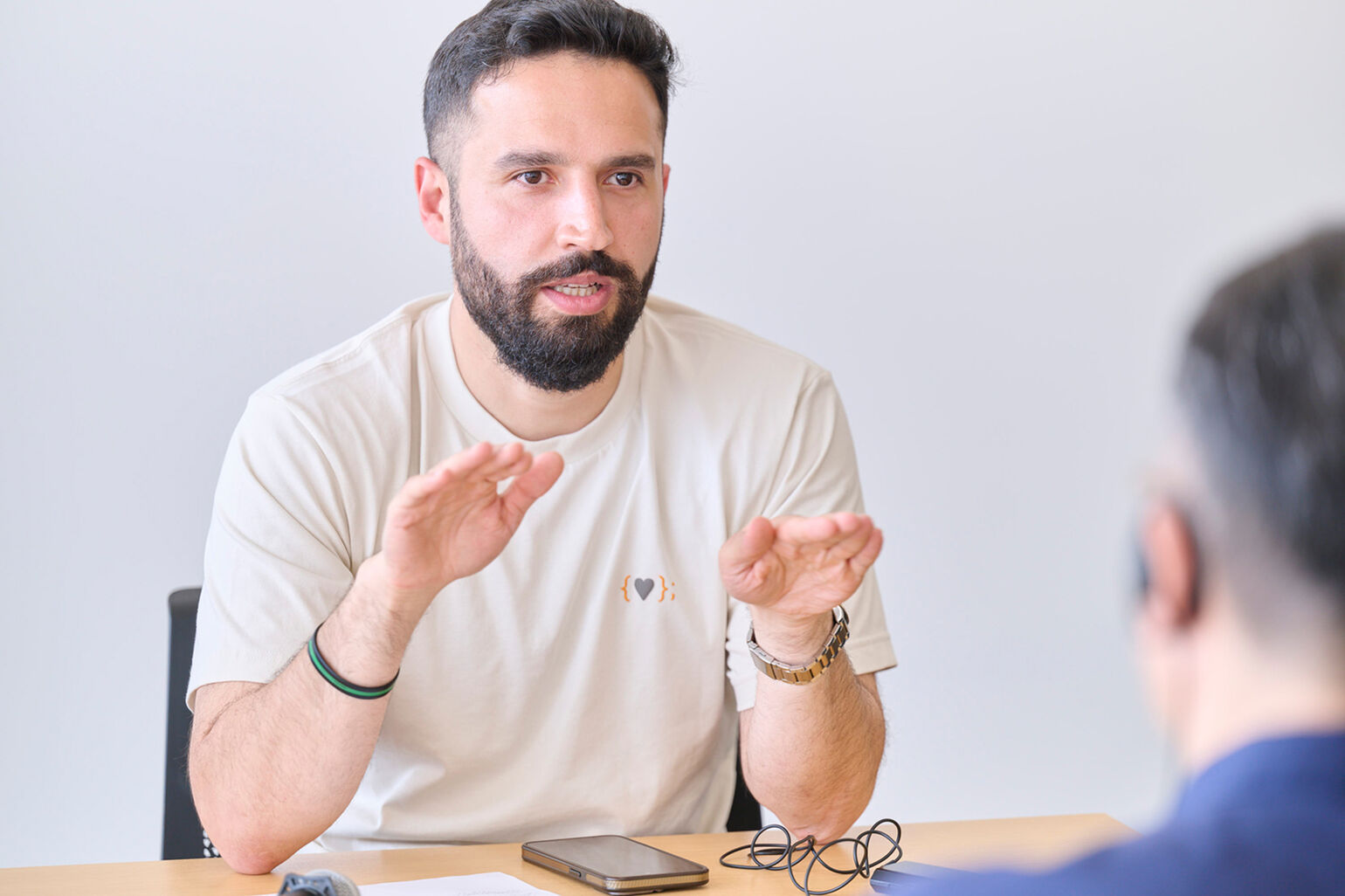
Tell us a little about The White Helmets (2016), a documentary that caused a sensation and won all kinds of recognition, including Best Documentary (Short Subject) at the Academy Awards. What was your role in this project?
The White Helmets film was a transformative experience for me, both professionally and personally. I was part of the team from the Aleppo Media Center, and my role was as a cinematographer inside Syria.
The White Helmets are ordinary people who volunteered to save lives during the most dangerous moments—pulling people from under the rubble after airstrikes, often while under threat of a second attack. Documenting their work meant being side by side with them in some of the most high-risk and emotional situations.
We rode with them in ambulances, entered bombed sites, and captured the painful and heroic moments of search and rescue. Many times, the people they found had already lost their lives. But in those moments of loss, there was still an incredible power in witnessing their humanity, their bravery, and their belief in saving others no matter the cost.
Our mission was to document their daily lives with honesty and to preserve the truth of what was happening. Being so close to them changed me. It wasn’t just about filming; it was about carrying their voices and sacrifices to the world.
Last Men in Aleppo (2017) was nominated for Best Documentary Feature at the Academy Awards. It also won twenty-three film awards globally, including the World Documentary Grand Jury Prize at the 2017 Sundance Film Festival. What was your role in this documentary?
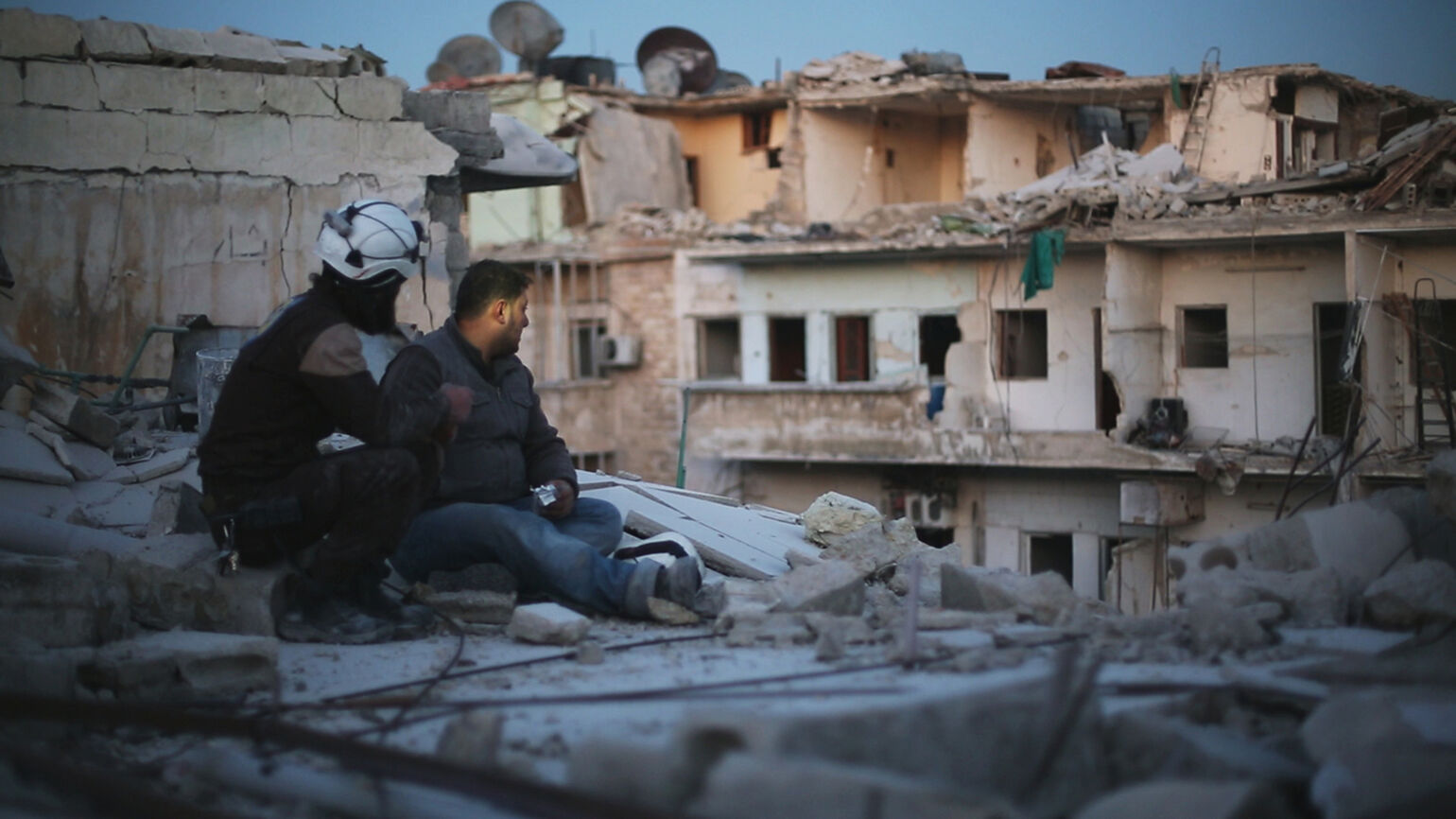
Last Men in Aleppo (2017) Director: Feras Fayyad, Co-director: Steen Johannessen
Last Men in Aleppo was nominated for Best Documentary Feature at the 90th Academy Awards and was the winner of the World Documentary Grand Jury Prize at the 2017 Sundance Film Festival along with 23 other film awards worldwide.
Distributed by UNITED PEOPLE / ©Larm Film
In Last Men in Aleppo, I was part of the directing team and one of the cinematographers also. Over nearly two years, we closely followed the White Helmets in Aleppo—not just during their rescue missions, but also in their personal lives and daily routines.
We aimed to show the full human experience behind the headlines: their fears, hopes, and the impossible choices they faced as fathers, friends, and rescuers. Filming in such an environment meant living through the same dangers, but it allowed us to tell their stories with honesty and depth—through their eyes and from within the city.
During the Assad regime, you escaped Syria for England, where you’ve sought asylum. We’re curious if the film you’ll be making with support from the Displacement Film Fund will engage with this experience.
After Last Men in Aleppo, I worked as a producer on Death Without Mercy, a documentary detailing the 2023 Turkey–Syria earthquakes. If something happens where I’m living, I feel a personal responsibility to make a film. Not so much as a filmmaker, but as a person who experienced the event.
As things played out, I moved to the UK. After being stranded for a while, I applied for asylum, and today I’m living as a refugee. I see it as imperative to document whatever I confront as I go through this process. All my films up to this point have drawn from what is happening around me. In my view, documentary film is about capturing the world the way that you experience it.
Only this time, the dangers have entered a new dimension. Asylum-seeking isn’t about a physical risk that can deal a mortal blow. Rather, it’s like being suspended in midair, no telling what will happen next or when. So, for my next work, the film the Displacement Film Fund will support, I’ve decided to depict how I escaped my homeland, why I needed to escape, and most of all, the friendships that have meant so much to me during my refuge. The future is connected to the past. The past is what gives shape to the future. And delving deep into the records of the past involves a different kind of danger.
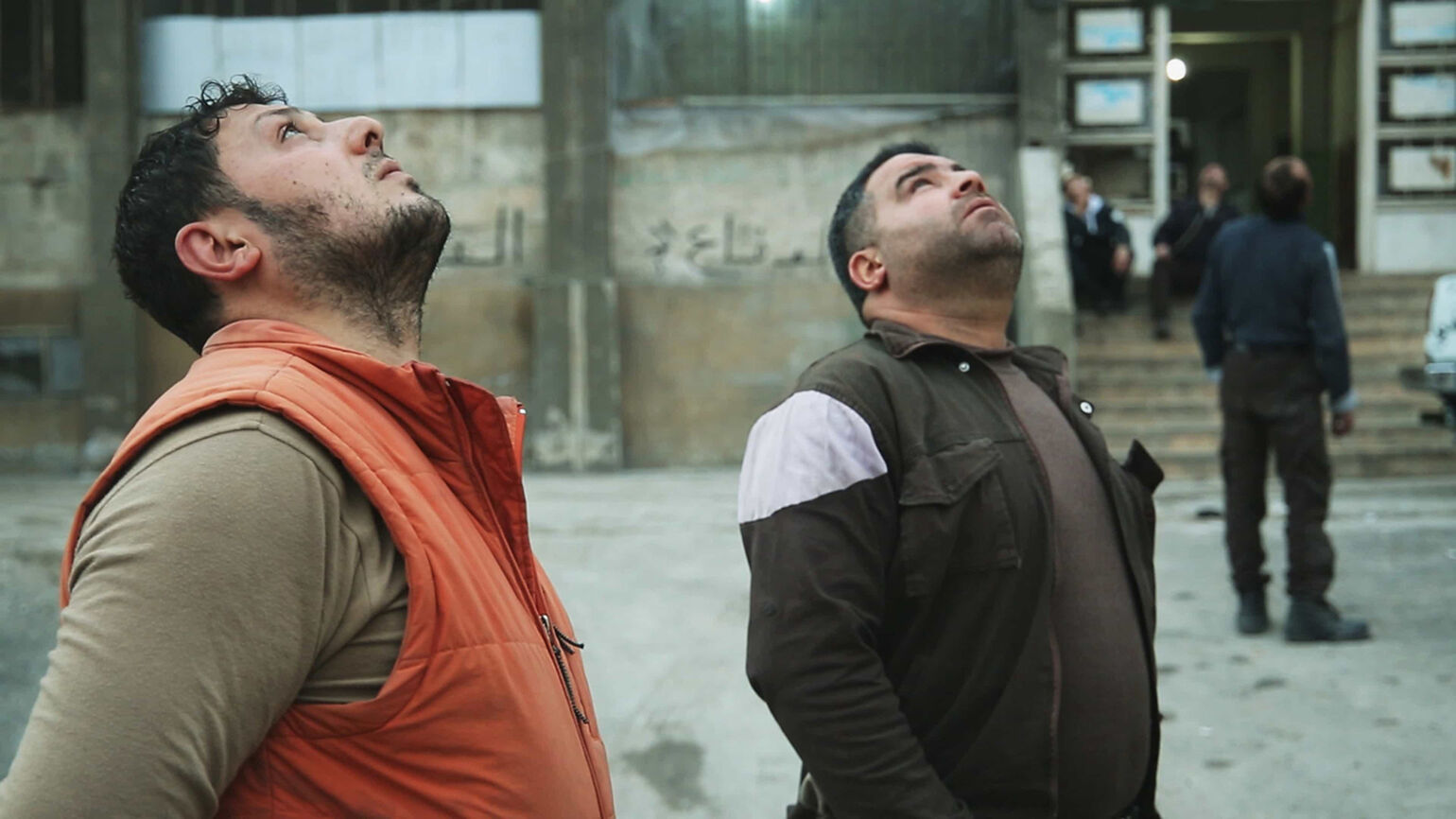
A scene from the documentary film ‘Last Men in Aleppo (2017)’ where White Helmet members look up at the sky, watching for approaching fighter jets.
Distributed by UNITED PEOPLE / ©Larm Film
What role will support from the Displacement Film Fund play in your next project?
Over the past few years, there has been great change in immigration policies towards refugees and the attitudes of the countries that receive them. Some critics say that refugees and asylum seekers pose a severe cost to the nation. Others view us as criminals or see us as a threat. Increasingly, we’re used as tools to support the claims of politicians.
I believe that understanding is essential if you want to solve a problem, no matter what it is. By filming my experience and the experiences of those around me with the support of the Displacement Film Fund, I believe that I can raise the visibility of refugees and asylum seekers to promote a greater level of understanding. Films encourage conversation. They provoke change. I will continue doing whatever I can to contribute to a better world for everyone.
For me, this opportunity from the Displacement Film Fund represents a window of hope in the midst of a new and challenging chapter of my life. It is an essential starting point—both financially and emotionally—offering space, freedom, and encouragement to create.
I truly see this support as more than just funding; it’s a meaningful gesture of solidarity. I’m deeply grateful to Cate Blanchett, UNHCR, UNIQLO, HBF and everyone involved in making this fund possible.
About Displacement Film Fund
The Displacement Film Fund is established to champion and fund the work of displaced filmmakers, or filmmakers with a proven track record in creating authentic storytelling on the experiences of displaced people. The pilot short film funding scheme, which was launched at IFFR 2025 by Cate Blanchett, is supported by Master Mind, UNIQLO, Droom en Daad, the Tamer Family Foundation and Amahoro Coalition as Founding Partners, the Hubert Bals Fund as Management Partner and UNHCR, the UN Refugee Agency, as Strategic Partner.
TOP