
WWD Special Feature
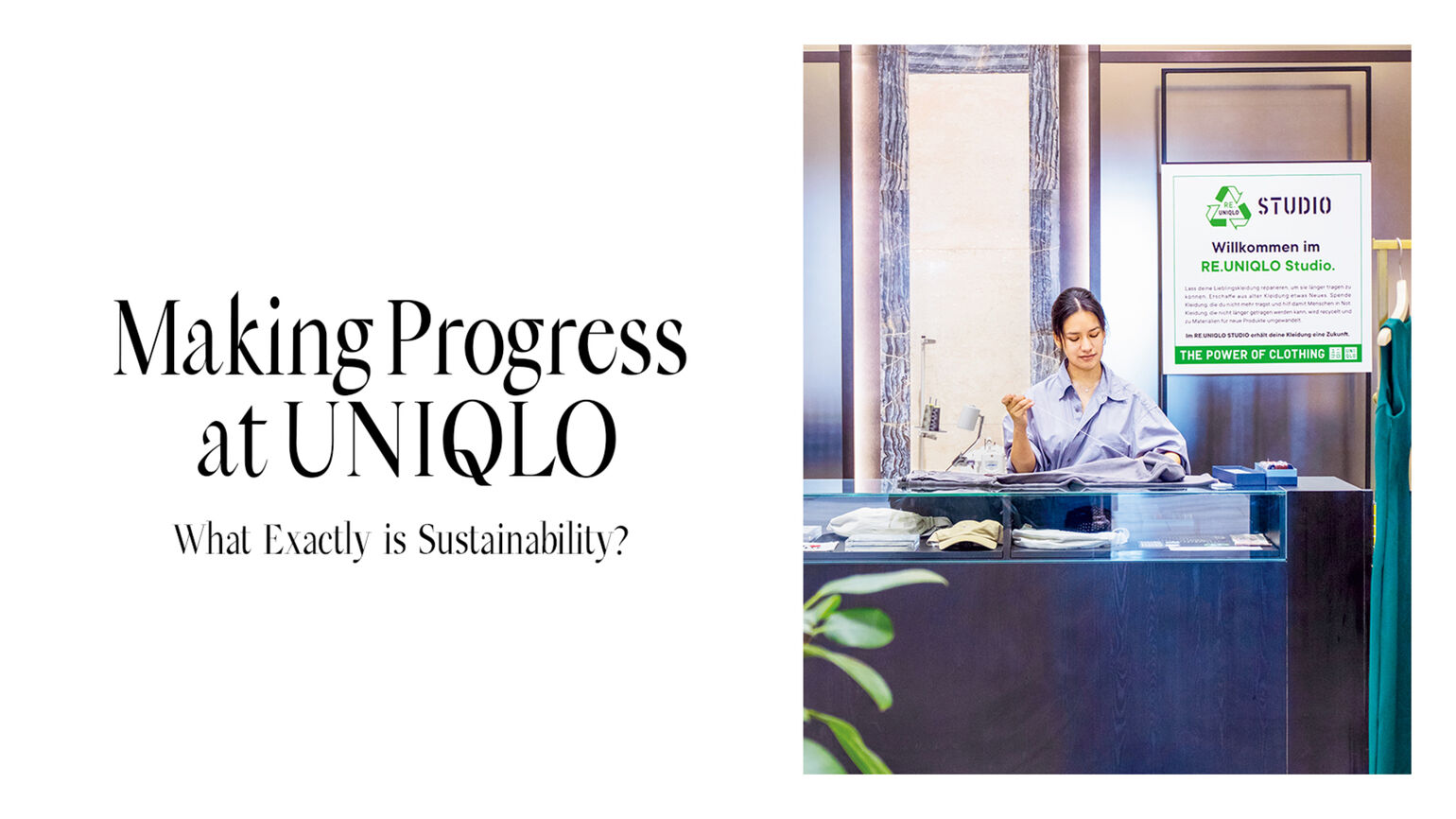
Making Progress at UNIQLO:
What Exactly Is Sustainability?
Nov 10, 2025
LifeWear
UNIQLO stores are currently distributing a booklet featuring an interview conducted by WWD editors, offering an overview and vision of UNIQLO’s sustainability initiatives.
This booklet reflects on UNIQLO’s past challenges and includes a special section on clothing production for the next era. It features a special interview with Koji Yanai, Director of FAST RETAILING Co., Ltd., and Clare Waight Keller, UNIQLO Creative Director.
Pick up a copy at your nearest UNIQLO store to read the full feature.
A Whole New World of Making
Designing a Cycle
This year, RE.UNIQLO which is UNIQLO's framework to contribute to circular society, celebrates its fifth anniversary. Here’s an update on the company’s overarching strategy from Koji Yanai, Group Senior Executive Officer at UNIQLO parent company, Fast Retailing, and a perspective on the role of design from UNIQLO Creative Director Clare Waight Keller.
“The definition of “good clothes” is evolving—global markets are emphasizing “safety.”
Koji Yanai
Born in 1977. After joining Mitsubishi Corporation in April 2001, Yanai worked in food imports and expanding domestic retail operations overseas. Next, he worked in the business planning office of a subsidiary food company in the UK before joining Fast Retailing in September 2012. Starting off by managing sports marketing, he became general manager of the Global Marketing Division in May 2013 and group executive officer of Fast Retailing that September, before being named director in 2018 and group senior executive officer in June 2020. Yanai also leads sustainability and social contribution programs while overseeing sustainability-related communications. He is the second son of Tadashi Yanai, chairman and president of Fast Retailing.
Born in 1977. After joining Mitsubishi Corporation in April 2001, Yanai worked in food imports and expanding domestic retail operations overseas. Next, he worked in the business planning office of a subsidiary food company in the UK before joining Fast Retailing in September 2012. Starting off by managing sports marketing, he became general manager of the Global Marketing Division in May 2013 and group executive officer of Fast Retailing that September, before being named director in 2018 and group senior executive officer in June 2020. Yanai also leads sustainability and social contribution programs while overseeing sustainability-related communications. He is the second son of Tadashi Yanai, chairman and president of Fast Retailing.
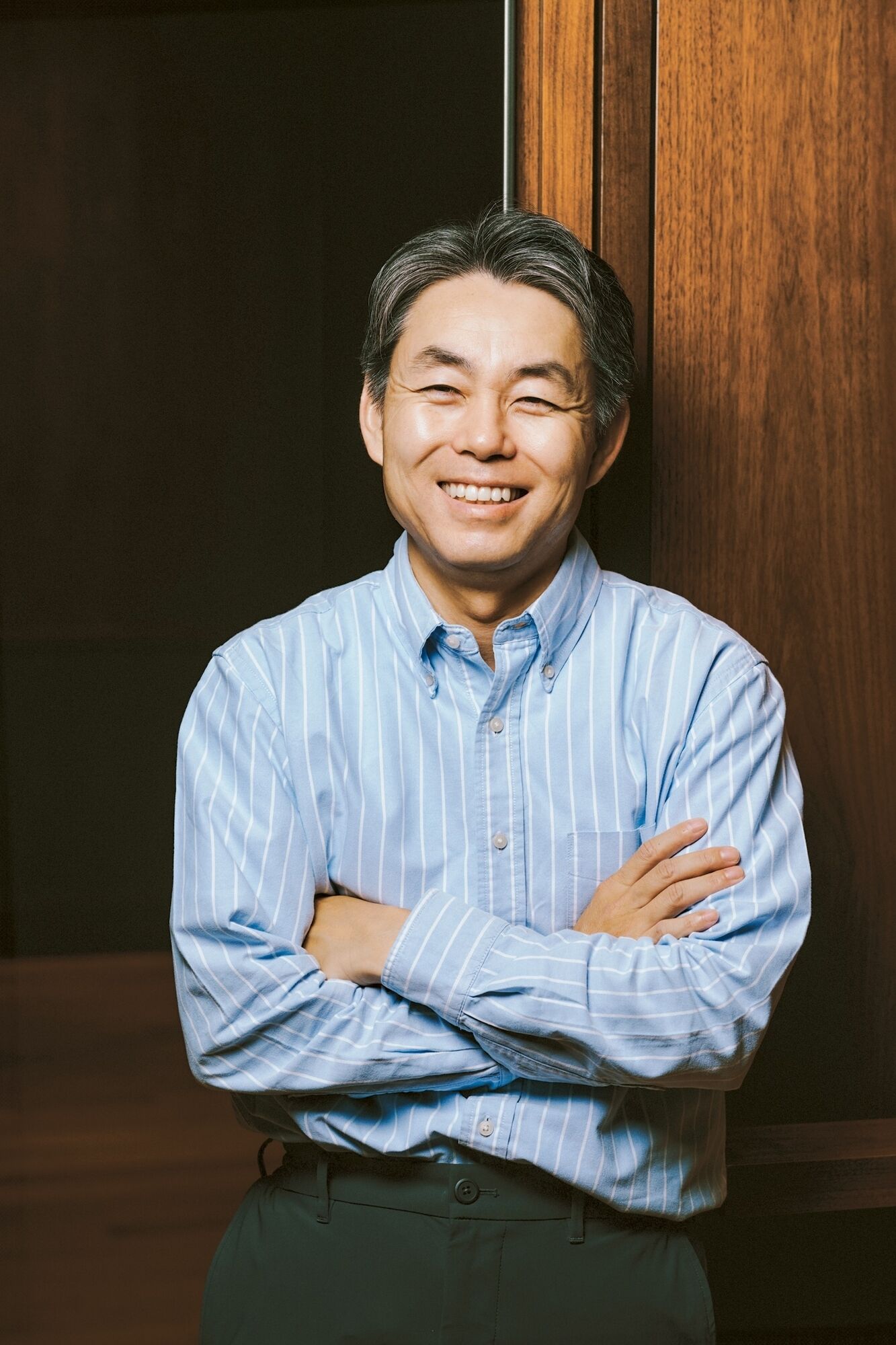
RE.UNIQLO turns five this year. Koji Yanai says it’s all about the simple, universal task of “responding to customer demand.” At stores all over the world, he’s heard real stories rooted in everyday life. In recent years, he’s noticed that the definition of “good clothes” has gone beyond “quality, price, and design” to include “safe and secure manufacturing.” This is a topic of interest for the brand, as well as a motivating pressure.
Companies no longer call the shots on sustainability. “Today,” asserts Yanai, “the customers have more information than we do.” Environmentally friendly products are one thing, but if there’s a price difference, the customer has to decide. Yet to be sure, there’s been a value shift toward “spending money on what matters.” The pandemic only underscored this trend, which has taken hold all over the world.
Curiously, there appears to be very little difference in the perspectives of Japan and of the West, both of which are seen as advanced in terms of sustainability. This is because technology has allowed customers to exchange information instantly, transcending geographic lines. Just as with soccer, music and visual media, clothing trends can spread beyond national borders. The company has also been proactive about working with tightened European regulations. “Consumers have a right to know, and now that it’s a rule, we’ll follow suit and stay competitive.” This can sometimes mean an opportunity to reconsider past initiatives. Now that the right to reuse and repair is drawing attention, things are moving swiftly, in what’s truly a transition period. RE.UNIQLO is making progress by donating reusable clothes or reselling them as pre-owned items. The donations benefit local communities, while pre-owned sales work towards a circular society. Keep an eye out for “Shop in Shop” kiosks in select stores, as UNIQLO continues testing this format on a trial basis.
Yanai doesn’t try to hide his frustration at UNIQLO being bundled together with “fast fashion.” He’s proud to say that “these clothes can be worn for years.” Every time a customer says “I’ve worn this for five years,” it underscores the power of experience over language. That’s why the company encourages straightforward messaging. This isn’t about insinuating a message, but about making the message clear. You could say this is what motivates the whole RE.UNIQLO project.
“Long life is the ultimate sustainability.” ─ The Role of Design in RE.UNIQLO
Clare Waight Keller
Born in England. After gaining experience at various fashion houses, Waight Keller worked as a creative director for top-class luxury brands in London and Paris, involved with everything from prêt-à-porter to haute couture collections. In 2018, she was named a British Designer of the Year for Womenswear at the British Fashion Awards. Time magazine included Waight Keller on its list of the most influential people in the world in 2019. Beginning 2023 Fall & Winter, she became the designer of UNIQLO : C, and since 2024 Fall & Winter, she has been the creative director of the men’s and women’s main lines for UNIQLO.
Born in England. After gaining experience at various fashion houses, Waight Keller worked as a creative director for top-class luxury brands in London and Paris, involved with everything from prêt-à-porter to haute couture collections. In 2018, she was named a British Designer of the Year for Womenswear at the British Fashion Awards. Time magazine included Waight Keller on its list of the most influential people in the world in 2019. Beginning 2023 Fall & Winter, she became the designer of UNIQLO : C, and since 2024 Fall & Winter, she has been the creative director of the men’s and women’s main lines for UNIQLO.
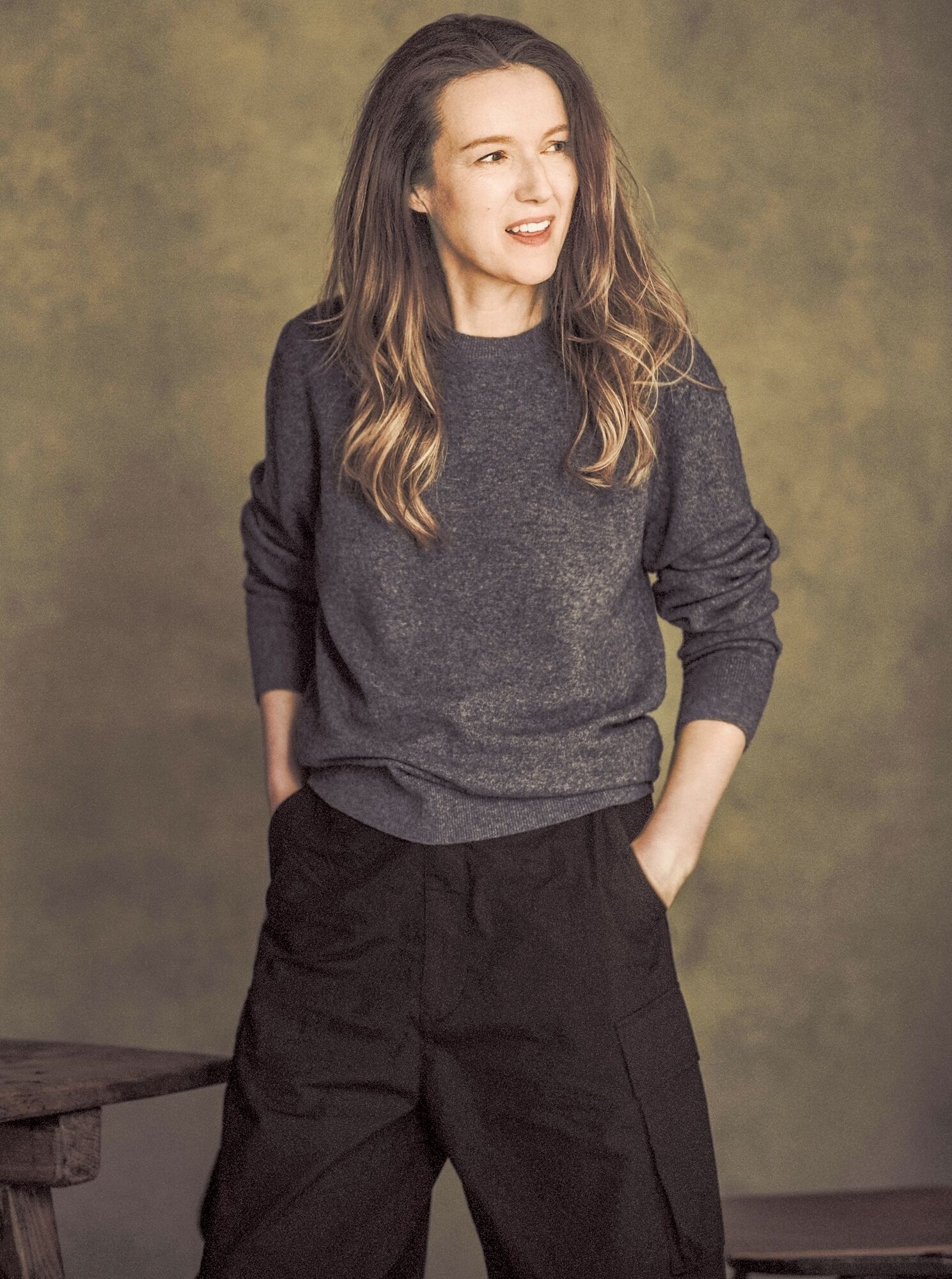
How does design add value in the context of the UNIQLO reuse project RE.UNIQLO?
Creative Director Clare Waight Keller sees it as her mission to “think seriously about the life of every item.” The aim is to create clothes that have timeless charm and high quality as well as functionality. Items that transcend trends and become old favorites.
A prime example is the men’s sweatsuit released last September from UNIQLO : C. This everyday basic has a modern silhouette and a two-layered structure using high-quality cotton that made it a top seller in half a year. Repeat customers, and there were many, praised the item as “top-quality and versatile, backed by sustainable design.”
Clare sees her “greatest challenge” as pushing the essentials to evolve. Take the classic French stripe T-shirt: giving the cut and neck a modern balance helps keep it fresh. Clare’s choice of materials is influenced by Europe’s increased awareness of sustainability, as well as the younger perspective of her twin daughters, who are twenty-two.
And while using recycled materials is important, recycling isn’t the whole story. What also matters, in her words, is “high quality that lasts. So, despite aiming for longer-lasting garments, how does she feel when clothes she designed end up back in the collection bins? When asked this slightly provocative question, she responded with conviction: “Currently, items are not yet being collected in adequate numbers. That is why more public awareness is needed for a truly sustainable cycle.” Clare looks forward to seeing items she’s designed show up in the recycling boxes. “That will be a whole new kind of inspiration,” she laughs.
At luxury brands, she released seven lines per year, but at UNIQLO there’s two. She says it’s “a treat” to have the time to research fabrics and proportions and release items once she’s sure they’ll last for a long time. People have naturally taken notice of the way these items look past gender, praising their general appeal on TikTok and YouTube.
The next generation has influenced Clare to “create more ways that you can personalize the clothes, making them yours,” like RE.UNIQLO’s popular embroidery service. Her ultimate goal, five or ten years ahead, is for “more clothes to return to the cycle, and more people to build wardrobes that last.” The result would be a closet of timeless items with low turnover, added as necessity demands──that’s how Clare sees the future.
A prime example of UNIQLO basics.
These sweats have a casual fit and a substantial feel thanks to expressive high-quality cotton. Pairing comfort with presentation, this setup exemplifies the UNIQLO approach to creating new classics.
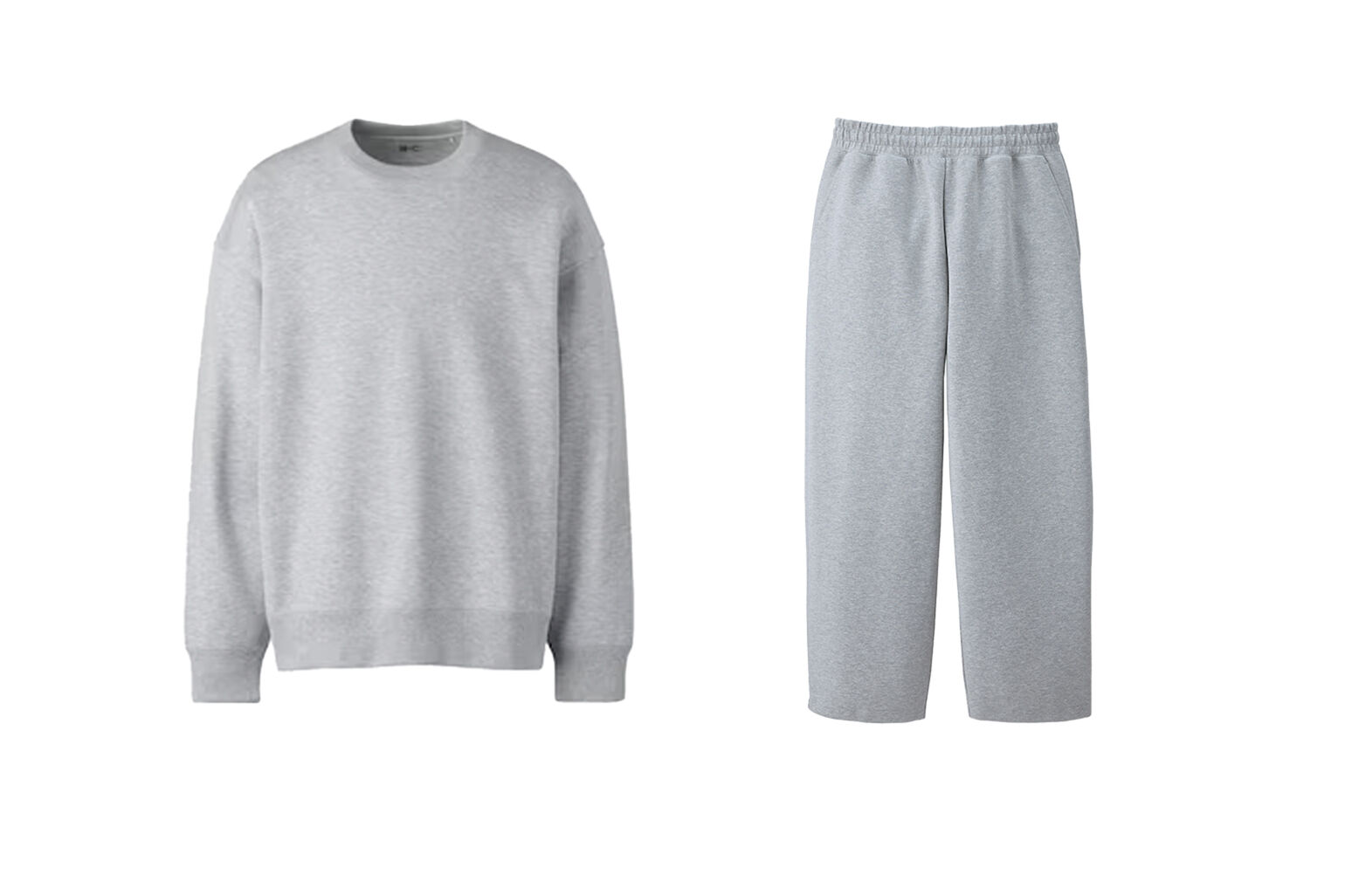
Oversized Sweatshirt P1,490
Sweat Wide Pants P1,990
What is RE.UNIQLO?
Next time you part with clothes, RE.UNIQLO hopes that you’ll give them a chance to be useful again by contributing to a circular society. This short message, seemingly simple, questions the status quo of the whole fashion industry.
Thus far, apparel companies have seen their task as making “good clothes” sold at reasonable prices. Makers paid almost no regard to what came after you bought the clothes, most of which were eventually thrown away. The United Nations Environment Programme (UNEP) has calculated that this translates into 92 million tons of discarded garments annually, while Japan’s Ministry of the Environment estimates that over 500 thousand tons of clothing is burned or buried each year in Japan. This only worsens global issues like resource shortages while increasing CO₂ emissions.
The RE.UNIQLO project aims to drastically reimagine the manufacturing status quo and the relationship between clothes and people. Centering on the three R’s of Reduce, Reuse, Recycle, UNIQLO is questioning preconceptions, building circular frameworks, investing in innovative tech, and learning by trial and error. Things are far from perfect. But the result is a new version of “good clothes,” as UNIQLO works toward a better future alongside the people who wear them.
Your clothes help feed the cycle. Next time you part with clothing, the choices you make will change the future.
UNIQLO stores are currently distributing a booklet featuring an interview conducted by WWD editors, offering an overview and vision of UNIQLO’s sustainability initiatives.
This booklet reflects on UNIQLO’s past challenges and includes a special section on clothing production for the next era. It features a special interview with Koji Yanai, Director of FAST RETAILING Co., Ltd., and Clare Waight Keller, UNIQLO Creative Director.
Pick up a copy at your nearest UNIQLO store to read the full feature.
A Whole New World of Making
Designing a Cycle
This year, RE.UNIQLO which is UNIQLO's framework to contribute to circular society, celebrates its fifth anniversary. Here’s an update on the company’s overarching strategy from Koji Yanai, Group Senior Executive Officer at UNIQLO parent company, Fast Retailing, and a perspective on the role of design from UNIQLO Creative Director Clare Waight Keller.
“The definition of “good clothes” is evolving—global markets are emphasizing “safety.”
Koji Yanai
Born in 1977. After joining Mitsubishi Corporation in April 2001, Yanai worked in food imports and expanding domestic retail operations overseas. Next, he worked in the business planning office of a subsidiary food company in the UK before joining Fast Retailing in September 2012. Starting off by managing sports marketing, he became general manager of the Global Marketing Division in May 2013 and group executive officer of Fast Retailing that September, before being named director in 2018 and group senior executive officer in June 2020. Yanai also leads sustainability and social contribution programs while overseeing sustainability-related communications. He is the second son of Tadashi Yanai, chairman and president of Fast Retailing.
![Image of Koji Yanai]()
RE.UNIQLO turns five this year. Koji Yanai says it’s all about the simple, universal task of “responding to customer demand.” At stores all over the world, he’s heard real stories rooted in everyday life. In recent years, he’s noticed that the definition of “good clothes” has gone beyond “quality, price, and design” to include “safe and secure manufacturing.” This is a topic of interest for the brand, as well as a motivating pressure.
Companies no longer call the shots on sustainability. “Today,” asserts Yanai, “the customers have more information than we do.” Environmentally friendly products are one thing, but if there’s a price difference, the customer has to decide. Yet to be sure, there’s been a value shift toward “spending money on what matters.” The pandemic only underscored this trend, which has taken hold all over the world.
Curiously, there appears to be very little difference in the perspectives of Japan and of the West, both of which are seen as advanced in terms of sustainability. This is because technology has allowed customers to exchange information instantly, transcending geographic lines. Just as with soccer, music and visual media, clothing trends can spread beyond national borders. The company has also been proactive about working with tightened European regulations. “Consumers have a right to know, and now that it’s a rule, we’ll follow suit and stay competitive.” This can sometimes mean an opportunity to reconsider past initiatives. Now that the right to reuse and repair is drawing attention, things are moving swiftly, in what’s truly a transition period. RE.UNIQLO is making progress by donating reusable clothes or reselling them as pre-owned items. The donations benefit local communities, while pre-owned sales work towards a circular society. Keep an eye out for “Shop in Shop” kiosks in select stores, as UNIQLO continues testing this format on a trial basis.
Yanai doesn’t try to hide his frustration at UNIQLO being bundled together with “fast fashion.” He’s proud to say that “these clothes can be worn for years.” Every time a customer says “I’ve worn this for five years,” it underscores the power of experience over language. That’s why the company encourages straightforward messaging. This isn’t about insinuating a message, but about making the message clear. You could say this is what motivates the whole RE.UNIQLO project.
“Long life is the ultimate sustainability.” ─ The Role of Design in RE.UNIQLO
Clare Waight Keller
Born in England. After gaining experience at various fashion houses, Waight Keller worked as a creative director for top-class luxury brands in London and Paris, involved with everything from prêt-à-porter to haute couture collections. In 2018, she was named a British Designer of the Year for Womenswear at the British Fashion Awards. Time magazine included Waight Keller on its list of the most influential people in the world in 2019. Beginning 2023 Fall & Winter, she became the designer of UNIQLO : C, and since 2024 Fall & Winter, she has been the creative director of the men’s and women’s main lines for UNIQLO.
![Image of Clare Waight Keller]()
How does design add value in the context of the UNIQLO reuse project RE.UNIQLO?
Creative Director Clare Waight Keller sees it as her mission to “think seriously about the life of every item.” The aim is to create clothes that have timeless charm and high quality as well as functionality. Items that transcend trends and become old favorites.
A prime example is the men’s sweatsuit released last September from UNIQLO : C. This everyday basic has a modern silhouette and a two-layered structure using high-quality cotton that made it a top seller in half a year. Repeat customers, and there were many, praised the item as “top-quality and versatile, backed by sustainable design.”
Clare sees her “greatest challenge” as pushing the essentials to evolve. Take the classic French stripe T-shirt: giving the cut and neck a modern balance helps keep it fresh. Clare’s choice of materials is influenced by Europe’s increased awareness of sustainability, as well as the younger perspective of her twin daughters, who are twenty-two.
And while using recycled materials is important, recycling isn’t the whole story. What also matters, in her words, is “high quality that lasts. So, despite aiming for longer-lasting garments, how does she feel when clothes she designed end up back in the collection bins? When asked this slightly provocative question, she responded with conviction: “Currently, items are not yet being collected in adequate numbers. That is why more public awareness is needed for a truly sustainable cycle.” Clare looks forward to seeing items she’s designed show up in the recycling boxes. “That will be a whole new kind of inspiration,” she laughs.
At luxury brands, she released seven lines per year, but at UNIQLO there’s two. She says it’s “a treat” to have the time to research fabrics and proportions and release items once she’s sure they’ll last for a long time. People have naturally taken notice of the way these items look past gender, praising their general appeal on TikTok and YouTube.
The next generation has influenced Clare to “create more ways that you can personalize the clothes, making them yours,” like RE.UNIQLO’s popular embroidery service. Her ultimate goal, five or ten years ahead, is for “more clothes to return to the cycle, and more people to build wardrobes that last.” The result would be a closet of timeless items with low turnover, added as necessity demands──that’s how Clare sees the future.
A prime example of UNIQLO basics.
These sweats have a casual fit and a substantial feel thanks to expressive high-quality cotton. Pairing comfort with presentation, this setup exemplifies the UNIQLO approach to creating new classics.
![Sweatshirt and Sweatpants]()
Oversized Sweatshirt P1,490
Sweat Wide Pants P1,990
What is RE.UNIQLO?
Next time you part with clothes, RE.UNIQLO hopes that you’ll give them a chance to be useful again by contributing to a circular society. This short message, seemingly simple, questions the status quo of the whole fashion industry.
Thus far, apparel companies have seen their task as making “good clothes” sold at reasonable prices. Makers paid almost no regard to what came after you bought the clothes, most of which were eventually thrown away. The United Nations Environment Programme (UNEP) has calculated that this translates into 92 million tons of discarded garments annually, while Japan’s Ministry of the Environment estimates that over 500 thousand tons of clothing is burned or buried each year in Japan. This only worsens global issues like resource shortages while increasing CO₂ emissions.
The RE.UNIQLO project aims to drastically reimagine the manufacturing status quo and the relationship between clothes and people. Centering on the three R’s of Reduce, Reuse, Recycle, UNIQLO is questioning preconceptions, building circular frameworks, investing in innovative tech, and learning by trial and error. Things are far from perfect. But the result is a new version of “good clothes,” as UNIQLO works toward a better future alongside the people who wear them.
Your clothes help feed the cycle. Next time you part with clothing, the choices you make will change the future.
Born in 1977. After joining Mitsubishi Corporation in April 2001, Yanai worked in food imports and expanding domestic retail operations overseas. Next, he worked in the business planning office of a subsidiary food company in the UK before joining Fast Retailing in September 2012. Starting off by managing sports marketing, he became general manager of the Global Marketing Division in May 2013 and group executive officer of Fast Retailing that September, before being named director in 2018 and group senior executive officer in June 2020. Yanai also leads sustainability and social contribution programs while overseeing sustainability-related communications. He is the second son of Tadashi Yanai, chairman and president of Fast Retailing.
RE.UNIQLO turns five this year. Koji Yanai says it’s all about the simple, universal task of “responding to customer demand.” At stores all over the world, he’s heard real stories rooted in everyday life. In recent years, he’s noticed that the definition of “good clothes” has gone beyond “quality, price, and design” to include “safe and secure manufacturing.” This is a topic of interest for the brand, as well as a motivating pressure.
Companies no longer call the shots on sustainability. “Today,” asserts Yanai, “the customers have more information than we do.” Environmentally friendly products are one thing, but if there’s a price difference, the customer has to decide. Yet to be sure, there’s been a value shift toward “spending money on what matters.” The pandemic only underscored this trend, which has taken hold all over the world.
Curiously, there appears to be very little difference in the perspectives of Japan and of the West, both of which are seen as advanced in terms of sustainability. This is because technology has allowed customers to exchange information instantly, transcending geographic lines. Just as with soccer, music and visual media, clothing trends can spread beyond national borders. The company has also been proactive about working with tightened European regulations. “Consumers have a right to know, and now that it’s a rule, we’ll follow suit and stay competitive.” This can sometimes mean an opportunity to reconsider past initiatives. Now that the right to reuse and repair is drawing attention, things are moving swiftly, in what’s truly a transition period. RE.UNIQLO is making progress by donating reusable clothes or reselling them as pre-owned items. The donations benefit local communities, while pre-owned sales work towards a circular society. Keep an eye out for “Shop in Shop” kiosks in select stores, as UNIQLO continues testing this format on a trial basis.
Yanai doesn’t try to hide his frustration at UNIQLO being bundled together with “fast fashion.” He’s proud to say that “these clothes can be worn for years.” Every time a customer says “I’ve worn this for five years,” it underscores the power of experience over language. That’s why the company encourages straightforward messaging. This isn’t about insinuating a message, but about making the message clear. You could say this is what motivates the whole RE.UNIQLO project.
“Long life is the ultimate sustainability.” ─ The Role of Design in RE.UNIQLO
Clare Waight Keller
Born in England. After gaining experience at various fashion houses, Waight Keller worked as a creative director for top-class luxury brands in London and Paris, involved with everything from prêt-à-porter to haute couture collections. In 2018, she was named a British Designer of the Year for Womenswear at the British Fashion Awards. Time magazine included Waight Keller on its list of the most influential people in the world in 2019. Beginning 2023 Fall & Winter, she became the designer of UNIQLO : C, and since 2024 Fall & Winter, she has been the creative director of the men’s and women’s main lines for UNIQLO.
How does design add value in the context of the UNIQLO reuse project RE.UNIQLO?
Creative Director Clare Waight Keller sees it as her mission to “think seriously about the life of every item.” The aim is to create clothes that have timeless charm and high quality as well as functionality. Items that transcend trends and become old favorites.
A prime example is the men’s sweatsuit released last September from UNIQLO : C. This everyday basic has a modern silhouette and a two-layered structure using high-quality cotton that made it a top seller in half a year. Repeat customers, and there were many, praised the item as “top-quality and versatile, backed by sustainable design.”
Clare sees her “greatest challenge” as pushing the essentials to evolve. Take the classic French stripe T-shirt: giving the cut and neck a modern balance helps keep it fresh. Clare’s choice of materials is influenced by Europe’s increased awareness of sustainability, as well as the younger perspective of her twin daughters, who are twenty-two.
And while using recycled materials is important, recycling isn’t the whole story. What also matters, in her words, is “high quality that lasts. So, despite aiming for longer-lasting garments, how does she feel when clothes she designed end up back in the collection bins? When asked this slightly provocative question, she responded with conviction: “Currently, items are not yet being collected in adequate numbers. That is why more public awareness is needed for a truly sustainable cycle.” Clare looks forward to seeing items she’s designed show up in the recycling boxes. “That will be a whole new kind of inspiration,” she laughs.
At luxury brands, she released seven lines per year, but at UNIQLO there’s two. She says it’s “a treat” to have the time to research fabrics and proportions and release items once she’s sure they’ll last for a long time. People have naturally taken notice of the way these items look past gender, praising their general appeal on TikTok and YouTube.
The next generation has influenced Clare to “create more ways that you can personalize the clothes, making them yours,” like RE.UNIQLO’s popular embroidery service. Her ultimate goal, five or ten years ahead, is for “more clothes to return to the cycle, and more people to build wardrobes that last.” The result would be a closet of timeless items with low turnover, added as necessity demands──that’s how Clare sees the future.
A prime example of UNIQLO basics.
These sweats have a casual fit and a substantial feel thanks to expressive high-quality cotton. Pairing comfort with presentation, this setup exemplifies the UNIQLO approach to creating new classics.
Oversized Sweatshirt P1,490
Sweat Wide Pants P1,990
What is RE.UNIQLO?
Next time you part with clothes, RE.UNIQLO hopes that you’ll give them a chance to be useful again by contributing to a circular society. This short message, seemingly simple, questions the status quo of the whole fashion industry.
Thus far, apparel companies have seen their task as making “good clothes” sold at reasonable prices. Makers paid almost no regard to what came after you bought the clothes, most of which were eventually thrown away. The United Nations Environment Programme (UNEP) has calculated that this translates into 92 million tons of discarded garments annually, while Japan’s Ministry of the Environment estimates that over 500 thousand tons of clothing is burned or buried each year in Japan. This only worsens global issues like resource shortages while increasing CO₂ emissions.
The RE.UNIQLO project aims to drastically reimagine the manufacturing status quo and the relationship between clothes and people. Centering on the three R’s of Reduce, Reuse, Recycle, UNIQLO is questioning preconceptions, building circular frameworks, investing in innovative tech, and learning by trial and error. Things are far from perfect. But the result is a new version of “good clothes,” as UNIQLO works toward a better future alongside the people who wear them.
Your clothes help feed the cycle. Next time you part with clothing, the choices you make will change the future.
TOP