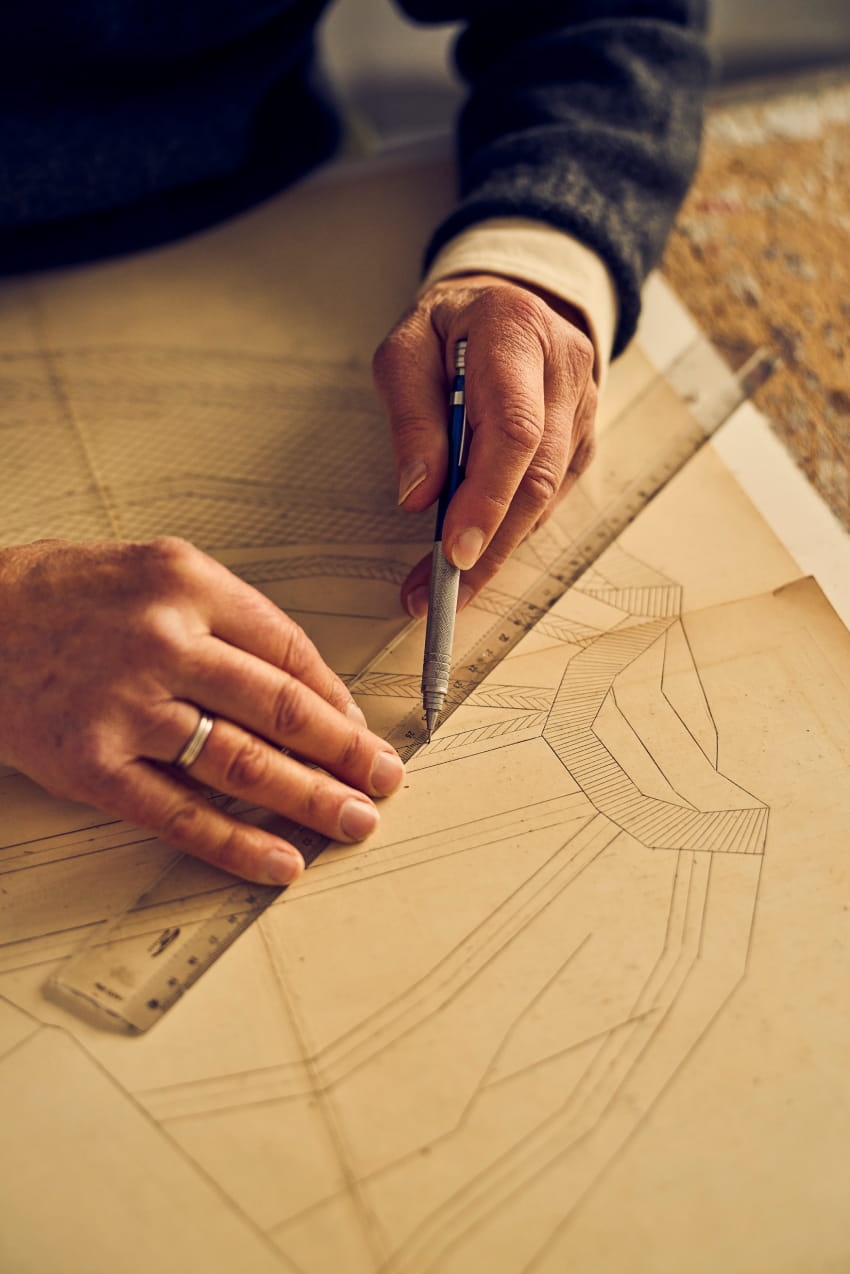
Rather than sketching, Weisbecker uses a ruler to draw lines right on the paper. This is how he finds the picture’s ultimate form.
In both his illustrations as well as his more personal work, Weisbecker’s mode of expression has changed a great deal overtime.
“It’s almost as if a glowing star up above has been guiding me along the twists and turns of my artistic life. Each time I shifted gears, my audience stuck with me. It gave me the boost I needed to keep moving forward.”
Philippe Weisbecker does little to no preliminary sketching. He simply begins and makes changes as he goes, working towards a finished piece. It’s not about following a blueprint, but about moving into the unknown.
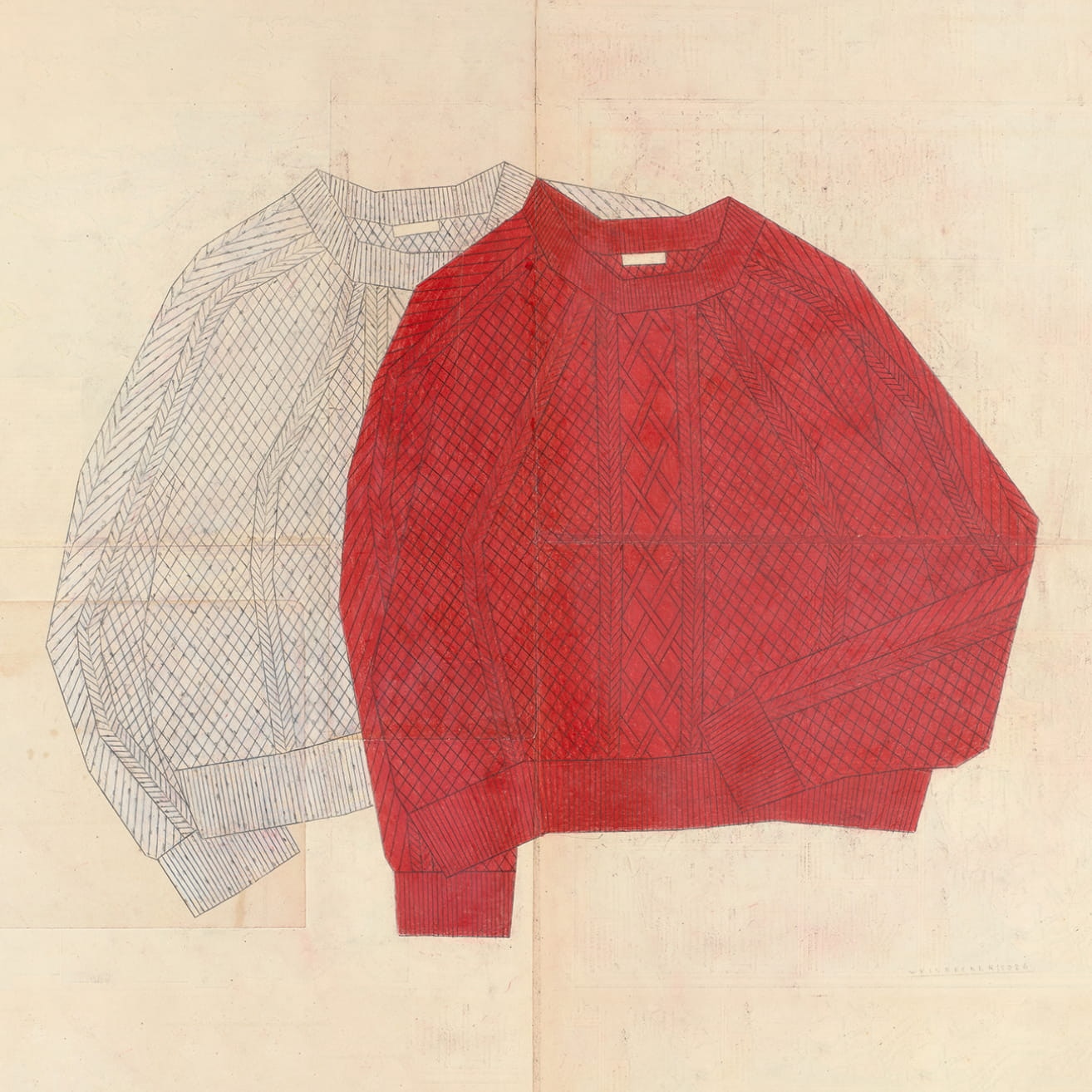
Rather than proceed in a straight line, start to finish, he goes back and forth as needed, as the picture gradually takes shape. “Ultimately,” he explained when asked about the sweater that he drew for UNIQLO, “I just see it as a mesh of lines, an interesting angle to look at it. After all, even a single line on a piece of paper, if drawn with restraint, can become a work of art. It’s not what it shows, so much as what it holds.”
One reason for drawing familiar objects? City living
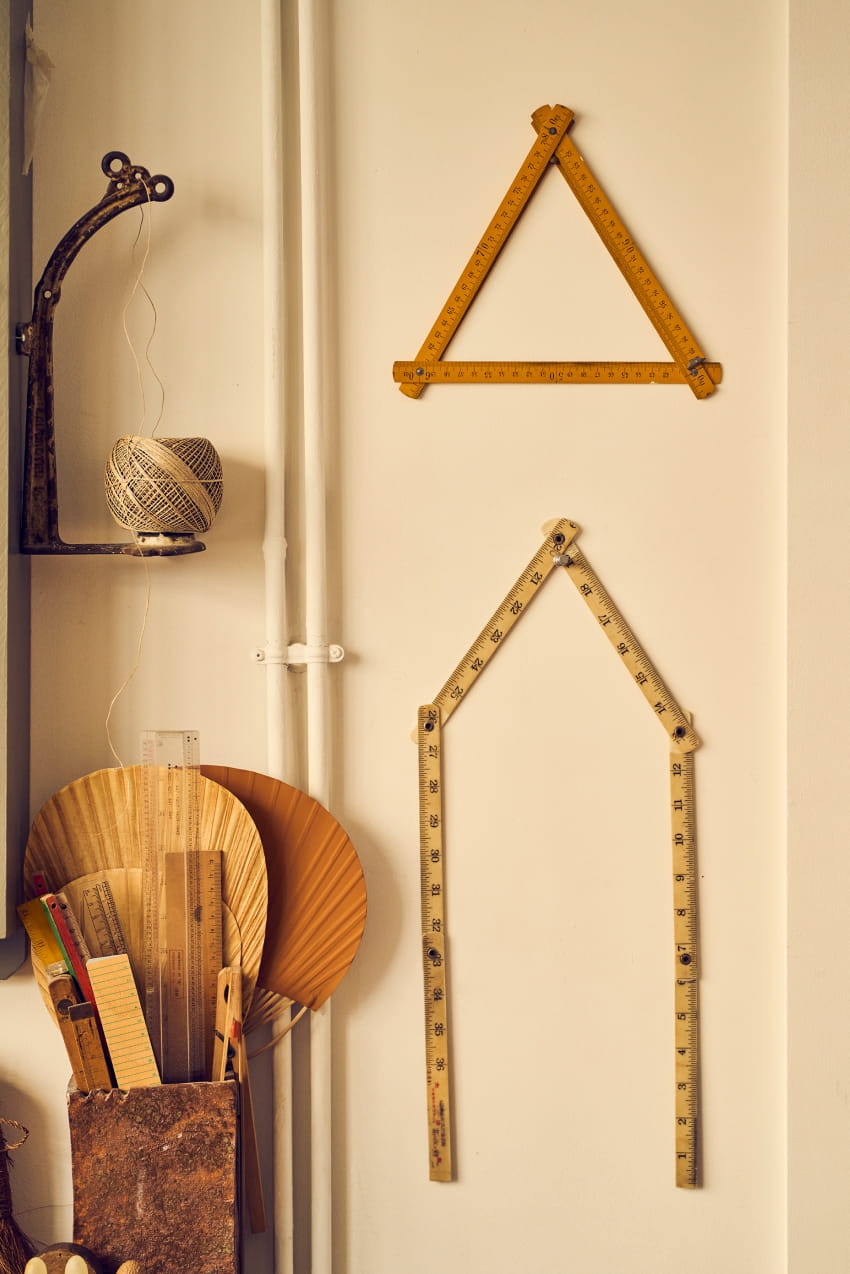
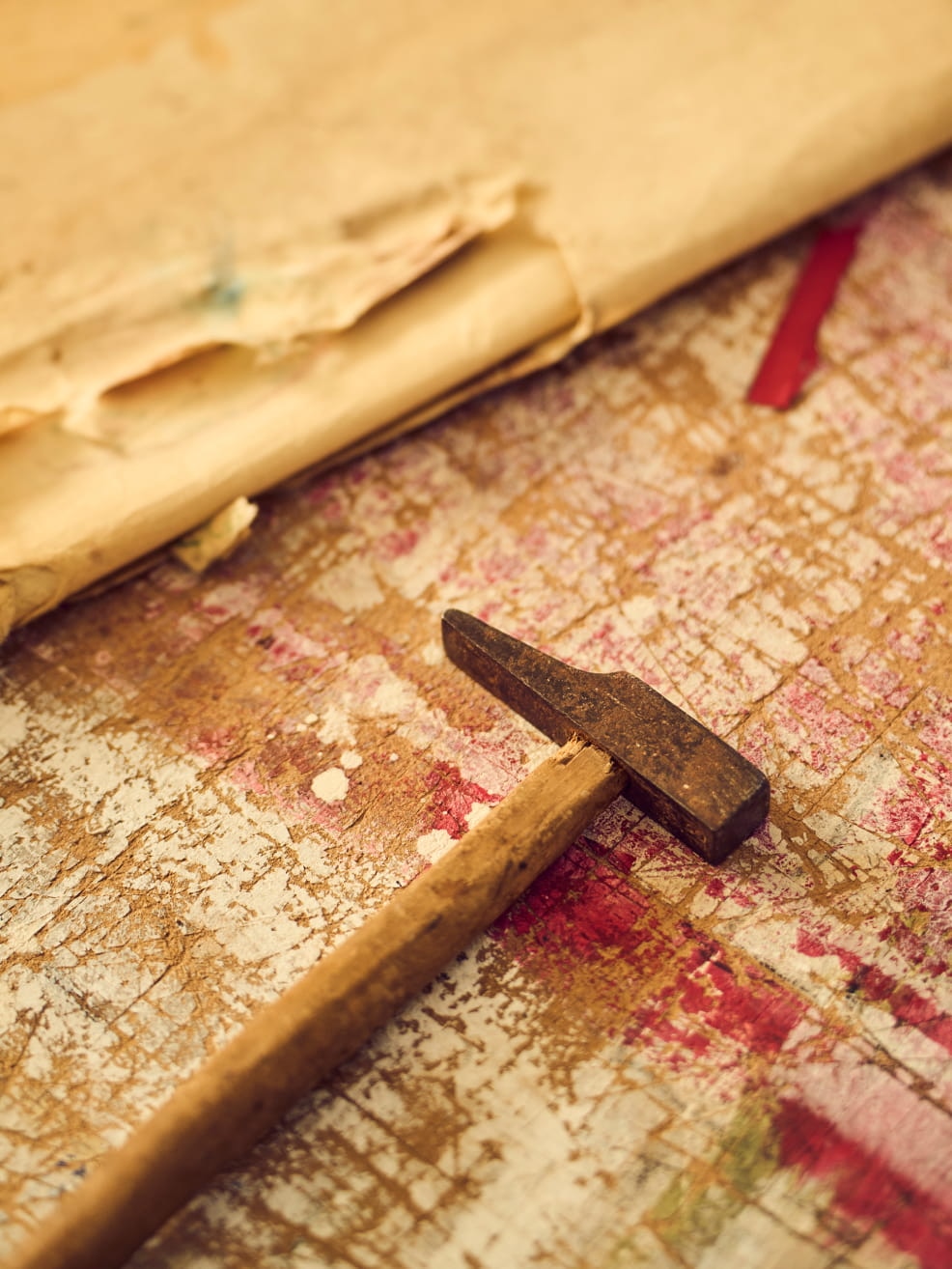
We visited Weisbecker’s studio, found in one of the quietest areas of Paris. Bathed in light streaming from the windows overhead, his tools each have their own place and convey a dedicated sense of purpose. It feels natural that Weisbecker would draw so many everyday objects. When we asked him if he had his own specific reason for drawing familiar things, he laughed. “Because they’re easy to draw! If an object is too complicated, I’ll lose interest. With simple tools and things, I can imagine them being used. The object tells a story. It holds memories. It’s like that expression, if these walls could talk. If I look at a hammer, I can’t help but imagine the people who’ve used it, how they’ve spent their time together. I love wondering about this kind of thing.”
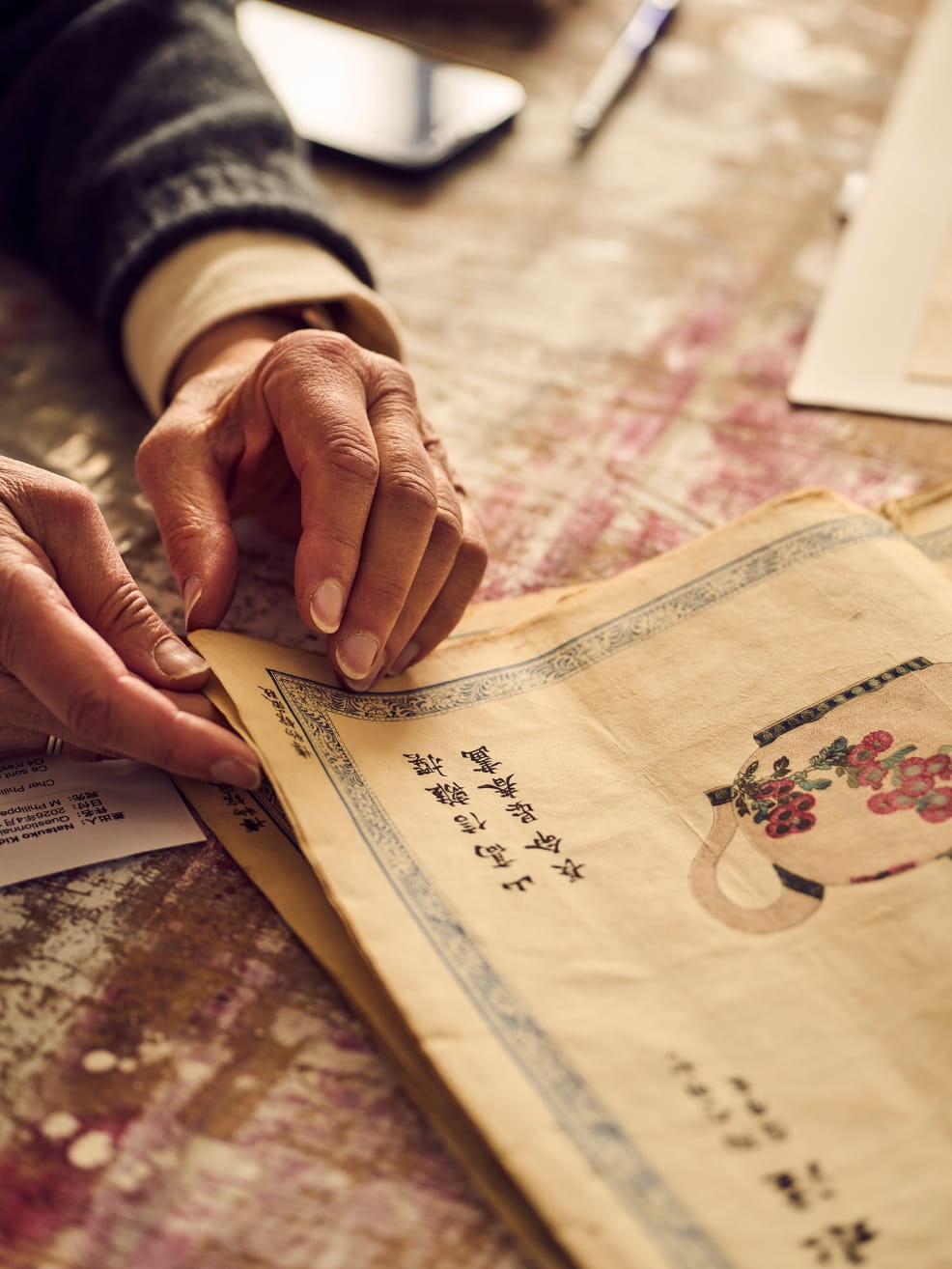
From the upstairs of his studio, Weisbecker brought down a collection of Japanese prints bound with string. On the cover is a pitcher, while the pages reveal illustrations of all kinds of objects.
“Who knows, maybe without knowing I found my passion through this book.”
“Around the time of the 1970 Osaka Expo, I got to visit Kyoto. People were still wearing kimono and geta. I was blown away by the indigo hanten embroidered with sashiko. The city streets were lined with these old stores and workshops. This precious book is the only souvenir I brought back from that whole trip.”
Which brings us back to Weisbecker’s life today.
“I used to live in Barcelona. Now I divide my time between Paris and Normandy. I like to live in different countries and cities for a certain length of time as I draw inspiration from where I live. Wherever I am, I like going to flea markets. There, I always stumble on some fascinating ordinary objects.
Weisbecker is happy to talk about his favorite tools.
“I picked this pencil up in Tokyo in 2002 and I’ve been using it ever since. It’s pretty heavy, feels like an extension of my arm. That’s why I love it.”
We asked Weisbecker one more thing.
Thinking of clothes as tools in their own right, what makes an item a longstanding favorite?
After a beat, he answered.
“Quality and craftsmanship.”
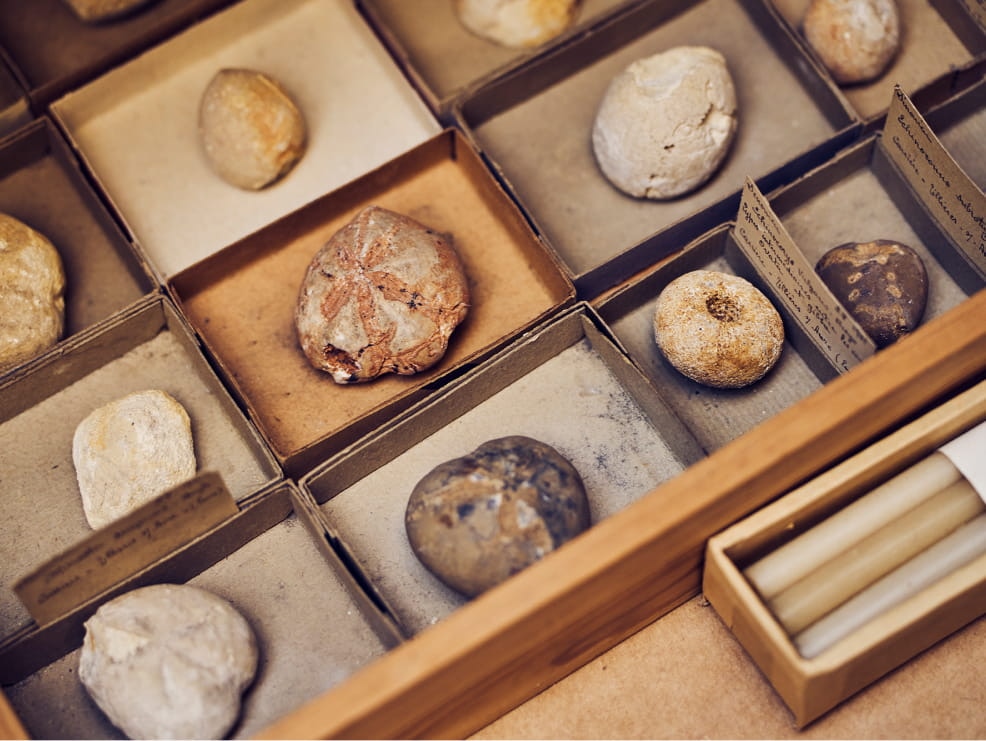
Sea urchin fossils in a specimen box, picked up at the flea market in Vanves.
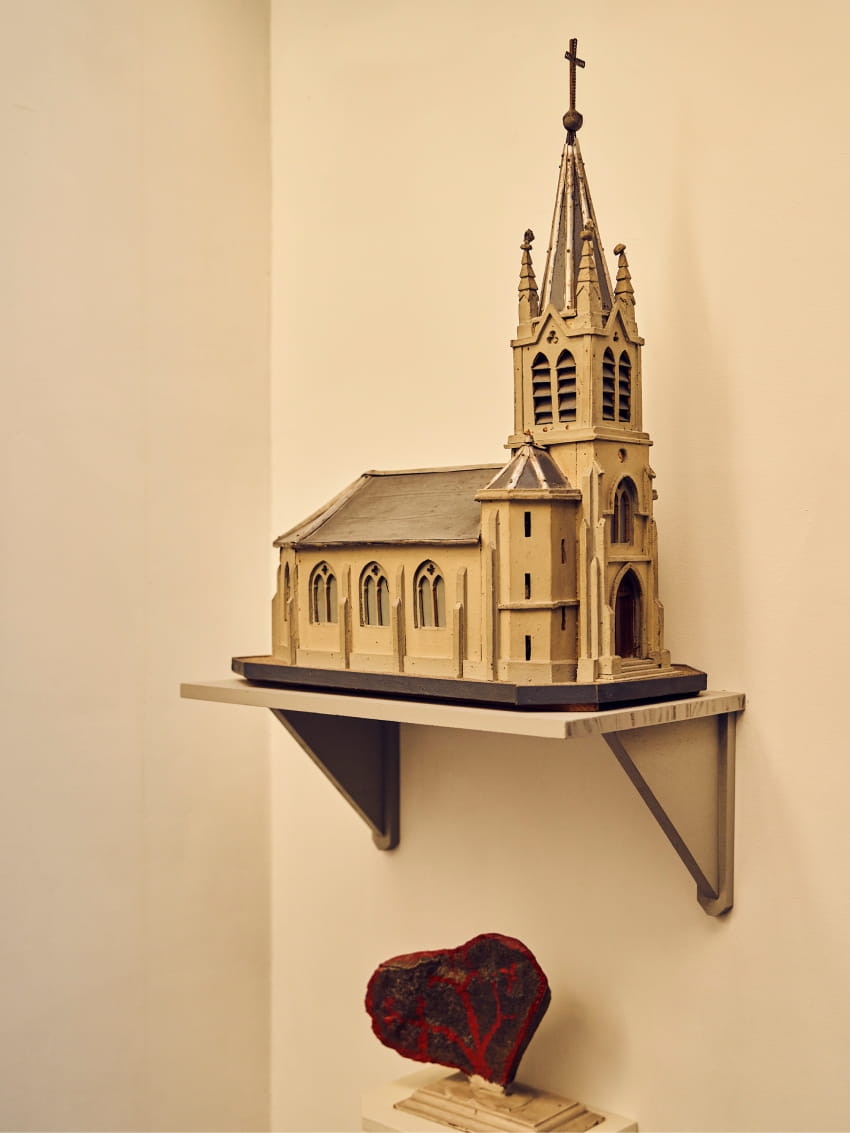
a church model made from wood by a hobbyist. Displayed on a shelf Weisbecker made himself.
Drafts for the LifeWear magazine cover art, attached to the wall of the studio. There are no preliminary sketches. The form comes to the fore through trial and error.
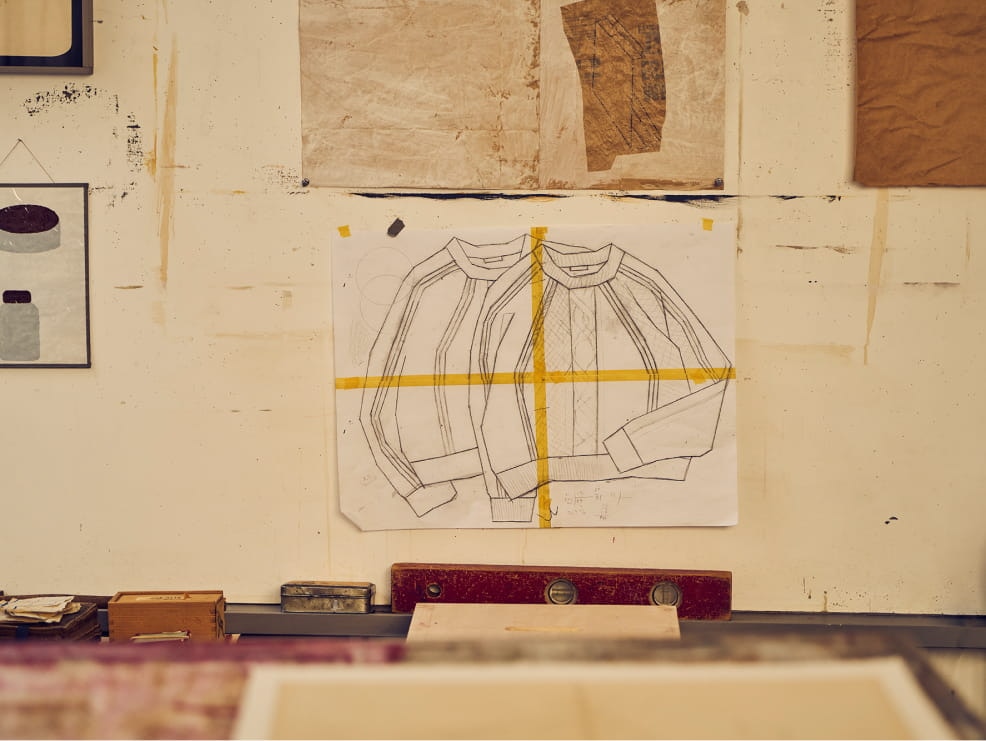
Drafts for the LifeWear magazine cover art, attached to the wall of the studio. There are no preliminary sketches. The form comes to the fore through trial and error.
What keeps you drawing?
“I think I will never stop drawing. It is for me the only way towards an ever eluding truth.” In his youth, Weisbecker was exposed to all kinds of beautiful objects passing through the hands of his aunt who was an antique dealer, leading him to pursue an artistic career.
He ended up studying interior design at École nationale supérieure des arts décoratifs but in his final year, he grew tired of it and shifted to study graphic design. “I realized then that rather than looking at things from the inside out, I longed to gaze at objects from the outside in.”
Reaching sixty was a turning point for Weisbecker. This is when he turned away from commissioned work to focus on his own creative output. But rather than focusing on painting, he decided to use pencil, ruler, eraser and paper. After thirty years working in illustration, he realized that these would be the most suitable tools and materials for his new path. No longer held back by commissioned projects, he could let his inspiration guide him whenever and wherever it chose to go.
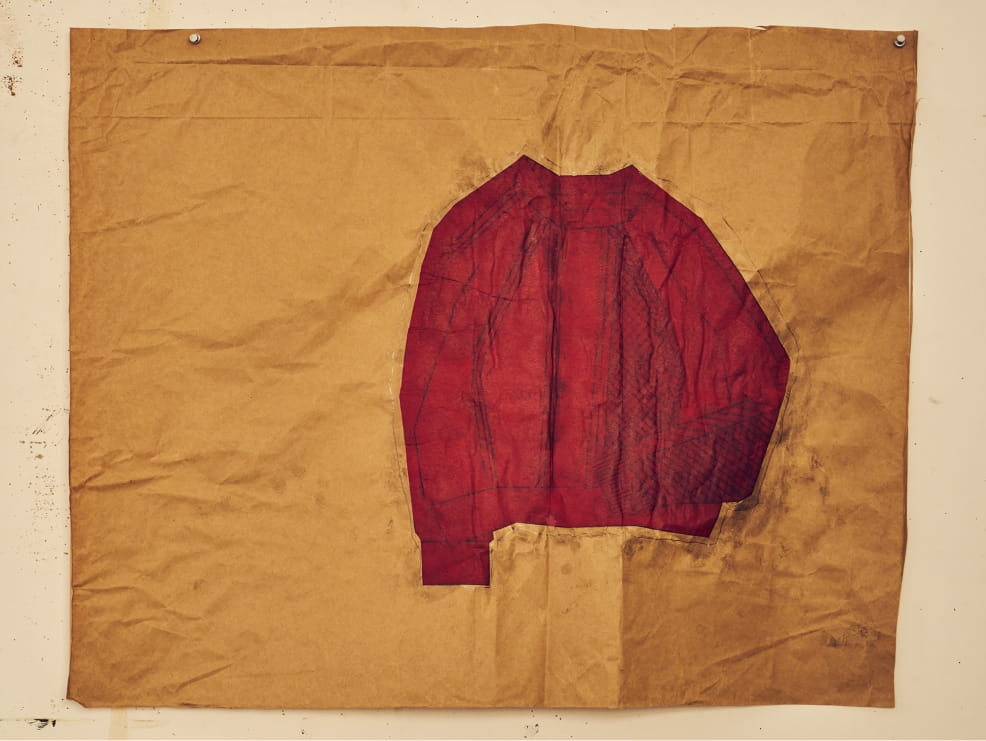
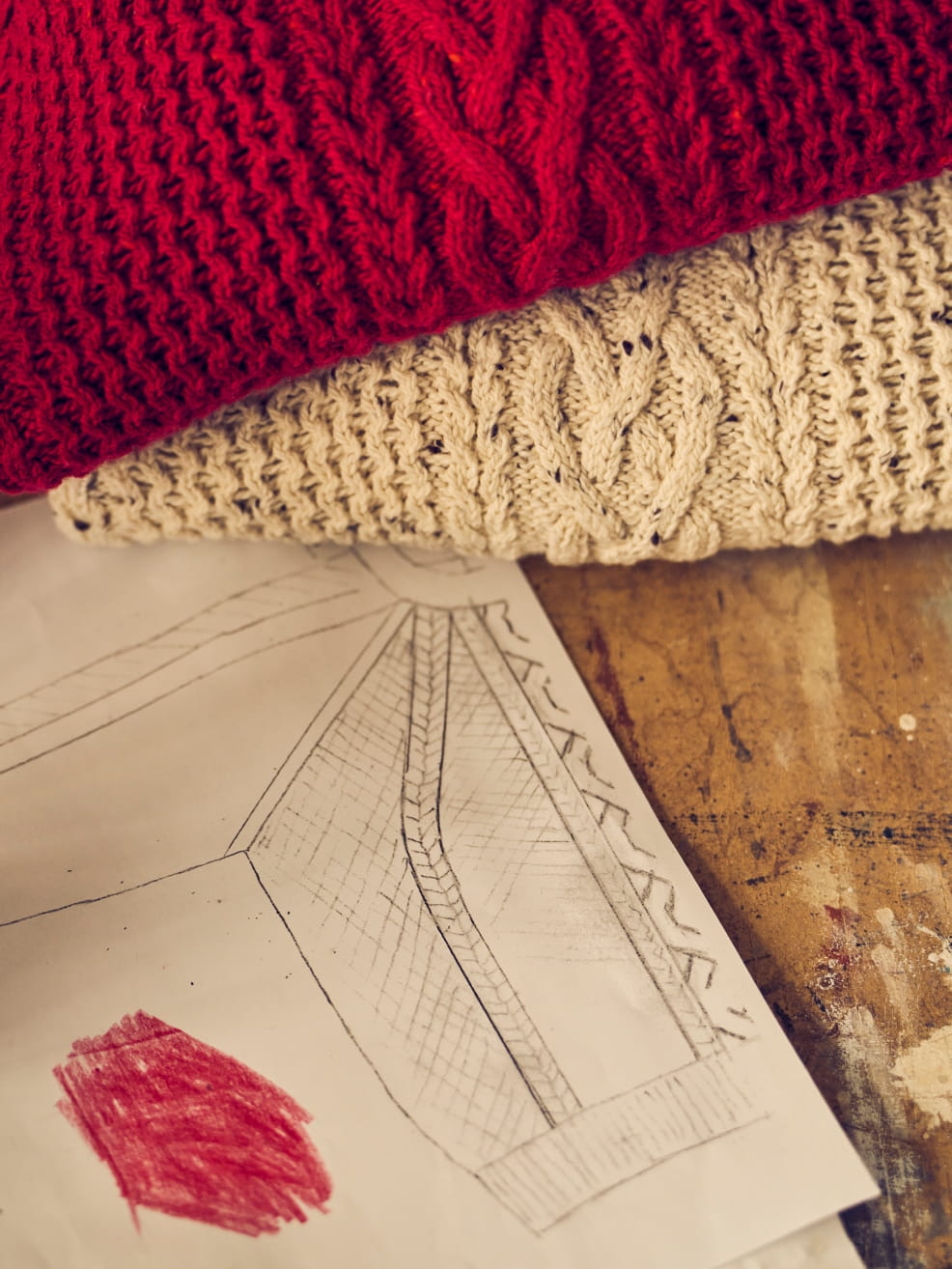
Another version of the sweater, tacked on the studio wall. Experimenting with pasted paper is part of a process of continually uncovering new expressive possibilities.
Japanese print collection and some favorite tools. Weisbecker uses these saws and this hammer almost every day.
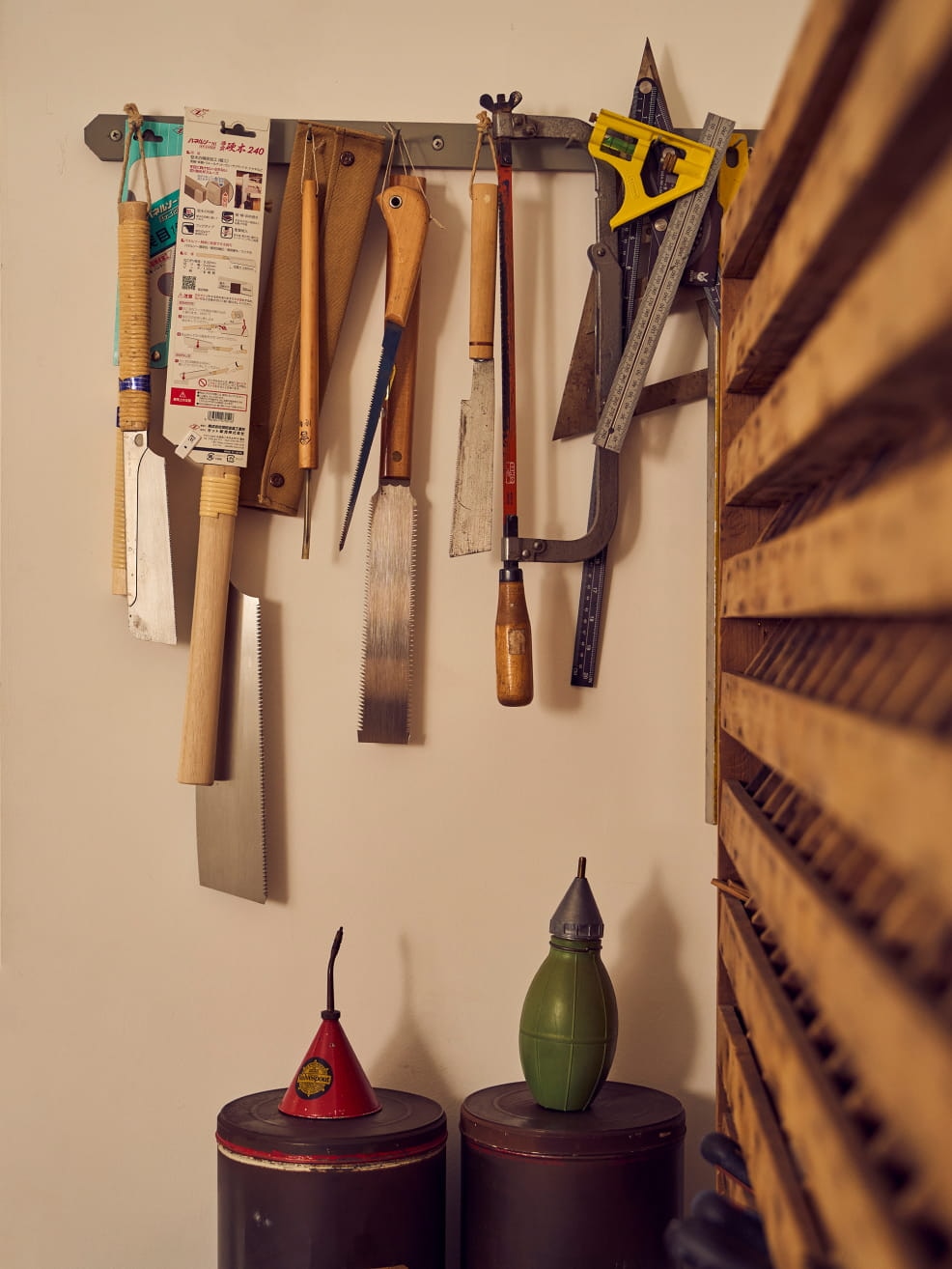
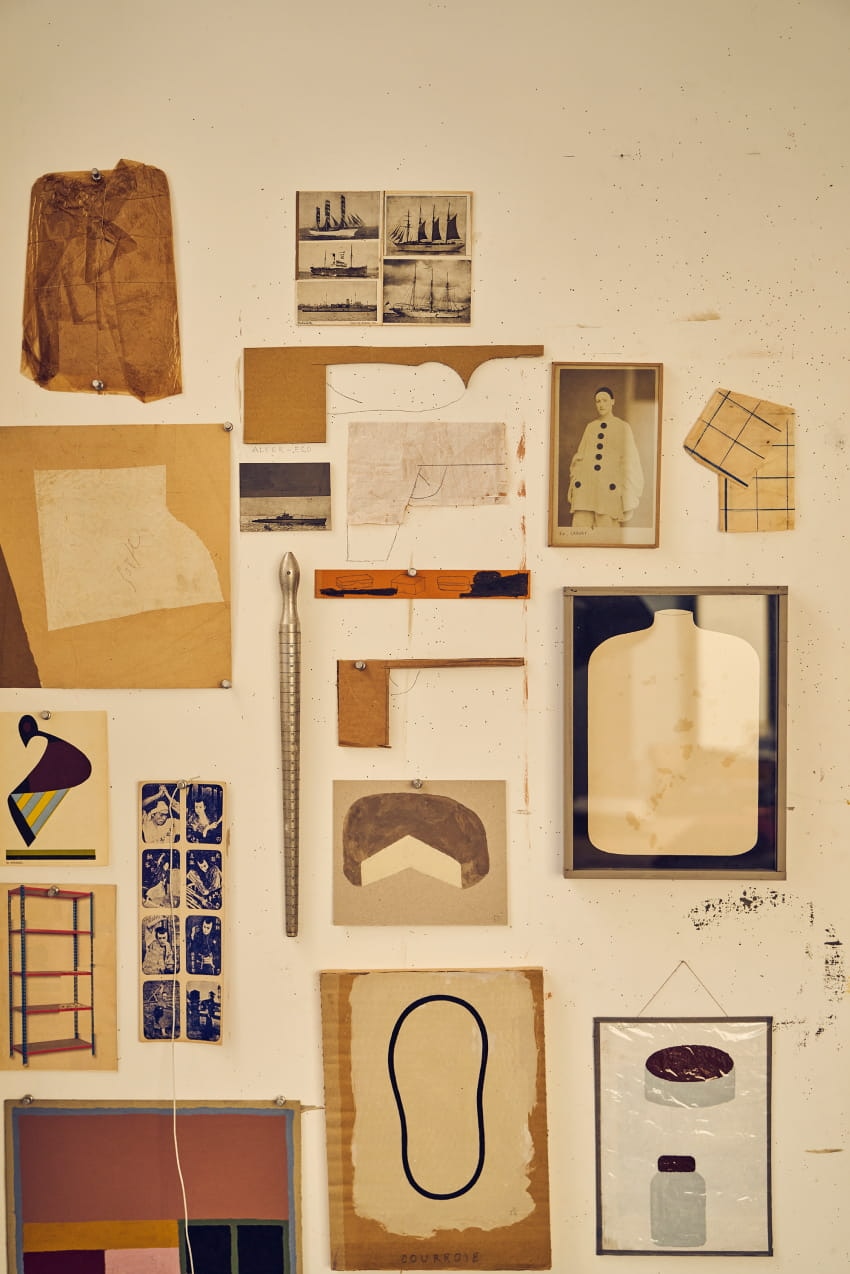
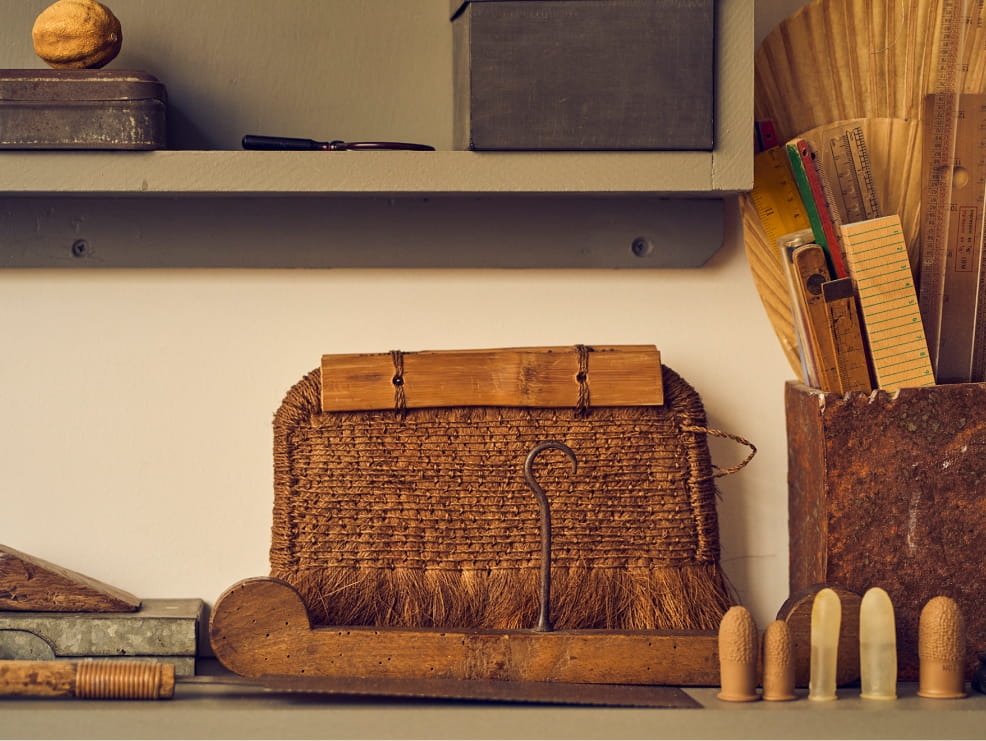
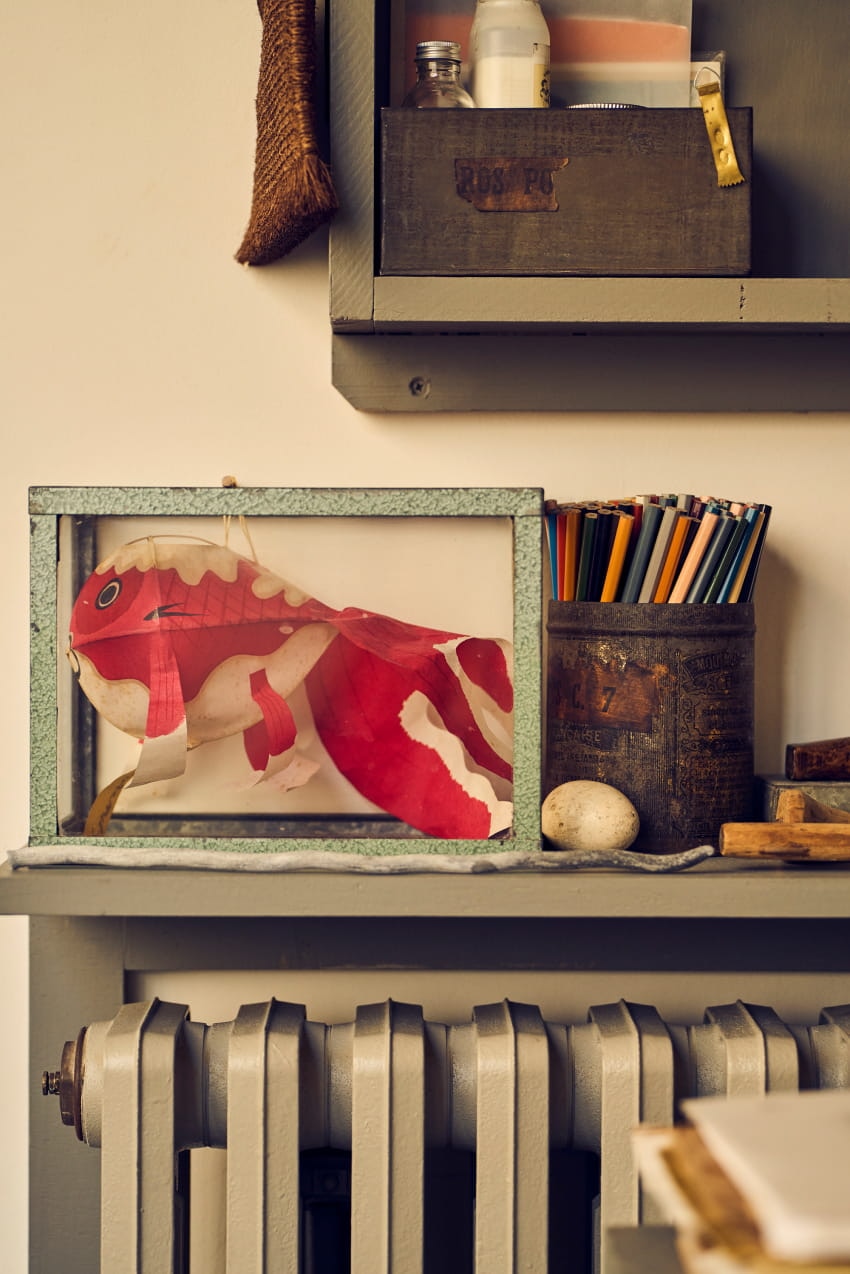
The studio walls are a mix of works in progress and curious objects. Rulers, brushes purchased at the former Paris retailer Comptoire de l’Asie et de l’Orient, a strangely shaped coat hanger, a rubber thimble picked up at a Japanese stationery store. There’s also a goldfish lantern shipped over from MOROcraft antiques and a Fushimi doll fox figurine given to Weisbecker by Tanka Ceramics, an eighth-generation figurine studio in Kyoto.
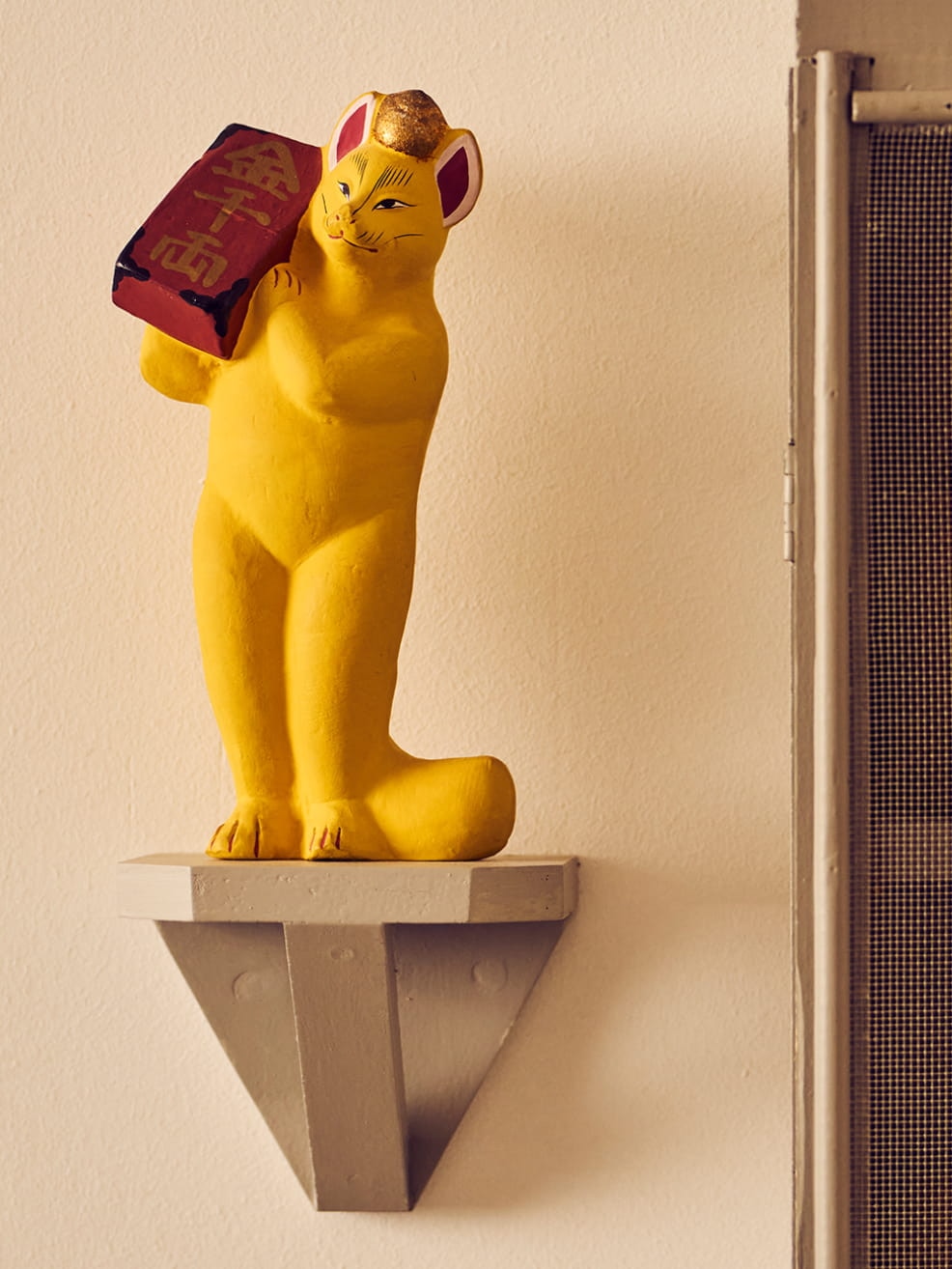
The studio walls are a mix of works in progress and curious objects. Rulers, brushes purchased at the former Paris retailer Comptoire de l’Asie et de l’Orient, a strangely shaped coat hanger, a rubber thimble picked up at a Japanese stationery store. There’s also a goldfish lantern shipped over from MOROcraft antiques and a Fushimi doll fox figurine given to Weisbecker by Tanka Ceramics, an eighth-generation figurine studio in Kyoto.
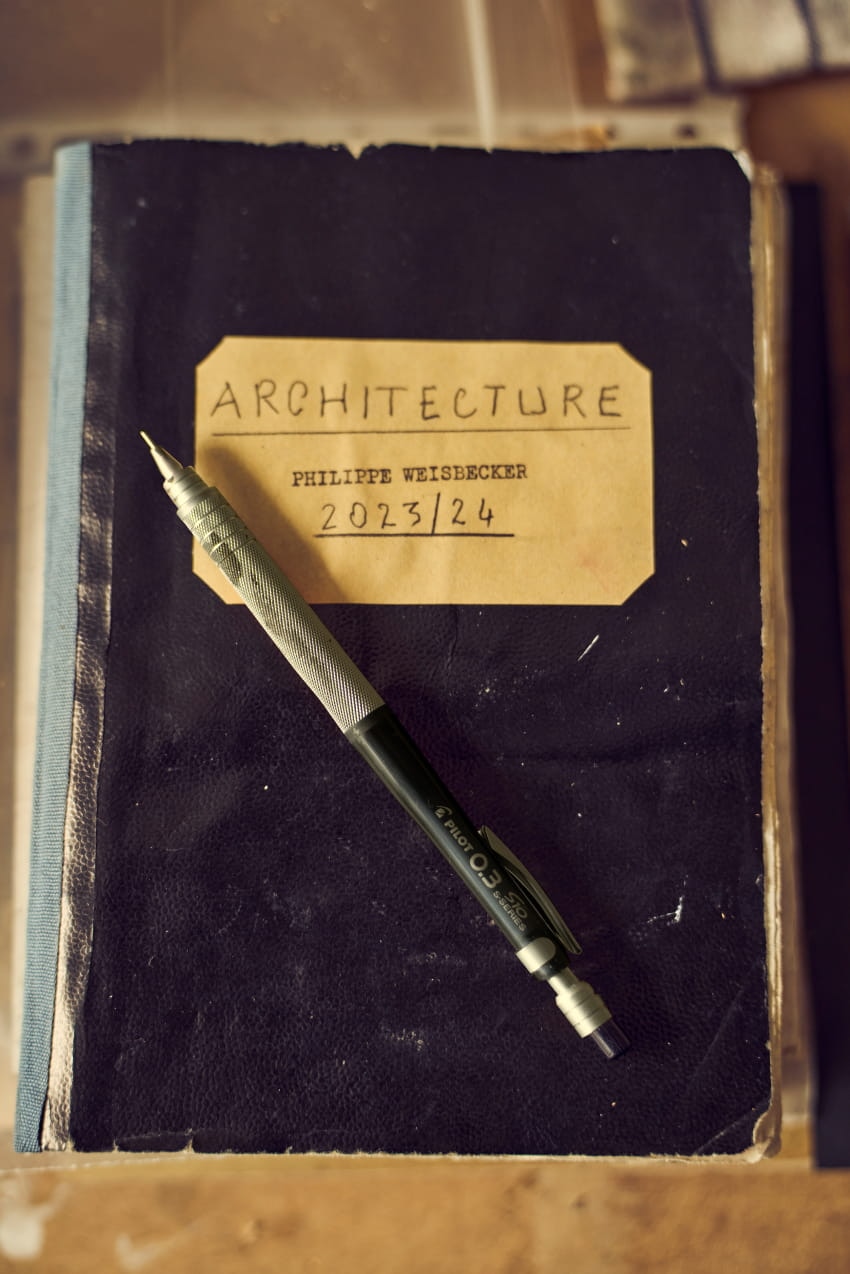
Purchased in Tokyo in 2002, this pencil has become a favorite tool. It’s a little heavy, but the heft is part of the appeal.