

Understanding TOYOTA's Manufacturing Through Legendary Cars
Photography cooperation: TOYOTA Automobile Museum
TOYOTA's Manufacturing Spirit: "For The Ones We Serve"
"For the ones we serve." This simple phrase, inherited from our inventor Sakichi Toyoda and often invoked by Chairman Akio Toyoda, lies at the very heart of what we do. People always come first. Before anything else, we ask ourselves: who are we doing this for, and what can we do for them? Functions, design, methods, solutions — all of that comes later. This is the foundational spirit of TOYOTA's manufacturing, and the basis of our design philosophy. In practice, this means we start by deeply understanding the people who will use what we create. We begin with people, and from there, the concept naturally emerges. Rather than anchoring ourselves to the history of cars, we stay close to the history of how people live — considering lifestyle, environment, and the challenges of each era. And from that understanding, we search for the best solution every time.
The Essence of Design is "Visualizing Ideas”
For TOYOTA, design means visualizing the ideas of everyone inside and outside the company, giving form to visions. That can be drawings, three-dimensional objects, text, concepts, or various things, but in our Vision Design Division, we materialize these ideas in collaboration with design bases both domestically and internationally. This is very important—no matter how much we debate around a desk, we ultimately can't decide. With our principle of "Genchi Genbutsu (go and see)" we learn a lot by actually making things and trying them out, so visualizing what's the best way to express something is a major role of design. How car design is born beyond that starts with building a concept. Materializing the experiential value of people when they move ultimately comes down to connecting people's ideas and visualizing them.
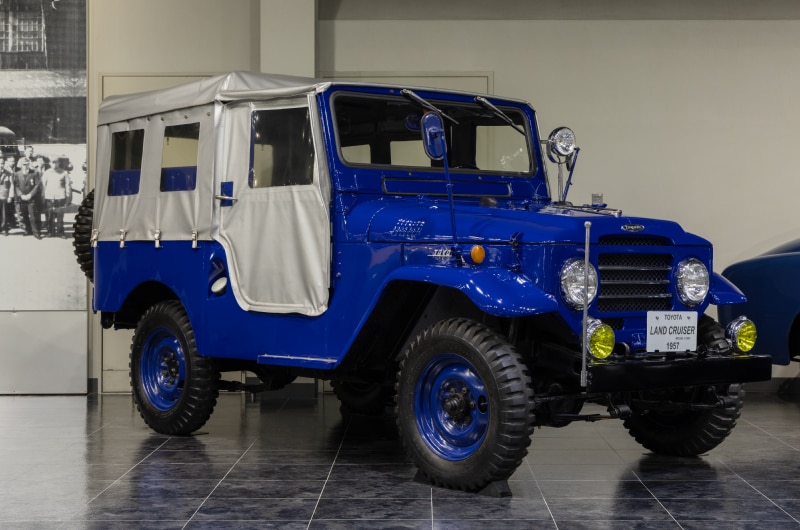
LAND CRUISER (20 Series)1957
Following the first generation (BJ model) developed for bidding as a cross-country vehicle for rough terrain at the request of the National Police Reserve (now Japan Ground Self-Defense Force), the second-generation commonly called "20 Series" had a civilian-oriented appearance. A pioneer in four-wheel drive vehicles that evolved as a versatile car for any purpose, enabling driving through water, mountain climbing regardless of conditions, imagining a land cruiser from its powerful mobility. Because it uses synchromesh mechanisms, steering dampers, and suspension comparable to passenger cars, it's easy to drive and achieve a comfortable ride. It was applied to a wide range of uses from cargo-passenger vehicles to trucks, light vans, fire trucks, and medical vehicles. It's also the model that started genuine exports overseas.
Car Design Starts with Building a Concept
The car design process first establishes a concept. It's not just about being able to move, but on the premise of making someone's life or work easier, the path diverges greatly depending on whether it's for leisure or for work. Even among 100 people with 100 different values, we hold onto common ground as a foundation while adding a plus alpha. It differs by family composition and generation, so even after the big path diverges, it branches into many small paths. How much we can cover while establishing a concept is important. And before getting into the exterior silhouette and design, there's one more thing we must do, called "package design," which covers the entire vehicle design and layout—passenger space, parts placement, and more. This is also part of the concept: "how many people will ride," "in what position will they ride," and according to the purpose, we decide where people sit and the position of the engine and four tires.
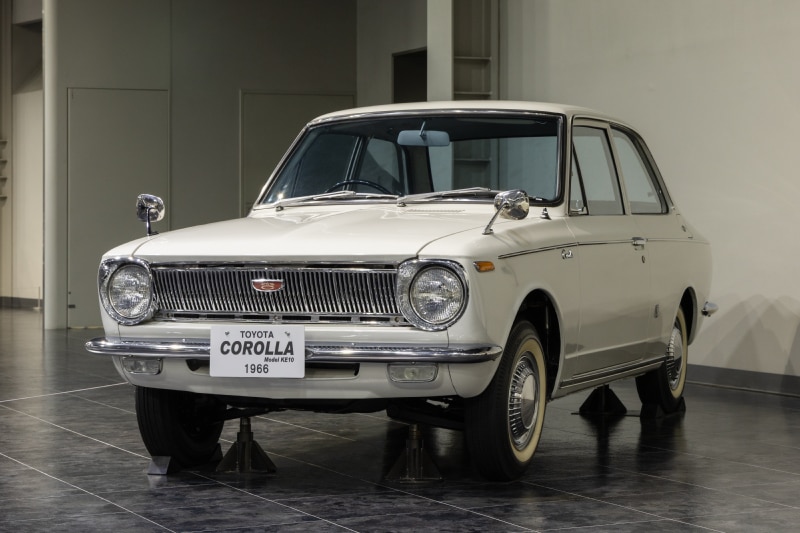
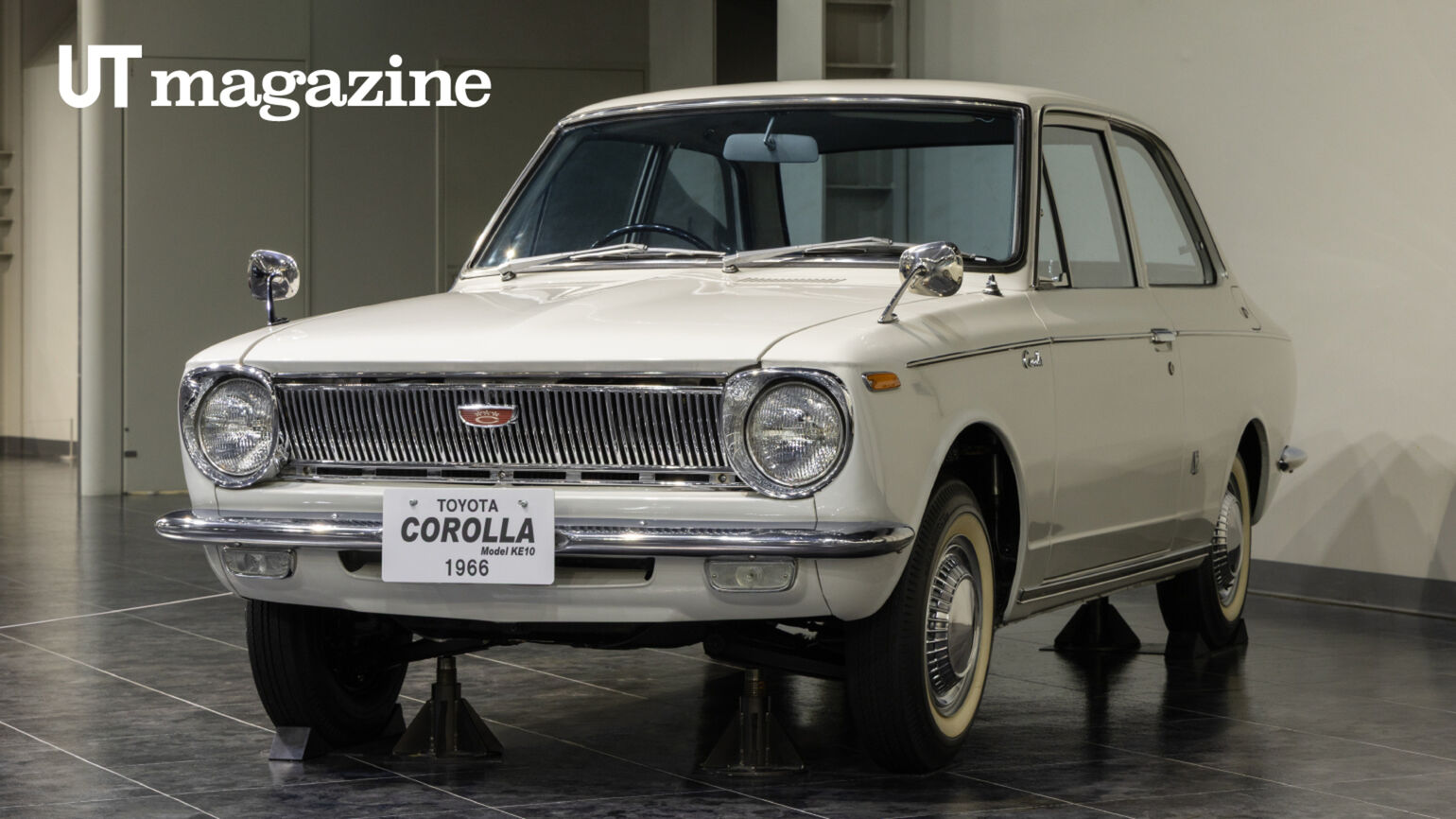
TOYOTA COROLLA1966
1077cc powerful 60 horsepower engine, 6000 rpm, 0-400m in 19.7 seconds, top speed 140km/h High-speed design exceeding European standards, boasting 1500cc class performance. A 5-passenger car provided for the mass market. Dynamic headlamps reminiscent of a leopard's eyes, a bonnet with elegant bulge in the center, a sharp flowing rear, an innovative style with extensive use of curved surfaces. Furthermore, with features like spacious and comfortable interior space, quiet design with noise blocking, and economical design with household-friendly low fuel consumption, it satisfied the aspirations of a wide range of people who wanted their own car as a compact crossover.
TOYOTA's Distinctive Added Value
While staying true to the core concept, we have always sought to add an extra layer of value—something beyond the expected. For example, at a time when rival models as well as European and American cars typically had engine displacements of 1000cc, the first-generation COROLLA was equipped with a 1077cc engine. This allowed it to deliver the same level of functionality while offering a subtle yet meaningful advantage in specifications. The same approach applied to design. Mass-market cars tend to become boxy when prioritizing interior space, but with the first-generation COROLLA, we introduced an added refinement in what designers refer to as surface quality. While competitors’ exterior designs often featured hard, lean surface treatments, the COROLLA adopted gently rounded forms with a sense of tension. By enhancing the quality of its surfaces and lines, the car achieved a more elaborate and refined appearance. We believed that this attention to detail would give the COROLLA the presence and value of a vehicle one class above, ultimately resonating more strongly with customers.
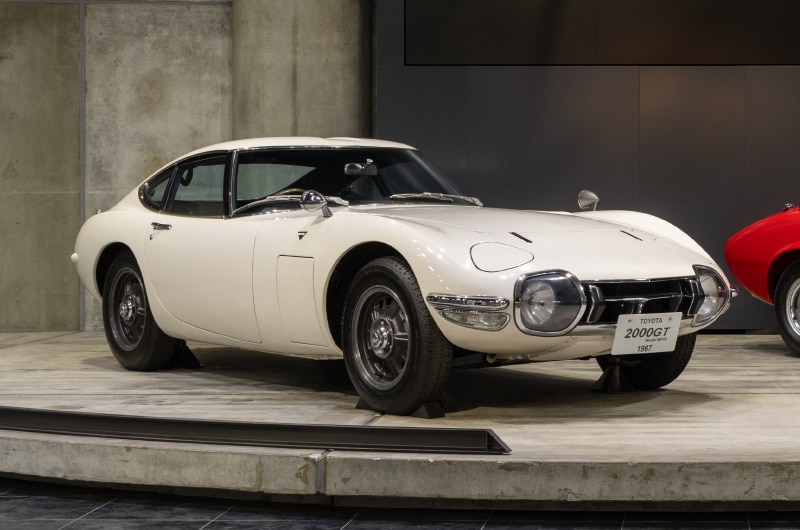
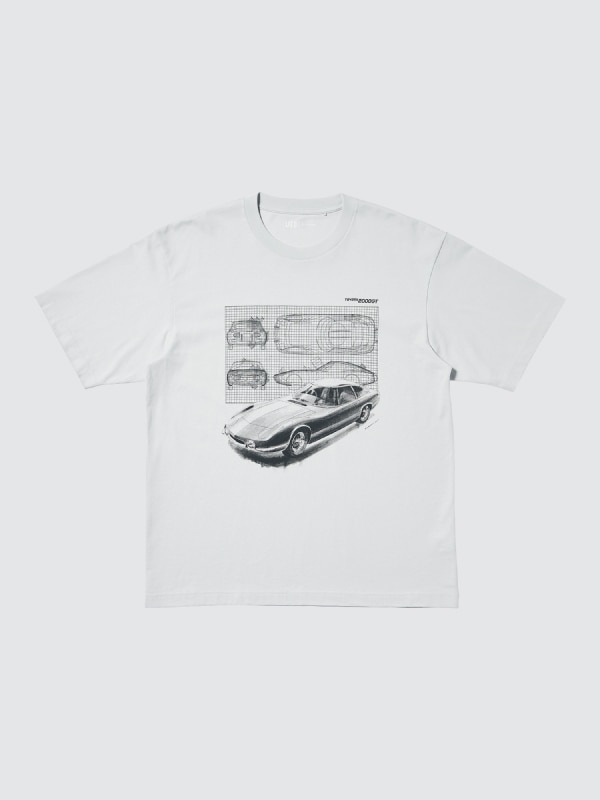
TOYOTA 2000GT1967
Top speed 220km/h, maximum cruising speed 205km/h, 0-400m in 15.9 seconds A crystallization of advanced technology developed with the cooperation of Yamaha Motor Co., Ltd., possessing world-class top performance in the 2000cc class GT (Grand Touring) while also having luxurious practicality for city driving. In ultra-high-speed endurance trials, it ran at an average speed of 206.18km/h for 78 consecutive hours covering 16,000km, establishing 3 world records and 13 international records. It has an elegant style wrapped in an ideal body with smooth curves that extremely reduced air resistance, determined as a package for fast driving—the position and size of the engine, chassis, interior dimensions, etc. A prototype converted to open-top was used in the movie 007: You Only Live Twice, making its name known worldwide. A car that fused both performance and beauty at the highest level.
Creativity That Never Gives Up Until the End
The characteristic of TOYOTA's creativity is that design and engineering are integrated. Considering safety and durability based on ergonomics, engineers who don't want to reduce performance and designers who want to make things more beautiful continue to exchange ideas face-to-face until they're satisfied, looking for good solutions. For example, smaller mirrors look cooler, but they're hard for drivers of different heights to see. We aim for something everyone can use easily, not someone compromising, looking for methods to show it beautifully without impairing function. It's difficult to 100% satisfy everyone, but we don't give up until the very end to get as close as possible. We make decisions after repeatedly verifying from various angles. Moreover, these improvements continue even after release, constantly updating by replacing parts. I think this attitude of pursuing even these meticulous details is an expression of TOYOTA's creativity.
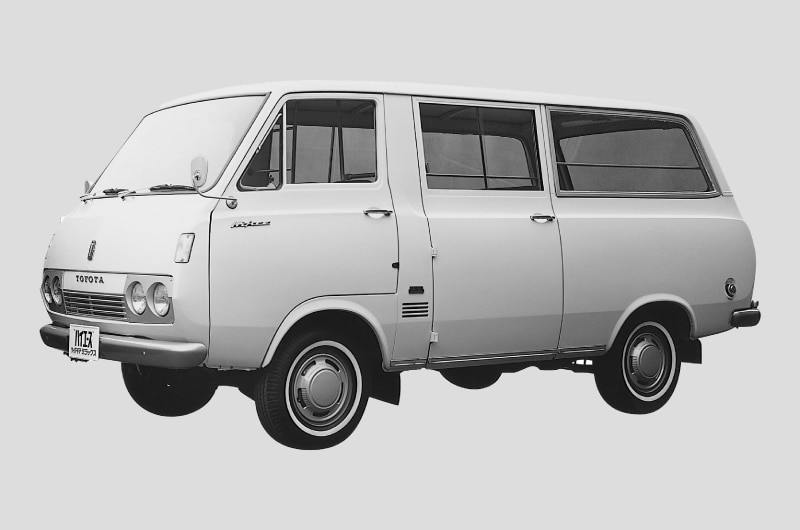
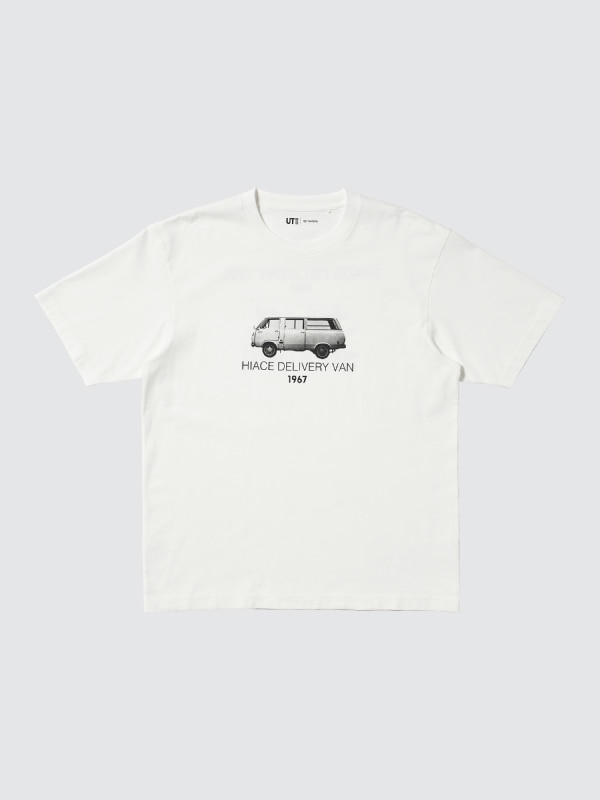
HIACE DELIVERY VAN 1967
345cc, 65 horsepower engine, load capacity 500-850kg The HIACE DELIVERY VAN was designed and developed as a genuine all-weather cargo-passenger vehicle. By adopting a monocoque body structure, it made the floor low and enabled securing a wide loading space. Easy to get in and out, easy to load and unload cargo, while having sufficient functionality as a commercial vehicle, it's a new commercial vehicle with a passenger car mood, designed based on the spirit of respect for people. It demonstrated the foresight of TOYOTA's technical team in quickly adopting the van conversion of trucks that was trending worldwide.
Four Cars That Built TOYOTA's History
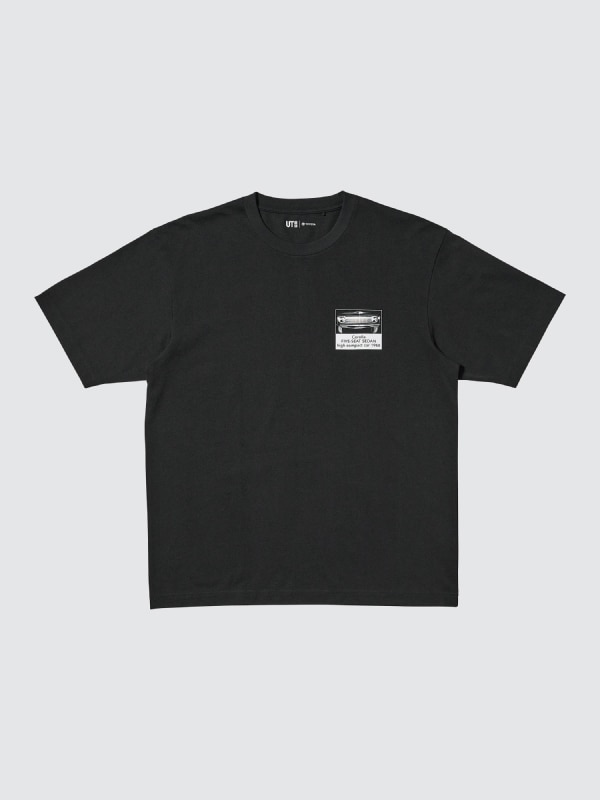
The four cars selected for the UT artwork—"COROLLA," "LAND CRUISER," "HIACE," and "2000GT"—are each the originals for TOYOTA their respective uses and purposes. The COROLLA established itself as a representative national family car among passenger vehicles. It's one of the best-selling cars in the world and an indispensable icon when talking about TOYOTA's history. The LAND CRUISER is the original 4WD and SUV. With the concept "a car that can go anywhere and will always come back," it's packed with values of maximum durability, driving performance, and reliability that it demonstrates even in the harshest environments. The design approach also has safety driving functions as its backbone, such as securing visibility to not fall off cliffs and raising the edges of the hood fender so you can see the four corners of the vehicle. The HIACE represents working vehicles. By taking a van form that could cover both passenger and commercial use from the previous truck type, it could be active at work sites while also taking the family to leisure on weekends. One car could satisfy two or three user needs. The 20 0 0GT established the position of the original domestically produced luxury sports car. It's a legend in Japanese automotive history that concentrated the technology of the time, and it's a symbolic car that appealed TOYOTA's passion, technical ability, and design power to the world. We thought we could express TOYOTA's diverse manufacturing history through these four models.
Providing a Believable Future
How do we think about future car design? Chief Branding Officer Simon Humphries often says, "Let's provide something believable." Even if we make a dream car like a spaceship and call it a car 20 years from now, we can't imagine it at all. Imagining the future 20 years ahead and working backwards to plan and think about what we should do now is called back casting, but even if the concept is a wild fantasy or boldest dreams, how far we bring it back is about 5 years ahead where it clicks, providing something just at the edge of what seems achievable. That requires not just basic research on population ratios and market trends, but also a designer's intuition that "it might work." We gather signs related to all aspects of food, clothing, and shelter that haven't become trends yet, brainstorm which one to bet on, and ideas are born. When developing the concept car "IMV Origin" announced for emerging African countries, we also went to a Maasai village in Africa for field research. By doing "Genchi Genbutsu (go and see)" we can find hints for a believable future.
The Future of Mobilit
I feel that the coolness and beauty of a car as a vehicle with four wheels, and its fundamental value, are unchanging elements, but there are also parts that should change. One is cost. Can we make it lower cost as a tool, like the first-generation COROLLA aimed for? Now that cars have become expensive, I'm thinking about whether we can recreate that familiar feeling once again. The other is adaptability to diversity. To respond to diversifying needs worldwide, it's becoming important to further subdivide lineups so that everyone can definitely find something that fits, and how we work, so no one is left behind. Also, in our global development, toward achieving Carbon Neutrality (CN), we're choosing "Multi-Pathway." In other words, not just looking at EVs (electric vehicles) in one direction, but everything—gasoline, hybrid cars, fuel cell vehicles (FCVs), hydrogen, everything is available. Our enemy is always CO2. For example, there are regions where EVs are advantageous, but also cases where battery manufacturing uses massive amounts of electricity, and depending on how each country supplies energy at its source, and in regions where gasoline is cheap, hybrid cars may have longer range and ultimately result in lower CO2 emissions. We think about the best decarbonization method according to the elements, environment, and situation required by each country and region. We consider it our mission to provide diverse powertrains. Our work starts with cars and is about providing mobility for living more comfortably and richly. Going forward, with this philosophy, we want to continue giving form to a believable future.
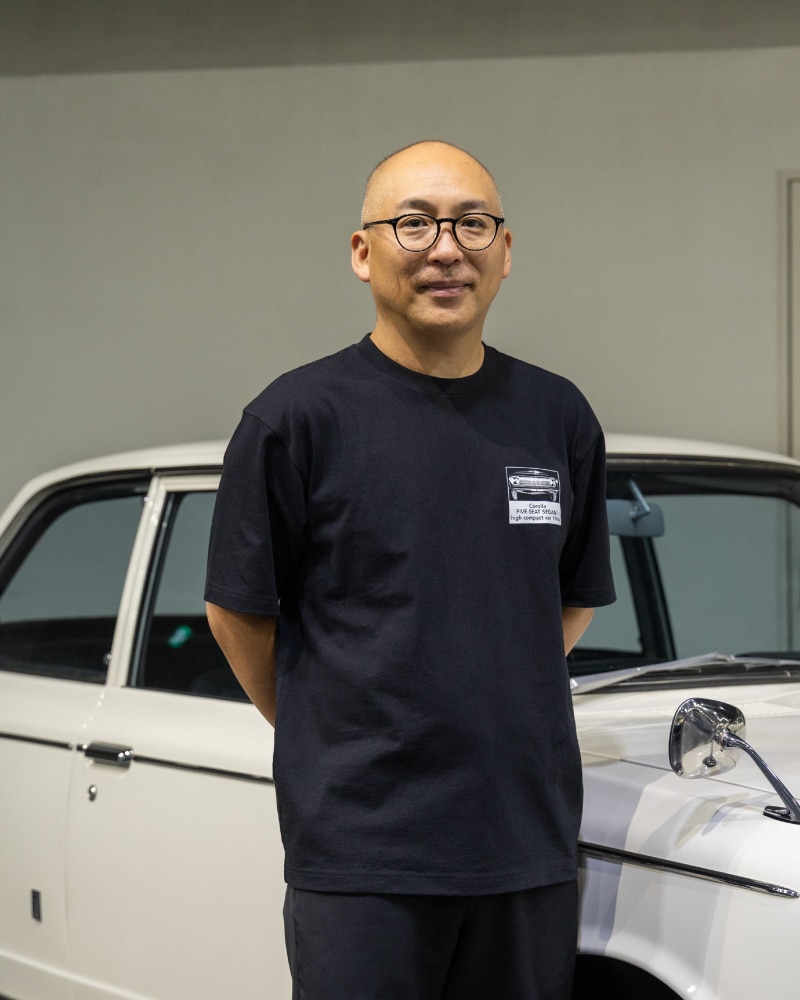
After graduating from Aichi Technical High School's Design Department in 1991, he joined the company. He has worked on interior design for many vehicles including the first-generation VITZ, first-generation AURIS, first-generation AYGO, IQ, JAPAN TAXI show car, and GRANACE. From 2008-2011, he was stationed in Europe. In 2015, he became the Project Chief Designer for the current YARIS, served as Interior Design Department Manager in 2017, and has been General Manager of the Vision Design Division since 2021.
© 2026 TOYOTA MOTOR CORPORATION. All Rights Reserved.
All items