My StandardLara Knows the Look
Lara’s known online as @lara_bsmnn. Here’s a primer on her fashion philosophy, backed by a keen sense and wise messages.
Lara
Content Creator
Content creator known on Instagram as @lara_bsmnn. Based in Düsseldorf, Germany, Lara has about 710,000 followers (as of July 2025). Along with daily outfit posts, her highly practical color tips and thoughts on fashion trends are also a hit.
Vivid Bomber

“I topped off this deep purple bomber with a yellow lambswool sweater. Complementary colors enhance each other’s vibrancy.” That’s Lara’s advice on boldly pairing vivid tones. What’s her secret for pulling off eccentric looks? “Balance out the volume all around. Colorful tops are best worn cropped, then anchor the look with a wide bottom. That’s the key to creating a natural flow.”
Dad Blouson

Lara pairs a roomy men’s blouson with an elegant pleated skirt, mixing tastes. “It’s all about complementary contrasts. How can you blend elements like formal and casual, masculine and feminine, while playing to their strengths? One simple technique is making the most of whites. This white shirt peeks out at the collar and hem, so repeating white in the socks ties the look together. ”
Dynamic Layering

Lara’s layers shine with originality. She’s careful to make sure an outfit isn’t too symmetrical. “Tying a checked shirt over the shoulder of the boa cardigan breaks up the vertical lines. It’s not a common look, but it’s fun, just the right balance.” Opting for neutral tones in the other items ensures that the playful check is the focal point, keeping everything in balance.

Bold colors can combine for greater impact by layering different shades. It may look challenging, but Lara has a tip for making purple outfits work. “Choose one purple as your base, then support it with either warmer or cooler variants. In this case, the deep colors of the fluffy purple muffler are offset both by a reddish turtleneck and shoulder bag and by a brighter cardigan, using a range of purples.”

“When layering, make sure the inner layer peeks out in a controlled way. This look combines three men’s shirts, all with different hems, so that the collars layer in just the right order. This time I went with indigo blue, light blue, and a light blue striped shirt. If you stick with the same color family, the outfit comes together effortlessly.” The sweater tied around Lara’s waist divides the outfit in an interesting way, giving the look dimensionality.
Heavy Balance
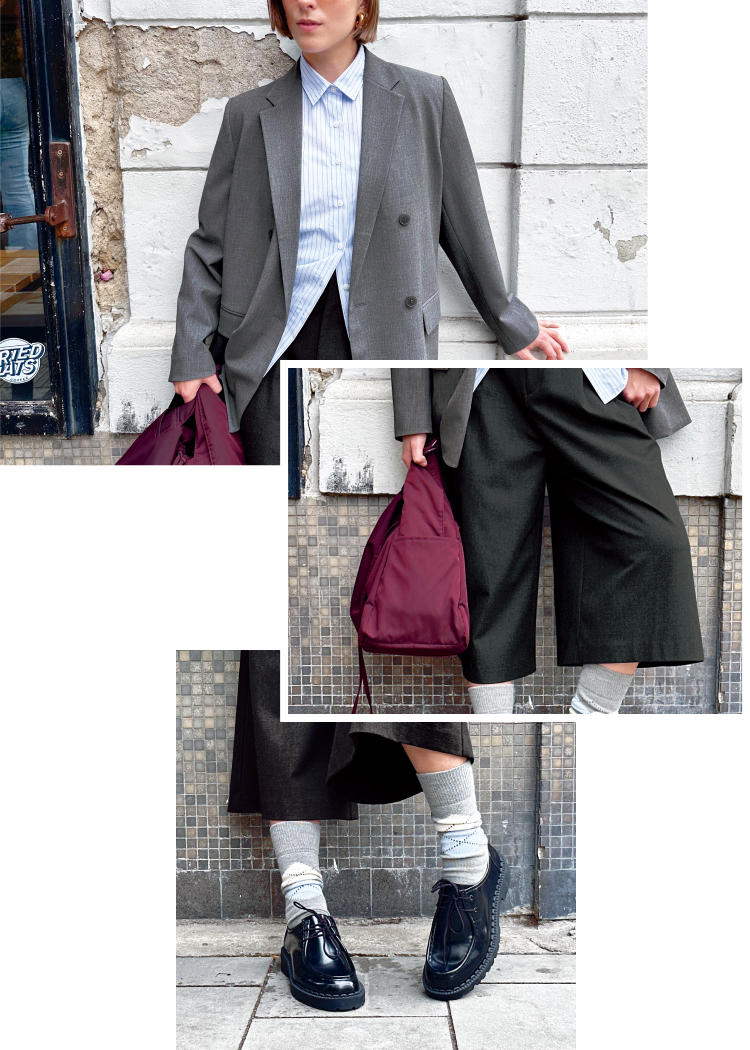
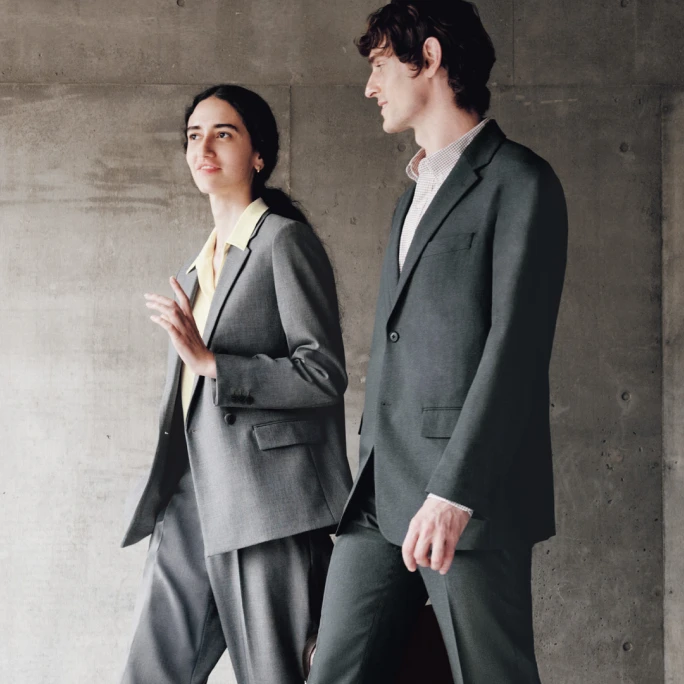
“This look blends the structured dominance of classic tailoring with the ease and attitude of streetwear.” What makes this mix of tastes effective is a heavy center of gravity. “These flared culottes are fabulous, shifting the focus down. The structure of the tailored jacket makes a “frame” for what’s happening. It pulls everything together.” Increase the impact with a big bag or shoes with chunky soles.
Fashion as a means of
self-expression

“As a kid, before I was aware of much else, I had a clear sense of what I wanted to wear.” Lara’s affinity for fashion started at an early age. A content creator known online by the name @lara_bsmnn, Lara posts about fashion, and is based in Düsseldorf.
“Back when I was posting as a hobby, I started thinking more about how to make my content interesting. The impetus behind writing on the cardboard was a desire to express my thoughts about fashion. You remember @dudewithsign? This guy that was doing all the sign messages...His weren’t about fashion, so much as topics people could relate to. I was thinking about new and fun ways to spice up my content, so I took my own personal spin on the idea.”
Today, Lara has fans all over the world. “I am so thankful that people like me and my style. The whole thing feels incredible and often very unreal.” Lara’s go-to items are comfortable classics with flattering lines. “During this shoot, I fell in love with cropped culottes all over again! For someone like me who thinks about the balance of her outfits, it’s fun to play with different silhouettes. I feel an affinity for UNIQLO’s way of prioritizing comfort, uninfluenced by trends, while still managing to always feel current.”
- Photography and film by Julian Jolink
- Styling by Lara
- Hair and makeup by Birte Krause
- Coordination by Yukiko Yamane
- Text by UNIQLO
- Special thanks to Rheinbahn AG