

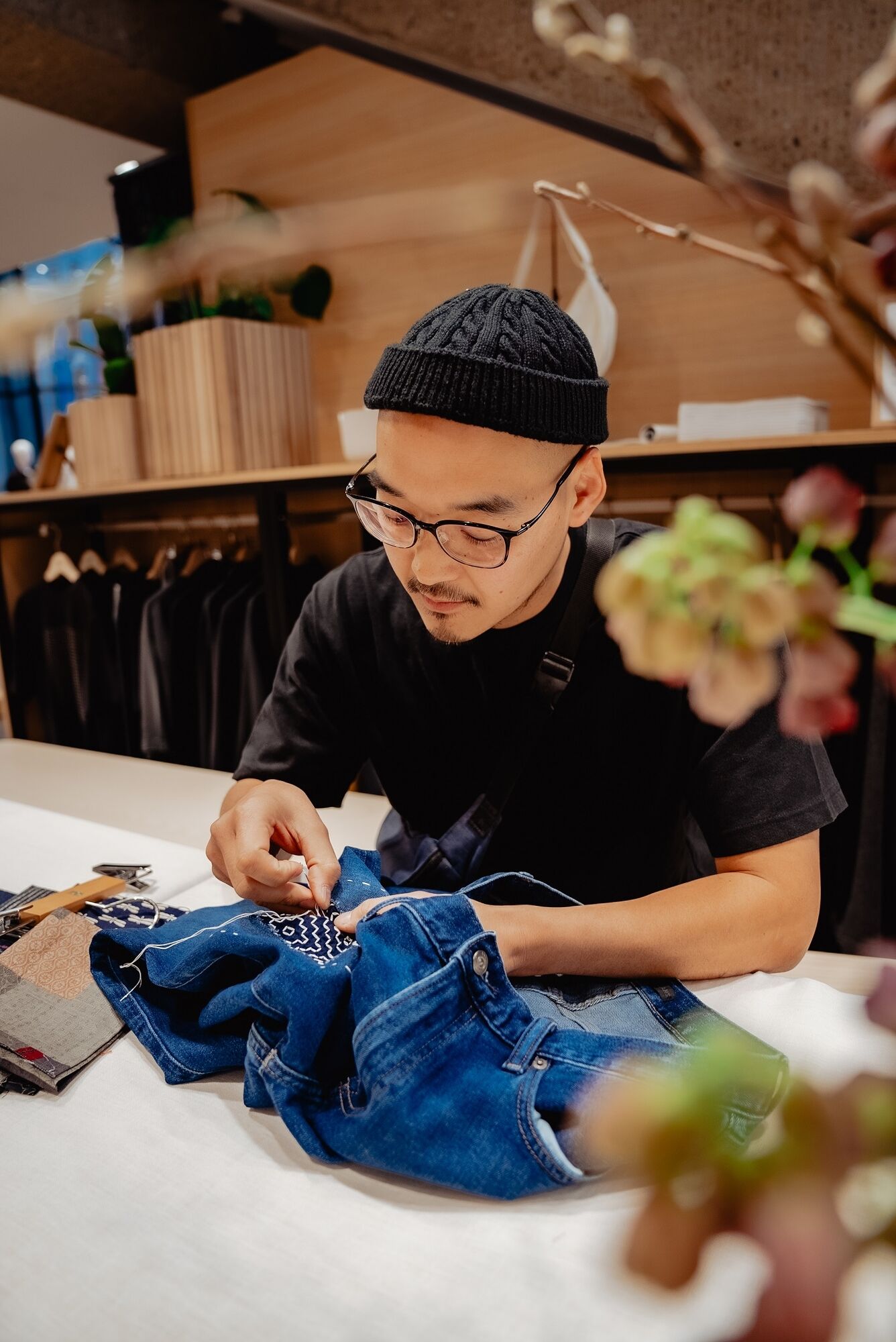
Thread stories: A conversation with Studio Masachuka
May 14, 2025
UNIQLO Today
Sashiko, craft and collaboration
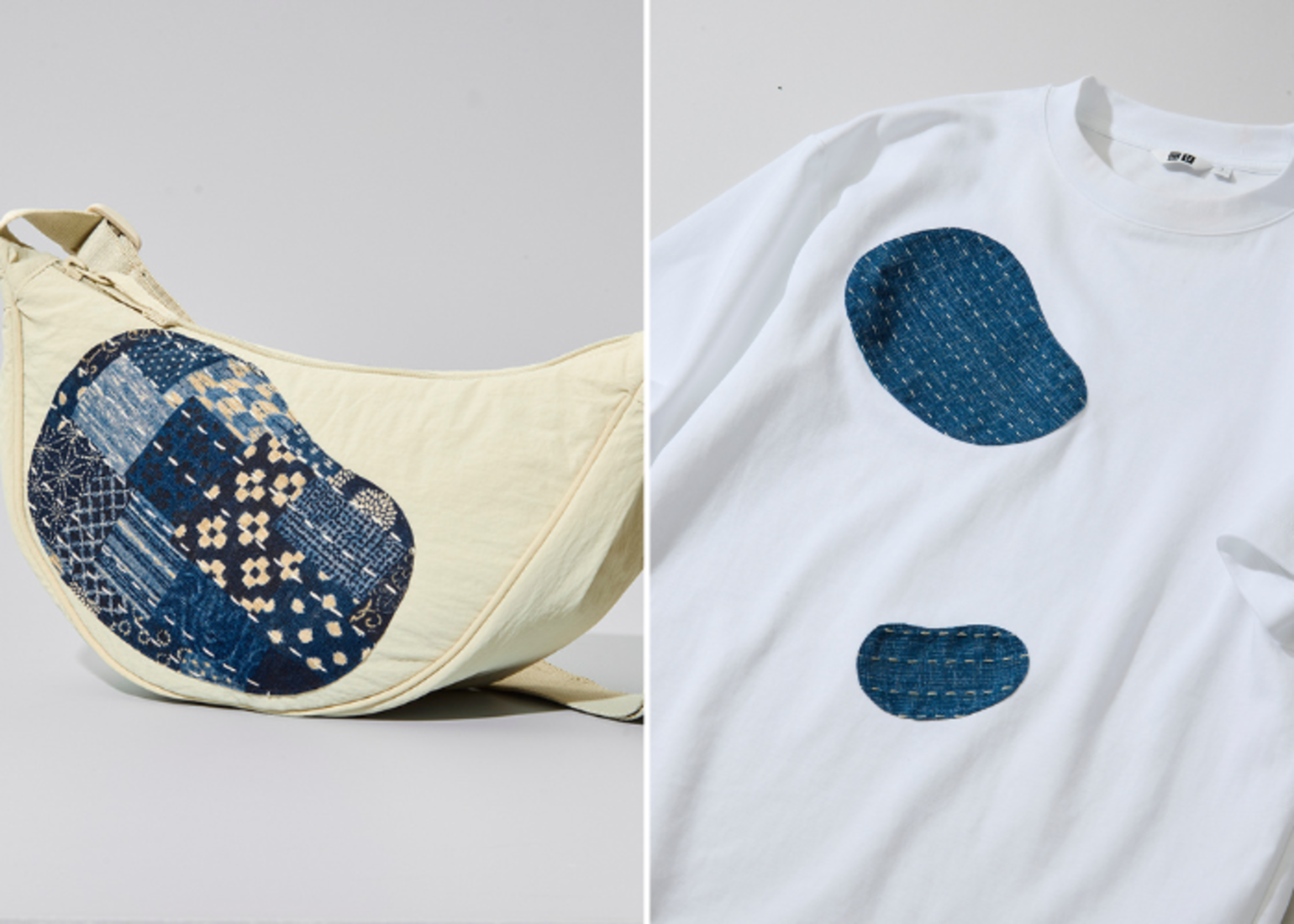
UNIQLO started to collaborate with Masahiro Morikawa, founder of Studio Masachuka, when launching the first RE.UNIQLO STUDIO in 2022. Today, we offer bespoke Sashiko mending techniques and customization of both old and new garments in all our European RE.UNIQLO STUDIOs, prices starting at 15 Euros. Now as we aim to make Sashiko even more accessible and affordable, we will begin offering machine made Sashiko patches in our RE.UNIQLO STUDIOs.
To celebrate this, we had the chance to speak with the artist himself about the roots of sashiko, why it speaks to him so deeply, and how a personal passion transformed into a full-fledged career.
Whether you’re a longtime admirer of sashiko or just discovering its textured beauty, this conversation offers a deeper look at the craft — and the artist stitching new meaning into old threads.
1. What is Sashiko and why do you love this craft?
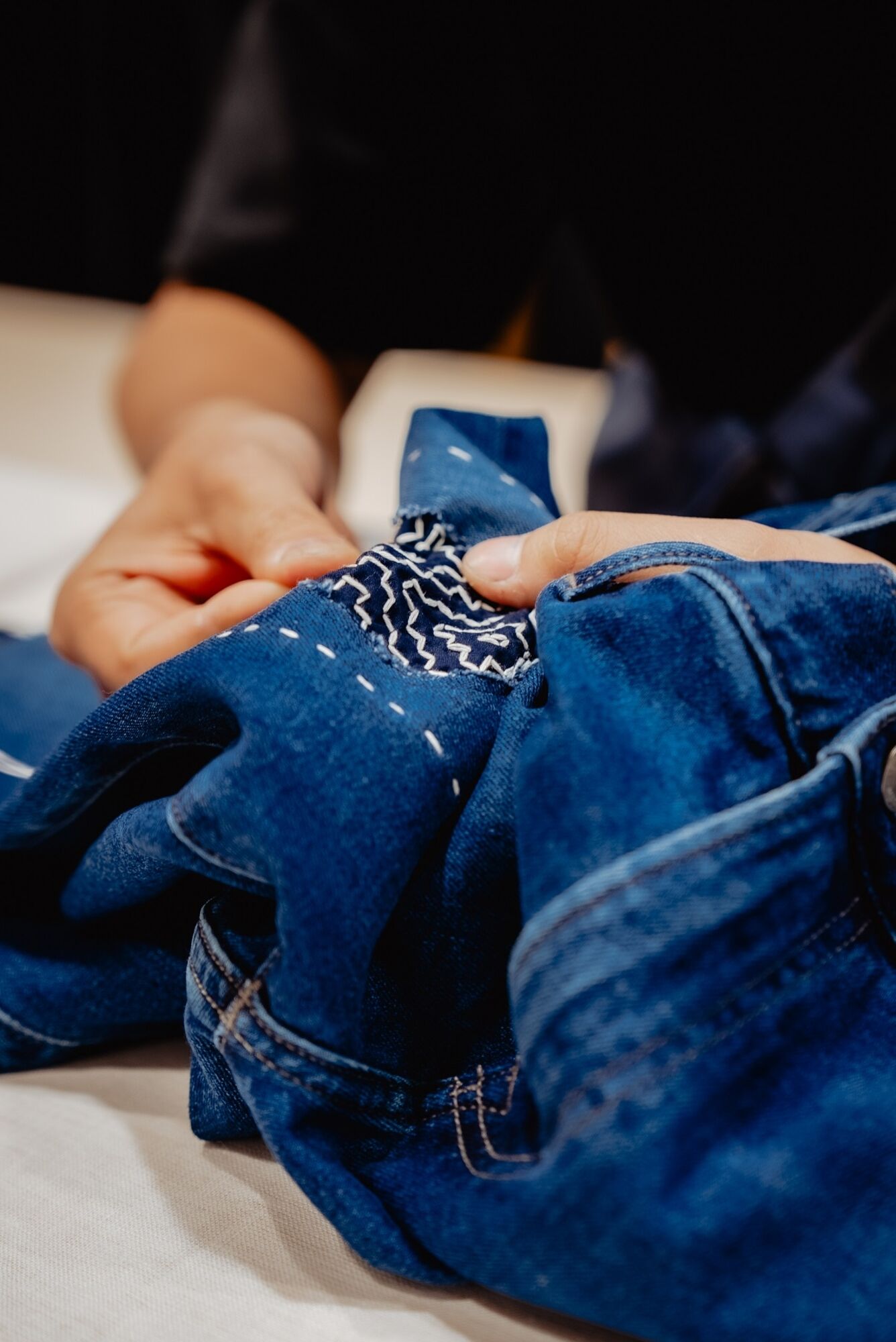
Sashiko is a centuries-old Japanese stitching technique for mending and reinforcing worn-out clothing. It involves patching old garments with aged fabric and using undyed or naturally coloured threads. Rather than looking flashy or fancy, Sashiko embraces the Japanese concept of wabi-sabi—finding beauty in imperfection and the passage of time.
I love Sashiko because it breathes new life into old garments while honouring their history. Each stitch reflects mindful care and sustainable craftsmanship, making every piece both practical and uniquely beautiful. Also, as a garment maker, I want each piece to be worn, loved, and respected for as long as possible—that’s our wish. It’s not just about repairing but about keeping all the memories and making it literally part of you.
2. How come you found this path in your career?
I discovered my path through my love of vintage clothing, especially denim. As a student, I repaired my worn jeans with pieces of Japanese fabric—although I had no idea what Sashiko was at the time. While studying abroad, I received a lot of compliments on my Boro-style repairs, so I decided to make more for others and started a small business.
After graduating, I worked at a company but soon realized I wanted to focus on denim again. I returned to my hometown looking for a place to learn garment construction, and a generous factory owner gave me a job. The factory specialized in tailored jackets, not denim, but I fell in love with tailoring and temporarily set aside my denim plans.
Three years later, I moved to the UK in 2011 to explore the world of tailoring even further. I worked in a South London garment factory, learned about factory management, and opened my own sewing studio in 2012. Since then, I’ve offered pattern cutting, sampling, and small-scale production for various brands in the UK and EU. Over time, I’ve also embraced my Japanese heritage more deeply, developing a growing interest in traditional methods like Sashiko.
3. Can you tell us the story of how you started working with RE.UNIQLO STUDIO, from London to all over the world?
During that period, I was contacted by a member of UNIQLO’s sustainability team who was passionate about keeping customers’ beloved UNIQLO items in circulation longer and looking to introduce a unique Japanese approach to mending —Sashiko. My role was to provide sewing and Sashiko training to their in-house repair teams.
For the opening of RE.UNIQLO STUDIO in Regent Street, we had the chance to create a Boro-inspired kimono for store display. I was amazed by how much interest there was in this centuries-old Japanese mending technique. Following the successful launch, we began an upcycling project using various techniques, to breathe new life into existing garments.
Fortunately, it didn’t stop in Europe. We conducted a live demonstration of upcycling kimono pieces in New York, created a collection in Singapore using local batik, and held events and workshops in several locations across Japan. As a garment maker, I’m honoured to support UNIQLO’s mission of cherishing each garment and feel privileged to contribute to their circularity journey.
4. Do you have any special anecdotes, customer voices from UNIQLO when you have been engaging with them in our stores?
Yes, I have a memorable story from an upcycling demonstration we did in New York. A local woman watched us repurpose a kimono into a new garment and was so inspired that she immediately went home, grabbed some of her UNIQLO clothes, and brought them back for repairs. The very next day, she returned with even more pieces, asking us to upcycle those as well. She told me how happy she was to see her favorite garments given a second life and how excited she was to wear them again.
It really reminded me that clothes are meant to be worn, and upcycling is a beautiful way to keep them in use rather than leaving them unworn in a closet. Although the event was free, she even insisted on giving us a tip—and it took some effort to politely decline. That moment made me realize just how much people appreciate and value the chance to reconnect with their clothing through upcycling.
5. Which item is your favorite Sashiko item in your wardrobe, and why?
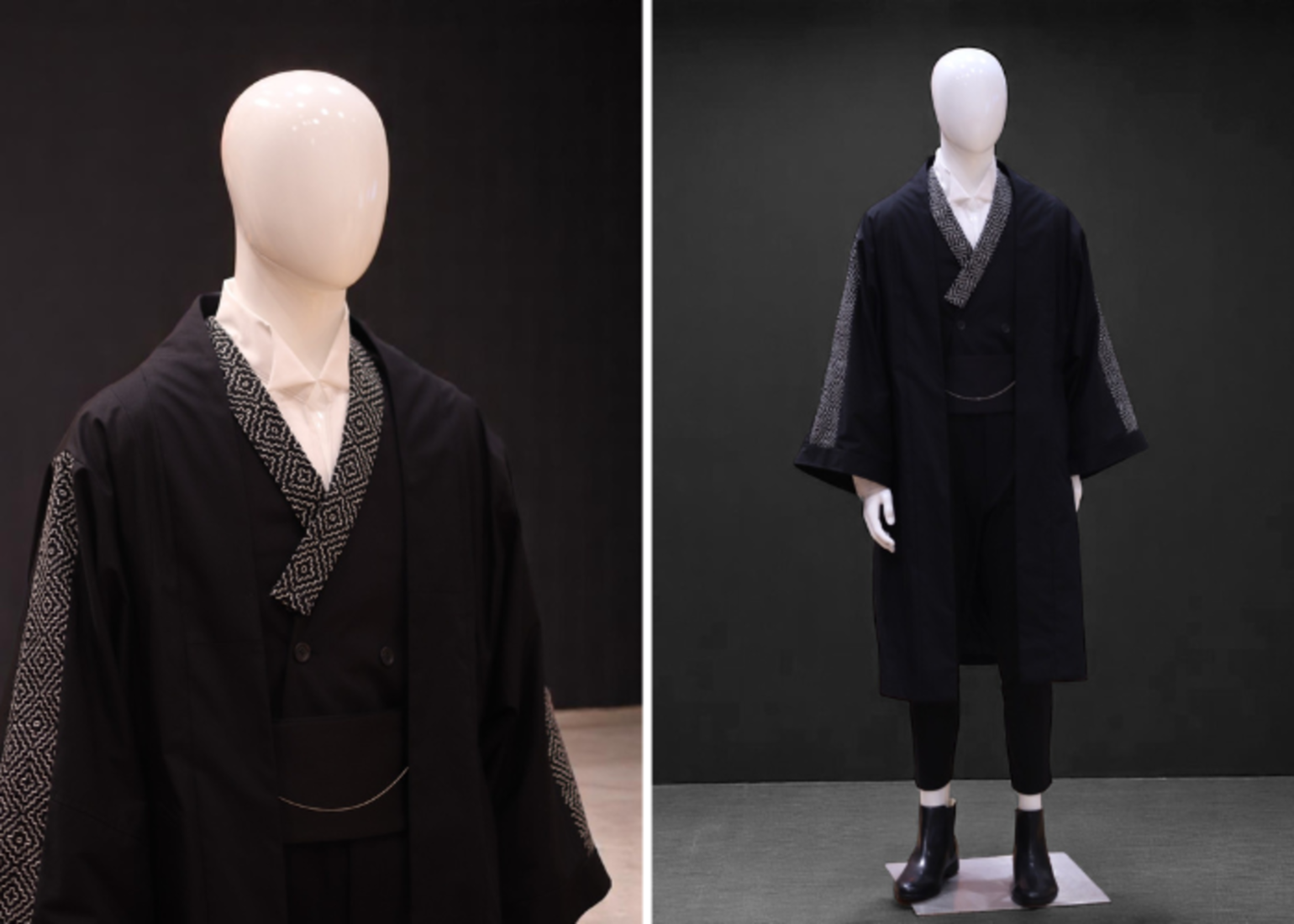
My favourite Sashiko piece isn’t actually in my personal wardrobe right now—it’s on display at a UNIQLO store. It’s an upcycled “kimono suite” made entirely from UNIQLO items: I turned two trench coats into a Haori coat, transformed a jacket into a kimono-collar waistcoat, a blouse into an origami-collar dress shirt, pyjamas into cummerbunds (a sash belt), and two pairs of trousers into traditional Japanese Monpe pants.
I created this kimono especially for a meeting with King Charles—maybe I'm the first person to visit Buckingham Palace in upcycled garments! It was a very special moment, not just for me but for everyone who helped make this UNIQLO project happen. I really wanted to celebrate that achievement with the whole team.
Sashiko service by hand is available by our skilled in house staff - trained by Masa Morikawa - on your old or new UNIQLO items in all 21 RE.UNIQLO STUDIOs in Europe: UK, France, Germany, Spain, Italy, Germany, Sweden, Denmark, Belgium, Netherlands and Luxembourg.
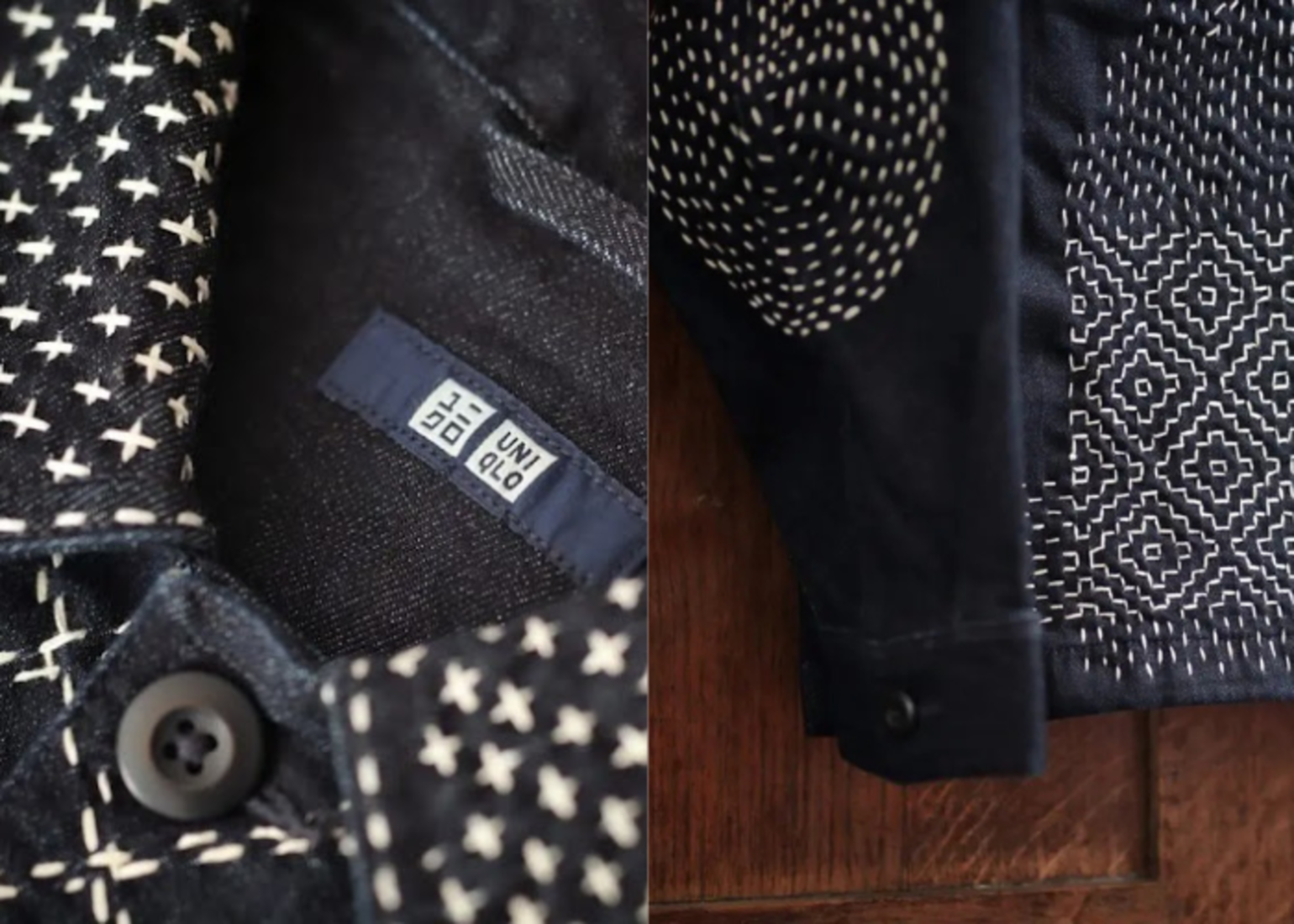
From May 22, more affordable machine made Sashiko patches (prices ranging from 6 € - 12 €) are available in our RE.UNIQLO STUDIOs.
Visit your local RE.UNIQLO STUDIO page here.
TOP